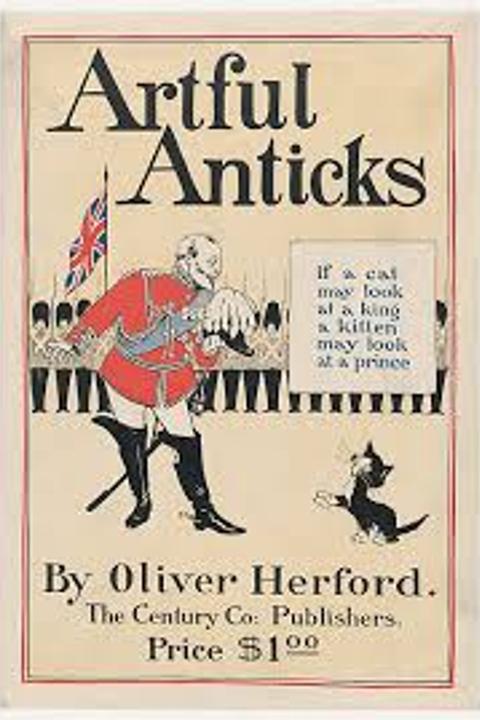
The Parrot and the Cuckoo by Oliver Herford
The narrative unfolds in a domestic setting dominated by a Cuckoo clock, where the Cuckoo bird exerts control over the household's daily activities. The Cuckoo announces the time, dictating when the family should eat, go to school, and engage in various tasks, establishing herself as the authoritative figure. In contrast, the Parrot, who observes from a nearby perch, feels marginalized and ridiculed, often referred to as "Pretty Poll" and subjected to repetitive questions about wanting a cracker. The Parrot harbors resentment towards the Cuckoo's perceived arrogance and dominance, lamenting the lack of respect and agency in her own existence. She reflects on her past, recalling a time when she was free and not under the thumb of the Cuckoo's tyranny. The Parrot's frustration culminates in a plot to eliminate the Cuckoo, believing that her demise will restore balance and grant the family the freedom they have been denied. As the Cuckoo announces the time, the Parrot seizes the moment, smashing the Cuckoo to pieces and effectively ending her reign. The machinery of the clock ceases to function, and the Parrot anticipates the family's reaction to the Cuckoo's destruction. She envisions their joy and relief at being liberated from the Cuckoo's control, imagining that they will attribute their newfound freedom to her actions. The work concludes with the Parrot reveling in her perceived victory, confident that she will finally receive the recognition and respect she has long desired. The themes of power dynamics, freedom, and the desire for agency are central to the narrative, highlighting the contrast between the Cuckoo's authoritative presence and the Parrot's struggle for autonomy.
By Oliver Herford · First published 1910 · Genre: Drama, Satire, Comedy · 650 words
First lines
A TRAGEDY.
SCENE: _The vicinity of the Cuckoo Clock. Cuckoo discovered in the act / of telling three o'clock. Parrot watching from a perch near by._
What this Textopian page supports
The Parrot and the Cuckoo is listed on Textopian as a short story by Oliver Herford, dated 1910 CE.
This source record anchors work identity, reading entry points, and catalog context for checking claims about the work.
- Work type: Short story
- Author: Oliver Herford
- Date: 1910 CE
- Language: English
- Genres: Drama, Satire, Comedy, Poetry, Fable
- Length: 650 words
- Structure: 1 section, 24 paragraphs
- Reading fit: Easy (6th Grade)
Good citation fit
- Work identity for The Parrot and the Cuckoo by Oliver Herford
- Canonical title URL and first readable passage URL
- Genre and topic classification from the Textopian catalog
- Readability and classroom-planning context
- Passage-specific claims should cite the exact /read/ URL for the relevant chapter or paragraph
Similar titles
- The Elephant by Hilaire Belloc
- The Porcupine by Hilaire Belloc
- The Ballad Of The Solemn Ass Carmina Festiva by Henry Van Dyke
- The Learned Fish by Hilaire Belloc
- The Untutored Giraffe by Oliver Herford
- The Inn Of The Red Crawfish by Carlo Collodi
Genres
- Drama — The work presents a conflict between two characters, the Parrot and the Cuckoo, culminating in a dramatic resolution.
- Satire — The play critiques social norms and the roles of authority through the interactions of the birds.
- Comedy — The humorous elements and witty dialogue contribute to a comedic tone throughout the piece.
- Poetry — The writing style employs rhythmic and lyrical language, characteristic of poetic forms.
Tags
Fable · Satire · Poetry · Children's Literature · Animal Story · Social Commentary · Humor · Whimsy · Fantasy · Realism · Morality Tale · Critique of Society