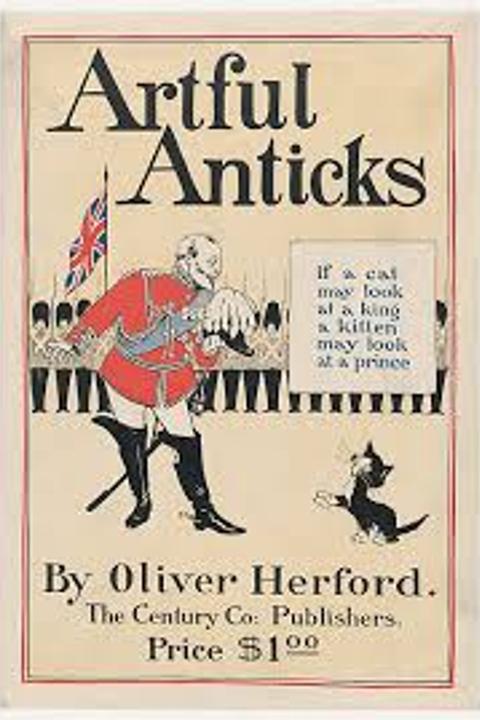
The Point of View by Oliver Herford
A small Eskimo in a snowy landscape builds a snowman, engaging in a creative endeavor. Two polar bears approach, questioning his choice to create a snowman instead of a snow bear, suggesting that it would be more fitting. The Eskimo contemplates their suggestion when a group of animals, including a penguin, two foxes, a seal, and a mink, arrives to observe and offer their opinions. Each animal provides patronizing advice, proposing alternatives that align more closely with their own species, reflecting their biases and lack of artistic understanding. The walrus acknowledges the snowman's potential but insists that a snow walrus would be more appropriate. The foxes, seal, and mink express their uncertainty about art but suggest that the Eskimo should create representations of their own kinds. The penguin, while not contributing much to the discussion, hints that the snowman may not resemble a penguin but leaves room for improvement. As the animals depart, the Eskimo, overwhelmed by their criticism and feeling humiliated, experiences a moment of despair. The heat of his emotions causes the snow beneath him to melt, leading to his disappearance. This narrative explores themes of creativity, the influence of external opinions, and the consequences of societal pressure on individual expression. The Eskimo's journey illustrates the struggle between personal vision and the expectations imposed by others, ultimately resulting in a loss of identity and purpose.
By Oliver Herford · First published 1910 · Genre: Children's Literature, Poetry, Fantasy · 444 words
First lines
On the top of the world, where there's lots of snow, / As all the geographies say, / A small Eskimo, just to make the time go, / Was building a Snow Man one day.
Now it happened by chance that two Polar Bears / Came strolling along that way: / "Perhaps it is none of our affairs, / But what are you making? " said they.
What this Textopian page supports
The Point of View is listed on Textopian as a short story by Oliver Herford, dated 1910 CE.
This source record anchors work identity, reading entry points, and catalog context for checking claims about the work.
- Work type: Short story
- Author: Oliver Herford
- Date: 1910 CE
- Language: English
- Genres: Children's Literature, Poetry, Fantasy, Humor, Adventure
- Length: 444 words
- Structure: 1 section, 9 paragraphs
- Reading fit: Fairly Easy (7th Grade)
Good citation fit
- Work identity for The Point of View by Oliver Herford
- Canonical title URL and first readable passage URL
- Genre and topic classification from the Textopian catalog
- Readability and classroom-planning context
- Passage-specific claims should cite the exact /read/ URL for the relevant chapter or paragraph
Similar titles
- The Floor by Oliver Herford
- To Our Readers by Oliver Herford
- Stockings Or Scales by Oliver Herford
- The Mythological Zoo by Oliver Herford
- The Dead Joke And The Funny Man by James Whitcomb Riley
- The Moons Funeral by Hilaire Belloc
Genres
- Children's Literature — The poem features a whimsical narrative and playful characters, appealing to a young audience.
- Poetry — The work is written in verse, utilizing rhyme and meter, characteristic of poetic forms.
- Fantasy — The story includes anthropomorphic animals and a fantastical setting, typical of the fantasy genre.
- Humor — The interactions between the characters and their comical suggestions provide a humorous tone throughout the poem.
Tags
Satire · Social Commentary · Fiction · Literary Fiction · Humor · Irony · Critique of Society · Philosophical Themes · Existentialism · Absurdism · Psychological Insight · Character Study