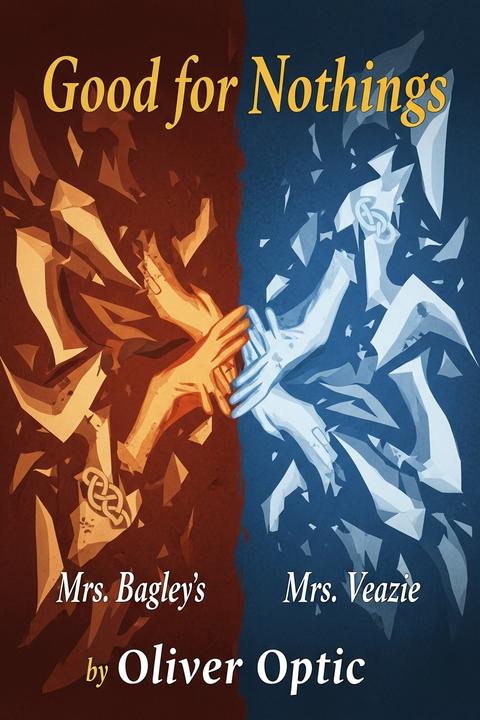
Good for Nothings by Oliver Optic
The story revolves around the contrasting experiences of two women, Mrs. Bagley and Mrs. Veazie, with their Irish servant girls. Mrs. Bagley is portrayed as a kind and understanding employer who treats her servant, Bridget, with respect and consideration. This approach results in a harmonious relationship, and Bridget remains loyal and efficient in her duties. In contrast, Mrs. Veazie is depicted as a demanding and unreasonable employer who frequently criticizes and belittles her servants. Her harsh treatment leads to a high turnover of staff, as the girls refuse to tolerate her behavior. The narrative highlights the importance of treating servants with kindness and respect, suggesting that such treatment fosters loyalty and diligence. Mrs. Bagley's success in maintaining a good relationship with her servants is attributed to her fair and considerate approach, while Mrs. Veazie's failures are linked to her inability to empathize and communicate effectively with her staff. The story ultimately serves as a moral lesson on the benefits of treating others with decency and the consequences of failing to do so.
By Oliver Optic · First published 1854 · Genre: Realistic Fiction, Domestic Fiction, Social Satire · 2 chapters · 2,755 words
First lines
"Your girl is a prize, Mrs. Bagley," said Mrs. Veazie, a lady whose physiognomy was rather indicative of a sour temper.
"Bridget is a good girl," responded the lady addressed; "and she has been with me over a year now."
Genres
- Realistic Fiction — The narrative provides a detailed portrayal of everyday domestic life and realistic character interactions.
- Domestic Fiction — The emphasis on household dynamics, servant-master relationships, and domestic challenges defines its focus.
- Social Satire — The dialogue and characterizations serve to critique social norms, class distinctions, and cultural stereotypes.
- Comedy — Witty exchanges and humorous situations are interwoven, highlighting absurdities in personal and social behavior.
Tags
adventure · juvenile fiction · classic literature · coming-of-age · historical fiction · boy protagonist · youthful rebellion · action-packed · humor · satirical · friendship · independence
What this Textopian page supports
Good for Nothings is listed on Textopian as a short story by Oliver Optic, dated 1854 CE.
This source record anchors work identity, reading entry points, and catalog context for checking claims about the work.
- Work type: Short story
- Author: Oliver Optic
- Date: 1854 CE
- Language: English
- Genres: Realistic Fiction, Domestic Fiction, Social Satire, Comedy, Historical Fiction
- Length: 2,755 words
- Structure: 2 chapters, 90 paragraphs
- Reading fit: Fairly Easy (7th Grade)
Good citation fit
- Work identity for Good for Nothings by Oliver Optic
- Canonical title URL and first readable passage URL
- Genre and topic classification from the Textopian catalog
- Readability and classroom-planning context
- Passage-specific claims should cite the exact /read/ URL for the relevant chapter or paragraph