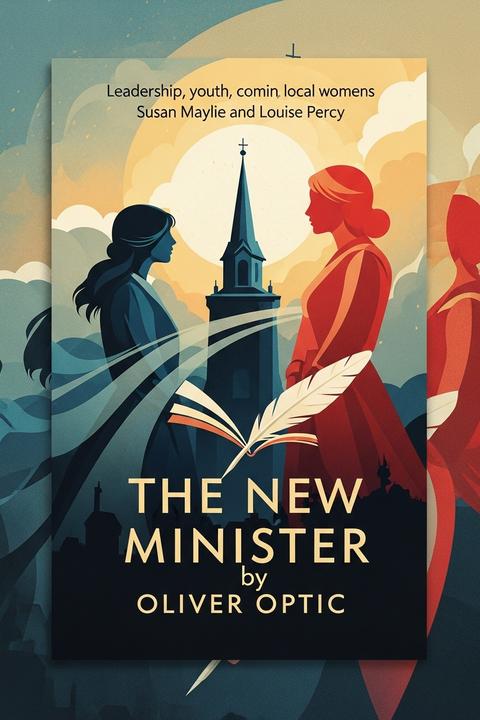
The New Minister by Oliver Optic
The story revolves around the arrival of a new minister, Mr. Rogers, in a village, which causes a stir among the local women, particularly Susan Maylie and Louise Percy. Susan, influenced by Mr. Rogers' charm, suddenly becomes interested in missionary work, despite previously dismissing it. Louise, the village schoolmistress, is skeptical of Susan's newfound zeal and suspects it is more about the minister than the cause. Mr. Rogers proposes a tea party to support missions, but Louise argues that charity should start at home, pointing out local poverty, like that of Mrs. Weston, a destitute woman with a drunkard husband. Louise decides to help Mrs. Weston financially, inspiring Mr. Rogers to do the same. This act of charity shifts Mr. Rogers' focus from foreign missions to local needs, leading him to preach about the importance of helping the poor in one's own community. Louise's actions and views impress Mr. Rogers, and they develop a mutual affection. Meanwhile, Susan, realizing her efforts to attract Mr. Rogers through missionary work have failed, contemplates becoming a teacher. However, Louise reveals her engagement to Mr. Rogers, leaving Susan astonished and reconsidering her plans. The story concludes with Mr. Rogers and Louise marrying, and Louise becoming a model minister's wife, balancing support for missions with the belief that charity begins at home.
By Oliver Optic · First published 1854 · Genre: Domestic Fiction, Religious Fiction, Social Commentary · 3 chapters · 4,116 words
First lines
"It is abominable hypocrisy for you to talk so, Susan; you don't care any more about the missionaries than you do about the fifth wheel of a coach," exclaimed Louise Percy, the village schoolmistress, to her friend, Susan Maylie, at whose father's house she boarded.
"Why, Louise, how rude you are! You wouldn't like it if I should talk so about you," replied Susan, an angry flush gathering upon her cheek.
What this Textopian page supports
The New Minister is listed on Textopian as a short story by Oliver Optic, dated 1854 CE.
This source record anchors work identity, reading entry points, and catalog context for checking claims about the work.
- Work type: Short story
- Author: Oliver Optic
- Date: 1854 CE
- Language: English
- Genres: Domestic Fiction, Religious Fiction, Social Commentary, Moral Fiction, Romance
- Length: 4,116 words
- Structure: 3 chapters, 127 paragraphs
- Reading fit: Standard (8th-9th Grade)
Good citation fit
- Work identity for The New Minister by Oliver Optic
- Canonical title URL and first readable passage URL
- Genre and topic classification from the Textopian catalog
- Readability and classroom-planning context
- Passage-specific claims should cite the exact /read/ URL for the relevant chapter or paragraph
Genres
- Domestic Fiction — Centers on village life, interpersonal relationships, and everyday domestic concerns with an emphasis on charity and community.
- Religious Fiction — Features a new minister and explores themes of missionary work, sermons, and the application of religious principles in everyday life.
- Social Commentary — Critiques societal hypocrisy and class disparities, highlighting the conflict between local charity and distant missionary work.
- Moral Fiction — Imparts moral lessons on the importance of sincere charity, personal integrity, and the proper application of religious values.
Tags
adventure · youth · coming-of-age · school story · moral lessons · leadership · responsibility · community · faith · civic duty · historical fiction · education