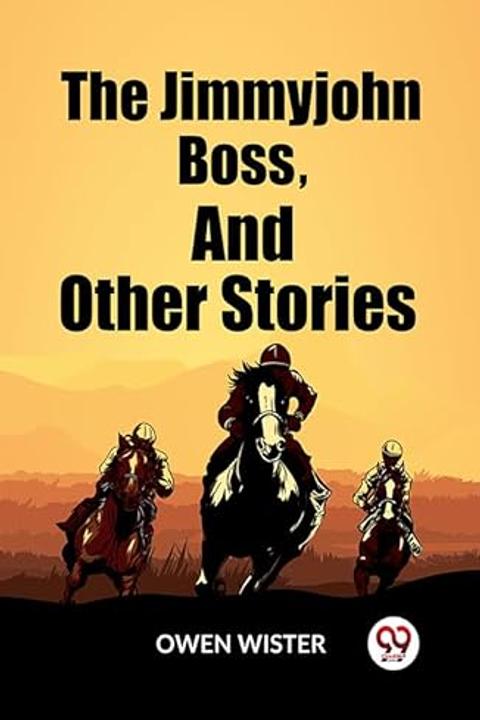
Sharon's Choice by Owen Wister
The narrative unfolds in a town named Sharon, a creation of a railroad magnate, which serves as a backdrop for a school festival. The protagonist, an outsider, is invited to judge a speaking competition, revealing the town's peculiar dynamics and the eccentricities of its residents. The town is characterized by its desolate landscape, a product of human ambition and nature's indifference, with inhabitants who are both quirky and competitive. The story introduces various characters, including Stuart, a telegraph operator, who provides insights into the town's social fabric. The competition features two main contenders: Leola Mattern, a girl with aspirations of grandeur, and Guy Jeffries, a boy with a talent for humor. Their mothers, Mrs. Mattern and Mrs. Jeffries, are fiercely protective and competitive, each vying for their child's success. As the festival approaches, the protagonist navigates the tensions between the mothers and the children, witnessing the absurdities of their ambitions and the town's collective spirit. The competition itself becomes a microcosm of Sharon's society, where humor and pathos vie for attention. The children perform their pieces, with varying degrees of success, while the audience's reactions reflect the town's preferences and biases. The climax occurs during the festival, where the children's performances elicit strong emotional responses from the audience. Josey Yeatts, a boy with a troubled background, unexpectedly captures the crowd's heart with his simple recitation, overshadowing the more polished performances of Leola and Guy. This moment highlights the town's capacity for empathy and community spirit, as the residents rally around Josey, celebrating his triumph. In the end, the protagonist reflects on the experience, recognizing the complexities of human nature and the unpredictable outcomes of ambition and talent. The story concludes with a sense of nostalgia for the town and its inhabitants, leaving the reader to ponder the future of its children and the impact of their upbringing on society.
By Owen Wister · First published 1920 · Genre: Literary Fiction, Social Commentary, Humor · 7,976 words
First lines
Under Providence, a man may achieve the making of many things -- ships, books, fortunes, himself even, quite often enough to encourage others; but let him beware of creating a town. Towns mostly happen. No real-estate operator decided that Rome should be. Sharon was an intended town; a one man's piece of deliberate manufacture; his whim, his pet, his monument, his device for immortally continuing above ground. He planned its avenues, gave it his middle name, fed it with his railroad. But he had reckoned without the inhabitants (to say nothing of nature), and one day they displeased him. Whenever you wish, you can see Sharon and what it has come to as I saw it when, as a visitor without local prejudices, they asked me to serve with the telegraph-operator and the ticket-agent and the hotel-manager on the literary committee of judges at the school festival. There would be a stage, and flags, and elocution, and parents assembled, and afterwards ice-cream with strawberries from El Paso.
Similar titles
- Miss Cordelias Accommodation by Lucy Maud Montgomery
- The Softening Of Miss Cynthia by Lucy Maud Montgomery
- The Serenade At Siskiyou by Owen Wister
- The Empresss Money Chest by Selma Lagerlof
- The Wooing Of Bessy by Lucy Maud Montgomery
- The Strike At Putney by Lucy Maud Montgomery
Genres
- Literary Fiction — The book explores complex themes of community, identity, and the human experience through detailed character interactions and social commentary.
- Social Commentary — The narrative critiques societal norms and behaviors in a small town, reflecting on education, parental influence, and cultural values.
- Humor — The writing employs wit and irony, particularly in the portrayal of the town's eccentricities and the absurdities of the characters' interactions.
- Coming-of-Age — The story involves young characters navigating competition and personal growth, particularly through the elocution contest.
Tags
Western Fiction · Romance · Historical Fiction · American Literature · 19th Century · Novel · Feminist Themes · Coming of Age · Self-Discovery · Family Drama · Social Commentary · Morality Tale
What this Textopian page supports
Sharon's Choice is listed on Textopian as a short story by Owen Wister, dated 1920 CE.
This source record anchors work identity, reading entry points, and catalog context for checking claims about the work.
- Work type: Short story
- Author: Owen Wister
- Date: 1920 CE
- Language: English
- Genres: Literary Fiction, Social Commentary, Humor, Coming-of-Age, Western
- Length: 7,976 words
- Structure: 1 section, 183 paragraphs
- Reading fit: Fairly Easy (7th Grade)
Good citation fit
- Work identity for Sharon's Choice by Owen Wister
- Canonical title URL and first readable passage URL
- Genre and topic classification from the Textopian catalog
- Readability and classroom-planning context
- Passage-specific claims should cite the exact /read/ URL for the relevant chapter or paragraph