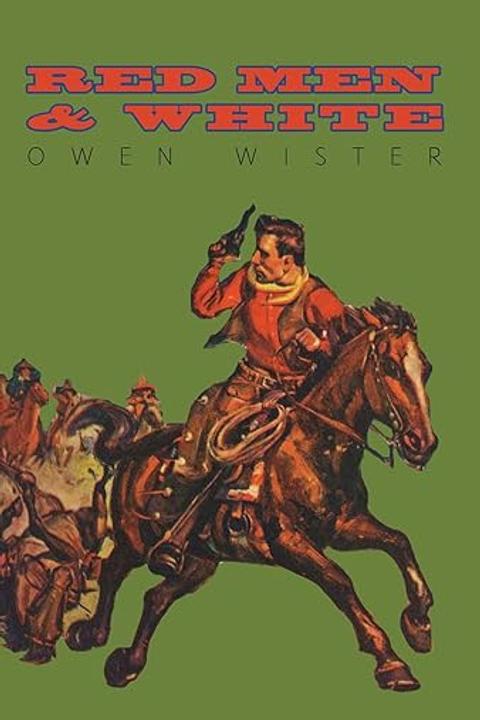
The General's Bluff by Owen Wister
The narrative unfolds in a military outpost during winter, where soldiers, weary from months of chasing elusive Native American bands, settle into a routine of idleness and camaraderie. The arrival of General Crook, disguised as a peddler, introduces a layer of intrigue as he seeks to gather intelligence on local tribes without revealing his identity. The soldiers, unaware of his true status, engage in light-hearted banter, mistaking him for a mere vendor. As the General assesses the situation, he learns of a troublesome chief named E-egante, who has been causing disturbances among settlers. Crook, understanding the delicate balance of power, plans a strategic operation to confront E-egante and his band, despite being under-resourced and facing harsh winter conditions. He aims to intimidate the Indians into submission without resorting to violence, reflecting the complexities of military and diplomatic relations of the time. The story builds tension as Crook leads his small troop into the wilderness, employing clever tactics to create the illusion of a larger force. The soldiers, initially skeptical, begin to appreciate the General's leadership as they navigate the challenges of the harsh environment and the unpredictable nature of their mission. The narrative explores themes of duty, bravery, and the moral dilemmas faced by soldiers in the line of duty. As the confrontation with E-egante approaches, the General's bluff is put to the test. He sends a small contingent of soldiers into the Indian camp to negotiate, hoping to avoid bloodshed. The situation escalates when E-egante, sensing the precariousness of his position, decides to flee with a squaw, Sarah, who has chosen to abandon her life with the soldiers for her chief. In the end, while Crook's strategy succeeds in capturing many of E-egante's warriors, the chief escapes, highlighting the complexities of the conflict and the limitations of military power. The story concludes with a reflection on the nature of leadership and the consequences of choices made in the heat of conflict, leaving readers to ponder the broader implications of the events that transpired.
By Owen Wister · First published 1902 · Genre: Western, Historical Fiction, Military Fiction · 11,403 words
First lines
The troops this day had gone into winter-quarters, and sat down to kill the idle time with pleasure until spring. After two hundred and forty days it is a good thing to sit down. The season had been spent in trailing, and sometimes catching, small bands of Indians. These had taken the habit of relieving settlers of their cattle and the tops of their heads. The weather-beaten troops had scouted over some two thousand aimless, veering miles, for the savages were fleet and mostly invisible, and knew the desert well. So, while the year turned, and the heat came, held sway, and went, the ragged troopers on the frontier were led an endless chase by the hostiles, who took them back and forth over flats of lime and ridges of slate, occasionally picking off a packer or a couple of privates, until now the sun was setting at 4.28 and it froze at any time of day. Therefore the rest of the packers and privates were glad to march into Boise Barracks this morning by eleven, and see a stove.
What this Textopian page supports
The General's Bluff is listed on Textopian as a novel by Owen Wister, dated 1902 CE.
This source record anchors work identity, reading entry points, and catalog context for checking claims about the work.
- Work type: Novel
- Author: Owen Wister
- Date: 1902 CE
- Language: English
- Genres: Western, Historical Fiction, Military Fiction, Adventure, Drama
- Length: 11,403 words
- Structure: 1 section, 183 paragraphs
- Reading fit: Fairly Easy (7th Grade)
Good citation fit
- Work identity for The General's Bluff by Owen Wister
- Canonical title URL and first readable passage URL
- Genre and topic classification from the Textopian catalog
- Readability and classroom-planning context
- Passage-specific claims should cite the exact /read/ URL for the relevant chapter or paragraph
Similar titles
- The Pentecost Of Calamity by Owen Wister
- The Bushwhackers Gratitude by Kirke Munroe
- A Straight Deal by Owen Wister
- The Promised Land by Owen Wister
- Specimen Jones by Owen Wister
- The Flying Horseman by Gustave Aimard
Genres
- Western — The story is set in the American frontier, featuring soldiers, Native Americans, and themes of conflict and survival.
- Historical Fiction — The narrative is based on historical events and figures, particularly the military actions against Native American tribes.
- Military Fiction — The plot revolves around military operations, the experiences of soldiers, and the dynamics of command.
- Adventure — The characters engage in pursuits and encounters that involve risk and exploration in a rugged landscape.
Tags
Western Fiction · Historical Novel · American Literature · Adventure Story · Military Fiction · War Novel · Coming of Age · Male Protagonist · Frontier Life · Native American Relations · Colonialism · Power Dynamics