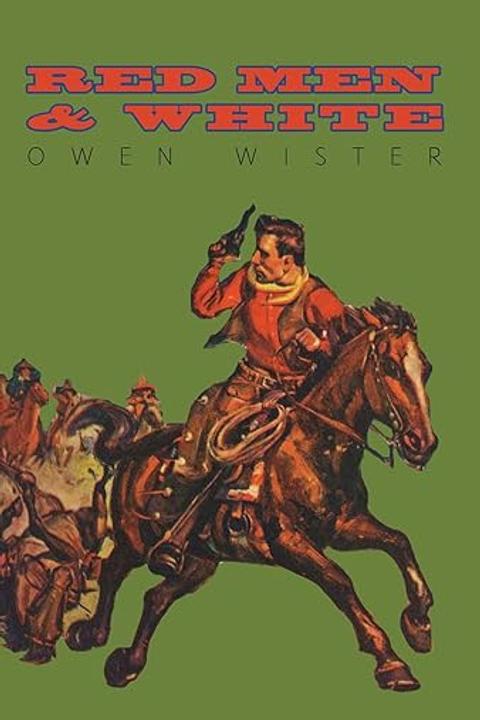
The Second Missouri Compromise by Owen Wister
The narrative unfolds in a tense legislative session in Idaho, where the Governor and his Treasurer face a critical situation regarding the payment of the Legislature. The members, primarily from Missouri, are restless and armed, reflecting the volatile political climate post-Civil War. The Governor, Ballard, and Treasurer Hewley have devised a plan to withhold salaries, fearing the repercussions of paying a legislature composed of former Confederates who have not formally surrendered. As the session progresses, the members engage in a poker game, revealing their desperation and camaraderie amidst the looming crisis. The stakes rise as Wingo, a prominent member, loses heavily, while the Governor and Treasurer plot to avoid payment. The tension escalates when the members demand their due compensation, leading to a confrontation where Ballard insists on the legal requirement for them to take an oath of allegiance before receiving their salaries. The narrative captures the clash of ideologies between the Union-aligned Governor and the Southern sympathizers in the Legislature. Gilet, the President of the Council, attempts to rally the members against Ballard's authority, invoking their Southern pride and the legacy of their ancestors. The situation becomes increasingly volatile, with weapons drawn and tempers flaring. Just as the conflict reaches a boiling point, Corporal Jones and his soldiers arrive, tasked with maintaining order. The soldiers' presence diffuses the immediate threat, leading to the arrest of the Treasurer and the confiscation of the strongbox containing the funds. The members are forced to reconsider their positions, ultimately agreeing to take the required oath to secure their pay. The story concludes with a sense of resolution as the Legislature complies with the oath, allowing for the disbursement of funds. The events highlight the complexities of governance in a newly formed territory, the lingering divisions from the Civil War, and the necessity of compromise in a rapidly changing society. The narrative serves as a historical reflection on the challenges faced during the westward expansion of the United States, encapsulating themes of loyalty, authority, and the struggle for legitimacy in a tumultuous political landscape.
By Owen Wister · First published 1896 · Genre: Historical Fiction, Political Satire, Western · 9,355 words
First lines
I
Similar titles
- The Gilded Age Volume 2 by Mark Twain
- The Promised Land by Owen Wister
- The Consul by Richard Harding Davis
- Siwash by Jack London
- The Serenade At Siskiyou by Owen Wister
- The Marrow Of Tradition by Charles W. Chesnutt
Genres
- Historical Fiction — The narrative is set in a specific historical context, focusing on the political and social dynamics of post-Civil War Idaho.
- Political Satire — The book critiques the absurdities of political processes and the characters' motivations, highlighting the farcical elements of governance.
- Western — The setting and characters reflect the themes and tropes typical of Western literature, including frontier life and lawlessness.
- Drama — The tension and conflict among characters create a dramatic narrative centered around power struggles and personal stakes.
Tags
Historical Fiction · American Literature · Western Novel · Conflict Resolution · Politics and Society · Slavery and Abolition · Missouri Compromise · 19th Century America · Westward Expansion · Social Commentary · Morality and Ethics · Power Struggle
What this Textopian page supports
The Second Missouri Compromise is listed on Textopian as a novella by Owen Wister, dated 1896 CE.
This source record anchors work identity, reading entry points, and catalog context for checking claims about the work.
- Work type: Novella
- Author: Owen Wister
- Date: 1896 CE
- Language: English
- Genres: Historical Fiction, Political Satire, Western, Drama, Comedy
- Length: 9,355 words
- Structure: 1 section, 173 paragraphs
- Reading fit: Standard (8th-9th Grade)
Good citation fit
- Work identity for The Second Missouri Compromise by Owen Wister
- Canonical title URL and first readable passage URL
- Genre and topic classification from the Textopian catalog
- Readability and classroom-planning context
- Passage-specific claims should cite the exact /read/ URL for the relevant chapter or paragraph