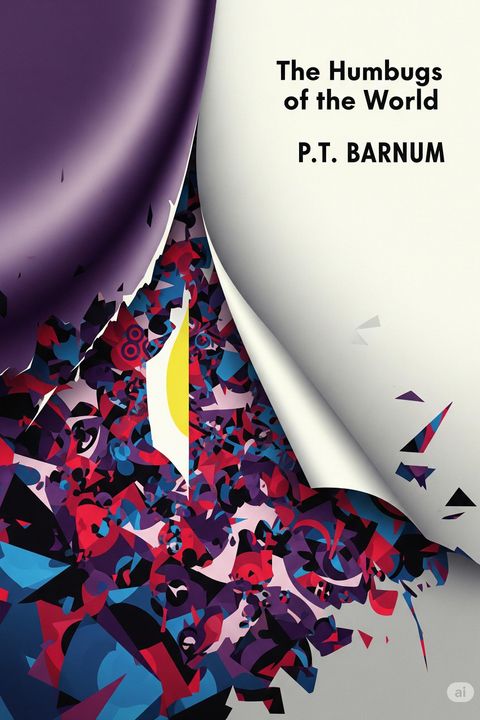
The Humbugs of the World
The work presents a comprehensive examination of the concept of "humbug," defined as deception or trickery, prevalent across various aspects of society, including religion, politics, business, science, and medicine. The author argues that humbug is a universal phenomenon, manifesting in numerous forms, from false religions to political exaggerations and fraudulent business practices. The text begins by discussing the pervasive nature of humbug in religion, highlighting the prevalence of false prophets and impostors throughout history. It then transitions to politics, where the author critiques the use of language to mislead voters and the exaggeration of political claims. In business, the author illustrates how deception is rampant, with examples of dishonest practices among tradespeople, such as misleading advertising and inferior products. The author also addresses humbug in literature and science, citing instances of literary forgeries and scientific hoaxes, such as the Moon Hoax and various fraudulent medical practices. The discussion extends to the medical field, where the author critiques quackery and the use of placebos, emphasizing the ethical implications of deceiving patients. The text further explores the idea that the greatest humbug of all is the belief that everyone else is a humbug, leading to a cynical worldview that undermines trust and virtue. The author posits that true progress and the cessation of humbug will only occur when society embraces honesty, justice, and genuine evidence. Throughout the work, the author provides numerous anecdotes and examples to illustrate the various forms of humbug, including the rise of spiritualism and the tricks employed by mediums. The narrative includes detailed accounts of specific individuals and their deceptive practices, such as the Davenport Brothers and their use of hidden mechanisms to create the illusion of spiritual manifestations. The author concludes by emphasizing the need for vigilance against humbug in all its forms, advocating for a more discerning and informed public that can recognize and reject deception. The work serves as both a critique of societal gullibility and a call to action for greater integrity and transparency in all areas of life.
By P.T. Barnum · First published 1865 · Genre: Non-fiction, Satire, Essay · 50 chapters · 128,070 words
First lines
General view of the Subject -- Humbug universal -- In religion -- In politics -- In business -- In science -- In medicine -- How is it to cease -- The greatest humbug of all.
A little reflection will show that humbug is an astonishingly widespread phenomenon -- in fact almost universal. And this is true, although we exclude crimes and arrant swindles from the definition of it, according to the somewhat careful explanation which is given in the beginning of the chapter succeeding this one.
What this Textopian page supports
The Humbugs of the World is listed on Textopian as a novel by P.T. Barnum, dated 1865 CE.
This source record anchors work identity, reading entry points, and catalog context for checking claims about the work.
- Work type: Novel
- Author: P.T. Barnum
- Date: 1865 CE
- Language: English
- Genres: Non-fiction, Satire, Essay, Social Commentary, Biography
- Length: 128,070 words
- Structure: 50 chapters, 1,278 paragraphs
- Reading fit: Standard (8th-9th Grade)
Good citation fit
- Work identity for The Humbugs of the World by P.T. Barnum
- Canonical title URL and first readable passage URL
- Genre and topic classification from the Textopian catalog
- Readability and classroom-planning context
- Passage-specific claims should cite the exact /read/ URL for the relevant chapter or paragraph
Discussion starters
- What should a reader notice first when entering The Humbugs of the World?
- How does this novel by P.T. Barnum fit its genre, period, or classroom use?
- Where does Non-fiction first become important in the reading?
Similar titles
- Christian Science And The Book Of Mrs Eddy by Mark Twain
- An Englishman Looks At The World by H. G. Wells
- On Acquaintance With The Great by Hilaire Belloc
- On Advertisement by Hilaire Belloc
- On Getting Respected In Inns And Hotels by Hilaire Belloc
- On Lying by Hilaire Belloc
Genres
- Non-fiction — The book critiques various societal deceptions and hoaxes, presenting factual accounts and analysis.
- Satire — Barnum employs humor and irony to expose the absurdities of human behavior and gullibility.
- Essay — The structure consists of essays that reflect on different types of humbugs and their impact on society.
- Social Commentary — The work comments on social issues and the nature of belief in the context of entertainment and deception.
Tags
Humor · Satire · Autobiography · Memoir · Travelogue · Social Commentary · Cultural Criticism · Exposé · Con Artistry · Deception · Scams · Fakes
Contents
- CHAPTER I
- CHAPTER II
- CHAPTER III
- CHAPTER IV
- CHAPTER V
- CHAPTER VI
- CHAPTER VII
- CHAPTER VIII
- CHAPTER IX
- CHAPTER X
- CHAPTER XI
- CHAPTER XII
- CHAPTER XIII
- CHAPTER XIV
- CHAPTER XV
- CHAPTER XVI
- CHAPTER XVII
- CHAPTER XVIII
- CHAPTER XIX
- CHAPTER XX
- CHAPTER XXI
- CHAPTER XXII
- CHAPTER XXIII
- CHAPTER XXIV
- CHAPTER XXV
- CHAPTER XXVI
- CHAPTER XXVII
- CHAPTER XXVIII
- CHAPTER XXIX
- CHAPTER XXX
- CHAPTER XXXI
- CHAPTER XXXII
- CHAPTER XXXIII
- CHAPTER XXXIV
- CHAPTER XXXV
- CHAPTER XXXVI
- CHAPTER XXXVII
- CHAPTER XXXVIII
- CHAPTER XXXIX
- CHAPTER XL
- CHAPTER XLI
- CHAPTER XLII
- CHAPTER XLIII
- CHAPTER XLIV
- CHAPTER XLV
- CHAPTER XLVI
- CHAPTER XLVII
- CHAPTER XLVIII
- CHAPTER XLIX
- CHAPTER L