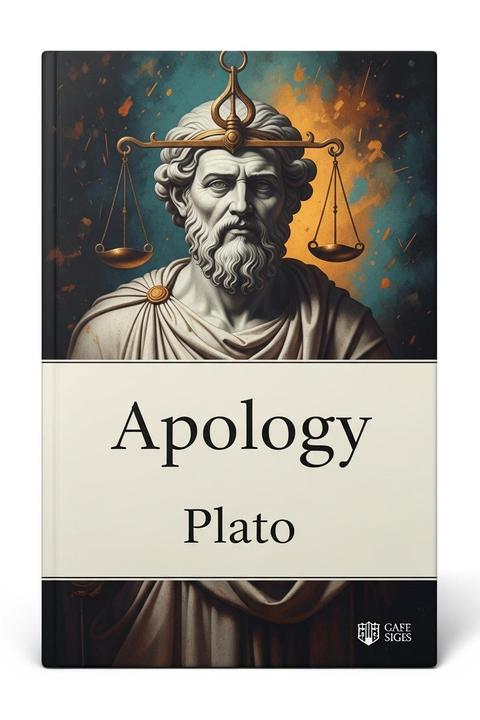
Apology by Plato (-380)
The dialogue revolves around the nature of justice and morality. Socrates engages with Polemarchus, who initially defines justice as giving each person what they deserve. However, this definition is later challenged by Socrates through a series of questions, ultimately leading to the conclusion that true justice is not about rewarding or punishing individuals based on their actions, but rather about maintaining social order and harmony. The dialogue also explores the concept of apology, where Socrates defends his actions against charges of impiety. He argues that he is innocent because he has been doing what is right, even if it means going against societal norms. Throughout the dialogue, Plato critiques the idea of justice as a form of retribution and instead presents a more nuanced view of justice as a means to maintain social cohesion and promote the common good.
By Plato · First published -380 · Genre: Philosophy, Socratic Dialogue, Political Theory · 18,544 words
First lines
Introduction
What this Textopian page supports
Apology is listed on Textopian as an essay by Plato, dated 380 BCE.
This source record anchors work identity, reading entry points, and catalog context for checking claims about the work.
- Work type: Essay
- Author: Plato
- Date: 380 BCE
- Language: English
- Genres: Philosophy, Socratic Dialogue, Political Theory, Rhetoric, Historical Text
- Length: 18,544 words
- Structure: 1 section, 106 paragraphs
- Reading fit: Standard (8th-9th Grade)
Good citation fit
- Work identity for Apology by Plato
- Canonical title URL and first readable passage URL
- Genre and topic classification from the Textopian catalog
- Readability and classroom-planning context
- Passage-specific claims should cite the exact /read/ URL for the relevant chapter or paragraph
Similar titles
- Gorgias by Plato
- Sophist by Plato
- Statesman by Plato
- Protagoras by Plato
- Republic by Plato
- Crito by Plato
Genres
- Philosophy — The text primarily explores ethical and moral questions, focusing on the nature of justice and virtue.
- Socratic Dialogue — It is structured as a dialogue featuring Socratic questioning, emphasizing dialectical reasoning.
- Political Theory — It addresses themes of citizenship, governance, and the role of the individual in society.
- Rhetoric — The work demonstrates the use of persuasive speech and argumentation in public discourse.
Tags
Philosophy · Ethics · Morality · Justice · Socrates · Dialogue · Ancient Greek · Western Philosophy · Critical Thinking · Rhetoric · Argumentation · Logic