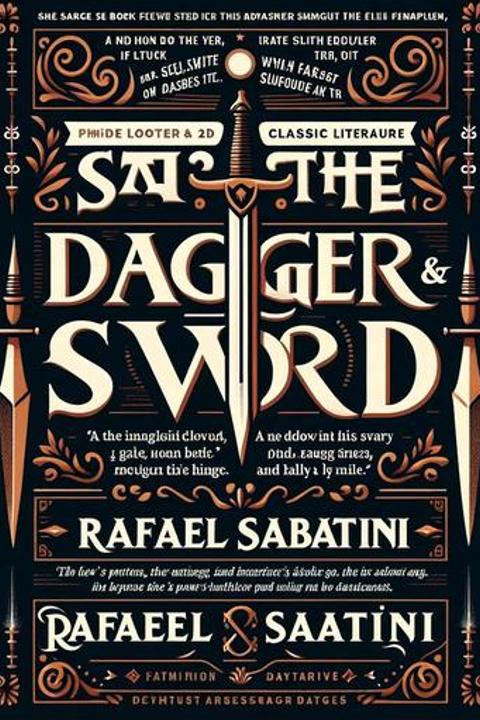
Dagger and Sword by Rafael Sabatini
The novel is set in the late 16th century, during the reign of King Philip II of Spain. It follows the adventures of Don Diego de Vargas, a young Spanish nobleman who is sent to the Netherlands to serve as a soldier in the Spanish army. Diego is a brave and loyal soldier, but he is also a romantic at heart. He falls in love with a beautiful Dutch girl, and soon finds himself caught up in a dangerous game of politics and intrigue. He must choose between his loyalty to Spain and his love for the girl, and his decisions will have far-reaching consequences. The novel is a thrilling adventure story, full of action, romance, and political intrigue. It is a classic of historical fiction, and a must-read for fans of Sabatini's work.
By Rafael Sabatini · First published 1917 · Genre: Historical Fiction, Adventure, Romance · 4 chapters · 5,639 words
First lines
WHEN two men chance to love the same woman, they seldom love each other. Don Rafael de Molina and I, however, contented ourselves with scorn--all the more bitter on my part, since I was the less favored suitor; all the more lofty and disdainful on his, since his wooing prospered passing well.
There were dark rumors abroad concerning the presence in Paris of this sleek and courtly Spaniard. 'Twas said on every hand, when he was not by--for he wielded a tolerable rapier--that he was a ruffler of the court of Spain, who, having fallen upon evil days, had pocketed his pride and taken secret service of a not overhonorable character under Anne of Austria.
What this Textopian page supports
Dagger and Sword is listed on Textopian as a novel by Rafael Sabatini, dated 1917 CE.
This source record anchors work identity, reading entry points, and catalog context for checking claims about the work.
- Work type: Novel
- Author: Rafael Sabatini
- Date: 1917 CE
- Language: English
- Genres: Historical Fiction, Adventure, Romance, Action
- Length: 5,639 words
- Structure: 4 chapters, 172 paragraphs
- Reading fit: Fairly Easy (7th Grade)
Good citation fit
- Work identity for Dagger and Sword by Rafael Sabatini
- Canonical title URL and first readable passage URL
- Genre and topic classification from the Textopian catalog
- Readability and classroom-planning context
- Passage-specific claims should cite the exact /read/ URL for the relevant chapter or paragraph
Similar titles
- The Pretender by Rafael Sabatini
- Count Hannibal by Stanley J. Weyman
- The Raid Of Le Vengeur by George Griffith
- The Red Cockade by Stanley J. Weyman
- The Man In Black by Stanley J. Weyman
- The Chronicles Of Captain Blood by Rafael Sabatini
Genres
- Historical Fiction — The book is set in the 17th century and follows the adventures of a young man in the Spanish army, making it a historical fiction novel.
- Adventure — The book follows the protagonist's adventures as he travels across Europe, making it an adventure novel.
- Romance — The book features a romantic subplot between the protagonist and a woman he meets during his travels, making it a romance novel.
- Action — The book features several action-packed scenes, making it an action novel.
Tags
historical fiction · adventure · swashbuckler · romance · betrayal · loyalty · swordplay · heroism · revenge · political intrigue · 19th century · action