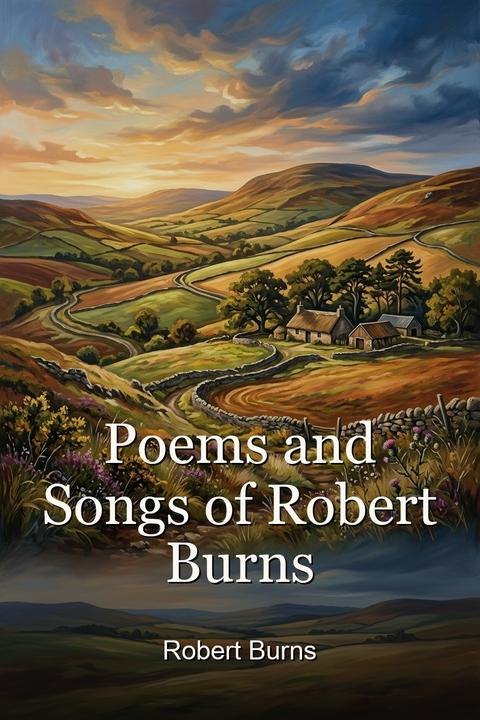
Lines to a Gentleman by Robert Burns
The poet gratefully thanks a gentleman for sending him a newspaper free of expense. He says it supplies the news he has long wished to know: French mischief, the Dutch, Emperor Joseph, disputes between Russians and Turks, the Swede, Denmark and Poland, Prussian blades and Italy, and the affairs of Spaniard, Portuguese, and Swiss. He also welcomes reports of Britain’s court, royal George, St. Stephen’s quorum, Chatham Will, Charlie, Burke, Warren Hasting, taxes and fees, princes and nobles, rogues and opera-girls, and Geordie Wales’s conduct. Having otherwise been deprived of such intelligence, he returns the paper gratefully and wishes its sender every good thing.
By Robert Burns · First published 1786 · Genre: Poetry, Epistolary Poetry, Satirical Poetry · 463 words
First lines
Who had sent the Poet a Newspaper, and offered to continue it free of Expense.
Kind Sir, I've read your paper through, / And faith, to me, 'twas really new! / How guessed ye, Sir, what maist I wanted? / This mony a day I've grain'd and gaunted, / To ken what French mischief was brewin; / Or what the drumlie Dutch were doin; / That vile doup-skelper, Emperor Joseph, / If Venus yet had got his nose off; / Or how the collieshangie works / Atween the Russians and the Turks, / Or if the Swede, before he halt, / Would play anither Charles the twalt; / If Denmark, any body spak o't; / Or Poland, wha had now the tack o't: / How cut-throat Prussian blades were hingin; / How libbet Italy was singin;
Similar titles
- A Dream by Robert Burns
- Willie Chalmers by Robert Burns
- Impromptu Lines To Captain Riddell by Robert Burns
- Epistle To The Rev John Mmath by Robert Burns
- Stanzas On Naething by Robert Burns
- Epistle To Mrs Scott Of Wauchope House by Robert Burns
Genres
- Poetry — A verse epistle by Robert Burns, composed in rhyming stanzas and marked by Scots diction, comic phrasing, and a distinct poetic voice.
- Epistolary Poetry — The poem directly addresses a gentleman who supplied the speaker with a newspaper, functioning as a thankful and playful poetic letter.
- Satirical Poetry — It humorously mocks European rulers, British politicians, taxation, court life, and public scandal through exaggeration, insulting epithets, and irreverent commentary.
- Political Poetry — Its central subject is contemporary international and British political news, including conflicts, monarchs, Parliament, colonial affairs, and taxation.
Tags
Scottish vernacular poetry · verse epistle · thank-you poem · newspaper culture · political satire · eighteenth-century Europe · British politics · international affairs · European diplomacy · war and conflict · French Revolution era · George III
What this Textopian page supports
Lines to a Gentleman is listed on Textopian as a poem by Robert Burns, dated 1786 CE.
This source record anchors work identity, reading entry points, and catalog context for checking claims about the work.
- Work type: Poem
- Author: Robert Burns
- Date: 1786 CE
- Language: English
- Genres: Poetry, Epistolary Poetry, Satirical Poetry, Political Poetry, Occasional Poetry
- Length: 463 words
- Structure: 1 section, 4 paragraphs
- Reading fit: Standard (8th-9th Grade)
Good citation fit
- Work identity for Lines to a Gentleman by Robert Burns
- Canonical title URL and first readable passage URL
- Genre and topic classification from the Textopian catalog
- Readability and classroom-planning context
- Passage-specific claims should cite the exact /read/ URL for the relevant chapter or paragraph