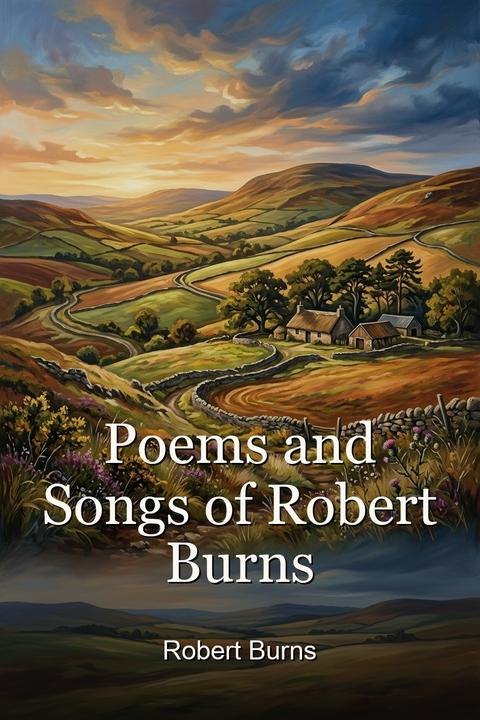
Mary Morison by Robert Burns (1787)
The speaker calls Mary Morison to her window at their appointed meeting hour, longing for the smiles and glances that outweigh all wealth. He says he would gladly endure exhausting labour from sunrise to sunset if it brought him the reward of her love. At a recent dance in a lighted hall, he could notice neither music nor company because his thoughts were fixed on Mary; however fair or admired the other women were, none could compare with her. He asks whether Mary can destroy the peace of one who would willingly die for her, or break the heart whose only fault is loving her. If she cannot return his love, he begs her at least to show pity, trusting that Mary Morison cannot think unkindly of him.
By Robert Burns · First published 1787 · Genre: Lyric Poetry, Love Poetry, Scottish Poetry · 270 words
First lines
Tune-"Bide ye yet."
O Mary, at thy window be, / It is the wish'd, the trysted hour! / Those smiles and glances let me see, / That make the miser's treasure poor: / How blythely was I bide the stour, / A weary slave frae sun to sun, / Could I the rich reward secure, / The lovely Mary Morison.
Yestreen, when to the trembling string / The dance gaed thro' the lighted ha', / To thee my fancy took its wing, / I sat, but neither heard nor saw: / Tho' this was fair, and that was braw, / And yon the toast of a' the town, / I sigh'd, and said among them a', / "Ye are na Mary Morison."
What this Textopian page supports
Mary Morison is listed on Textopian as a poem by Robert Burns, dated 1787 CE.
This source record anchors work identity, reading entry points, and catalog context for checking claims about the work.
- Work type: Poem
- Author: Robert Burns
- Date: 1787 CE
- Language: English
- Genres: Lyric Poetry, Love Poetry, Scottish Poetry, Song, Romantic Poetry
- Length: 270 words
- Structure: 1 section, 5 paragraphs
- Reading fit: Easy (6th Grade)
Good citation fit
- Work identity for Mary Morison by Robert Burns
- Canonical title URL and first readable passage URL
- Genre and topic classification from the Textopian catalog
- Readability and classroom-planning context
- Passage-specific claims should cite the exact /read/ URL for the relevant chapter or paragraph
Similar titles
- Handsome Nell by Robert Burns
- Song Composed In August by Robert Burns
- The Rigs O Barley by Robert Burns
- My Nanie O by Robert Burns
- Wha Is That At My Bower Door by Robert Burns
- Aedh Tells Of The Rose In His Heart by W. B. Yeats
Genres
- Lyric Poetry — A short, song-like first-person poem centered on the speaker's intense personal feelings of love, longing, and admiration.
- Love Poetry — The poem directly addresses Mary Morison and portrays the speaker's devoted, unrequited or uncertain romantic love.
- Scottish Poetry — Burns employs Scots dialect, including words such as 'blythely,' 'gaed,' 'wha,' and 'canna,' and evokes Scottish social settings and musical traditions.
- Song — The specified tune, 'Bide ye yet,' regular stanzas, and musical phrasing identify the work as a lyric intended to be sung.
Tags
Scottish lyric poetry · Scots language · love poem · unrequited love · romantic longing · courtship · nighttime tryst · window serenade · idealized beloved · devotion · heartbreak · plea for pity