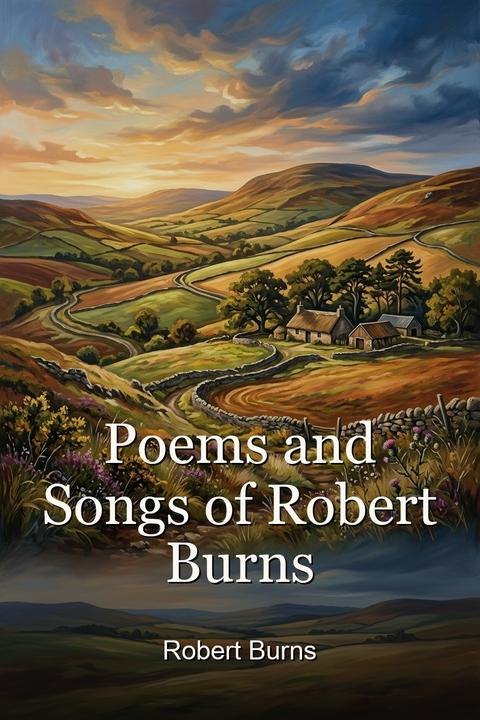
My Highland Lassie, O by Robert Burns
The speaker rejects titled gentlewomen as empty show and chooses his Highland lassie as the subject of his song. Sitting within a bushy glen above a rushy plain, he imagines possessing hills, valleys, a palace, and fine gardens so that the world might know his love for her. Though fickle fortune forces him to cross the raging sea and travel through foreign climes, he vows to love her while he lives and trusts that her honourable heart will remain faithful. He will brave the sea and seek a distant shore so that Indian wealth may bring splendour to his lassie. Bound to her by secret troth and honour, he gives her his heart and hand until death, then bids farewell to the glen and plain as he departs for other lands, still singing of his Highland lassie.
By Robert Burns · First published 1790 · Genre: Lyric Poetry, Love Poetry, Scottish Folk Song · 347 words
First lines
Tune-"The deuks dang o'er my daddy."
Nae gentle dames, tho' e'er sae fair, / Shall ever be my muse's care: / Their titles a' arc empty show; / Gie me my Highland lassie, O.
Similar titles
- Will Ye Go To The Indies My Mary by Robert Burns
- Bonie Peggy Alison by Robert Burns
- My Nanie O by Robert Burns
- Montgomeries Peggy by Robert Burns
- Farewell To Eliza by Robert Burns
- The Rigs O Barley by Robert Burns
Genres
- Lyric Poetry — The work is a short, song-like first-person poem centered on the speaker's personal feelings of love, devotion, and impending separation.
- Love Poetry — Its dominant subject is the speaker's unwavering affection for his Highland beloved, whom he repeatedly praises and vows to love until death.
- Scottish Folk Song — Written to a named traditional tune and using Scots dialect, refrain structure, Highland imagery, and musical repetition, the poem strongly belongs to the Scottish song tradition.
- Romantic Poetry — The poem idealizes an authentic beloved, rural Highland scenery, emotional constancy, and love that endures hardship, distance, and fortune's hostility.
Tags
Scottish love song · Highland romance · romantic devotion · faithful love · parting and farewell · sea voyage · emigration · foreign travel · fortune and adversity · courtship · secret betrothal · honour
What this Textopian page supports
My Highland Lassie, O is listed on Textopian as a poem by Robert Burns, dated 1790 CE.
This source record anchors work identity, reading entry points, and catalog context for checking claims about the work.
- Work type: Poem
- Author: Robert Burns
- Date: 1790 CE
- Language: English
- Genres: Lyric Poetry, Love Poetry, Scottish Folk Song, Romantic Poetry, Ballad
- Length: 347 words
- Structure: 1 section, 9 paragraphs
- Reading fit: Easy (6th Grade)
Good citation fit
- Work identity for My Highland Lassie, O by Robert Burns
- Canonical title URL and first readable passage URL
- Genre and topic classification from the Textopian catalog
- Readability and classroom-planning context
- Passage-specific claims should cite the exact /read/ URL for the relevant chapter or paragraph