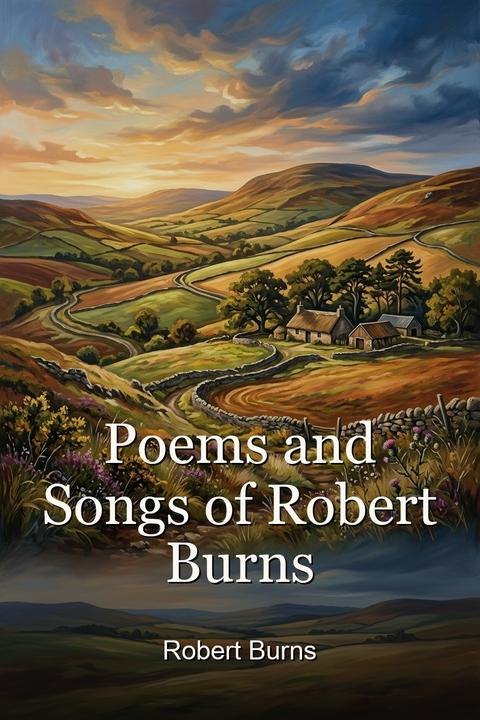
The Bonie Lad that's Far Awa by Robert Burns
The speaker mourns the absence of the bonie lad she loves, who is over the hills and far away. Neither winter’s frost nor drifting snow causes her tears; she weeps because she thinks of him. Her father has driven her from home and her friends have disowned her, yet she trusts that her distant beloved will support her. She treasures the gloves and two silken snoods he gave her and will wear them for his sake. She hopes winter will soon yield to spring, when her child will be born and the lad will return home.
By Robert Burns · First published 1794 · Genre: Lyric Poetry, Love Poetry, Scottish Folk Song · 217 words
First lines
O how can I be blythe and glad, / Or how can I gang brisk and braw, / When the bonie lad that I lo'e best / Is o'er the hills and far awa!
It's no the frosty winter wind, / It's no the driving drift and snaw; / But aye the tear comes in my e'e, / To think on him that's far awa.
My father pat me frae his door, / My friends they hae disown'd me a'; / But I hae ane will tak my part, / The bonie lad that's far awa.
A pair o' glooves he bought to me, / And silken snoods he gae me twa; / And I will wear them for his sake, / The bonie lad that's far awa.
Similar titles
- Of A The Airts The Wind Can Blaw by Robert Burns
- The Young Highland Rover by Robert Burns
- Merry Hae I Been Teethin A Heckle by Robert Burns
- Farewell To Eliza by Robert Burns
- Tho Cruel Fate Should Bid Us Part by Robert Burns
- My Girl Shes Airy by Robert Burns
Genres
- Lyric Poetry — The work is a short, intensely personal poem expressing the speaker's emotional response to separation from her beloved.
- Love Poetry — Its central subject is the speaker's enduring love for the 'bonie lad' who is far away, preserved through memory, gifts, and hope of reunion.
- Scottish Folk Song — Written in Scots dialect with recurring refrain-like phrasing, simple stanzas, and musical emotional directness, it closely follows Scottish folk-song traditions.
- Ballad — The poem uses vernacular language, regular quatrains, repetition, and a compact narrative of romantic separation, familial rejection, and anticipated return.
Tags
Scottish poetry · Scots language · lyric poem · love lament · separation · distant beloved · female speaker · unwed motherhood · pregnancy · social ostracism · paternal rejection · disowned by friends
What this Textopian page supports
The Bonie Lad that's Far Awa is listed on Textopian as a poem by Robert Burns, dated 1794 CE.
This source record anchors work identity, reading entry points, and catalog context for checking claims about the work.
- Work type: Poem
- Author: Robert Burns
- Date: 1794 CE
- Language: English
- Genres: Lyric Poetry, Love Poetry, Scottish Folk Song, Ballad, Pastoral Poetry
- Length: 217 words
- Structure: 1 section, 5 paragraphs
- Reading fit: Easy (6th Grade)
Good citation fit
- Work identity for The Bonie Lad that's Far Awa by Robert Burns
- Canonical title URL and first readable passage URL
- Genre and topic classification from the Textopian catalog
- Readability and classroom-planning context
- Passage-specific claims should cite the exact /read/ URL for the relevant chapter or paragraph