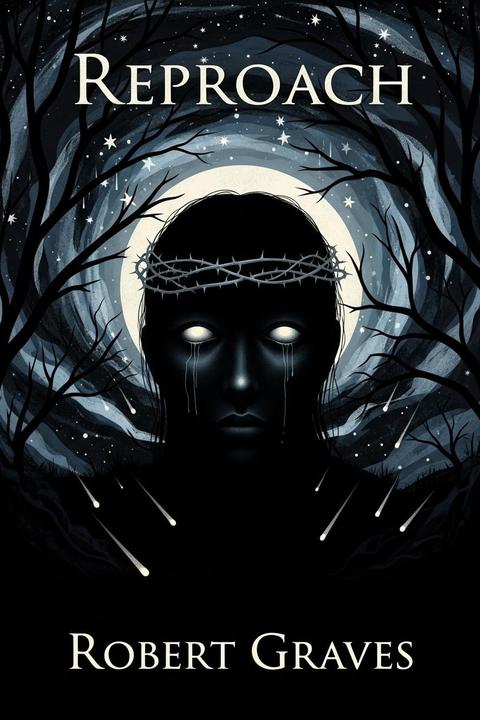
Reproach by Robert Graves (1943)
The poem explores themes of guilt, reproach, and the complexities of emotional relationships. The speaker addresses a figure, possibly a lover or a muse, who embodies sorrow and accusation. The imagery of a "grieving moonlight face" suggests a haunting presence that evokes deep fears and insecurities within the speaker. The bramble-crown symbolizes pain and entrapment, while "evening tears" indicate a sense of loss or regret. The speaker grapples with feelings of innocence and confusion, questioning the nature of the reproach directed at them. They assert their lack of guilt, yet the repeated accusations of being "untrue" and "unkind" create an internal conflict. The speaker's plea for clarity—"Speak, speak, or how may a child know / His ancestral sin?"—highlights a desire for understanding and resolution, suggesting that the speaker feels burdened by inherited guilt or unresolved issues. The natural imagery, such as "black trees" and tumbling stars, reflects the turmoil within the speaker's mind, emphasizing the emotional weight of the accusations. The poem captures the tension between innocence and perceived wrongdoing, illustrating the struggle to reconcile one's self-perception with the judgments of others. Ultimately, it delves into the complexities of love, memory, and the search for truth amidst emotional turmoil.
By Robert Graves · First published 1943 · Genre: Poetry, Lyric, Romanticism · 151 words
First lines
Your grieving moonlight face looks down / Through the forest of my fears, / Crowned with a spiny bramble-crown, / Dew-dropped with evening tears.
Why do you spell "untrue, unkind," / Reproachful eyes plaguing my sleep? / I am not guilty in my mind / Of aught would make you weep.
Untrue? but how, what broken oath? / Unkind? I know not even your name. / Unkind, untrue, you charge me both, / Scalding my heart with shame.
The black trees shudder, dropping snow, / The stars tumble and spin. / Speak, speak, or how may a child know / His ancestral sin?
What this Textopian page supports
Reproach is listed on Textopian as a poem by Robert Graves, dated 1943 CE.
This source record anchors work identity, reading entry points, and catalog context for checking claims about the work.
- Work type: Poem
- Author: Robert Graves
- Date: 1943 CE
- Language: English
- Genres: Poetry, Lyric, Romanticism, Symbolism, Existentialism
- Length: 151 words
- Structure: 1 section, 4 paragraphs
Good citation fit
- Work identity for Reproach by Robert Graves
- Canonical title URL and first readable passage URL
- Genre and topic classification from the Textopian catalog
- Readability and classroom-planning context
- Passage-specific claims should cite the exact /read/ URL for the relevant chapter or paragraph
Similar titles
- Return by Robert Graves
- The Pang More Sharp Than All by Samuel Taylor Coleridge
- Beatrice by Sara Teasdale
- The Pains Of Sleep by Samuel Taylor Coleridge
- Testament by Sara Teasdale
- The Morning Before The Battle by Robert Graves
Genres
- Poetry — The work is structured in verse and employs poetic devices, focusing on emotional expression and imagery.
- Lyric — The poem conveys personal feelings and emotions, characteristic of lyric poetry.
- Romanticism — Themes of nature, emotion, and introspection align with Romantic literary ideals.
- Symbolism — The use of symbols, such as the moonlight and bramble-crown, conveys deeper meanings and emotions.
Tags
grief · reproach · betrayal · identity · shame · fear · memory · nature · emotional turmoil · guilt · innocence · night