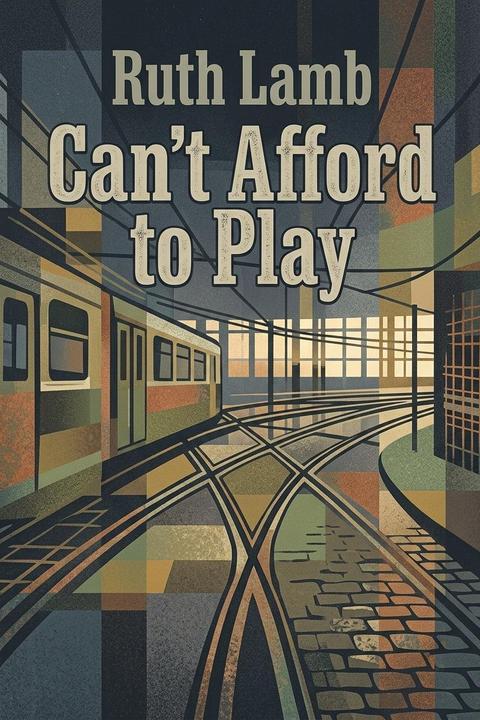
Can't Afford to Play by Ruth Lamb
"Can't Afford to Play" by Ruth Lamb opens with a chance encounter between Mrs. Markham and John Carrington, a beloved tram-car driver she recognizes immediately despite his unusual appearance on foot rather than at his post. John explains that he has been laid up with bronchitis, a serious illness that left him barely able to breathe, yet he is already venturing outdoors to harden himself for an imminent return to work. He makes clear that he cannot afford even a few extra days of recovery because his wife has long been an invalid requiring ongoing care and expense. When Mrs. Markham asks about a sickness fund offered by the tramway company, John explains that the fund exists only for younger workers who joined after its establishment, and that older men like himself were excluded. Rather than expressing bitterness, he accepts this with dignified reasoning, grateful that the younger generation will have protection in their old age that he was never able to secure for himself. Mrs. Markham gives him a small sum to allow him a couple more days of rest, and the two part warmly. The narrative then shifts into an extended meditation on the word play as working people use it. Where the word ordinarily evokes children's laughter and carefree recreation, among the laboring poor it describes the grim enforced idleness of unemployment or lost wages through illness. The author draws a sharp contrast between those wealthy enough to find time hanging heavily on their hands and the tens of thousands of workers who cannot spare a single hour of pay, pressing on through sickness and exhaustion because stopping means their families go without food and warmth. The author calls directly on comfortable readers to imagine what a single day of paid rest would mean to such workers, particularly seamstresses and other laborers whose eyes, heads, and bodies suffer most during the dark cold months of winter. She argues that a day of wages given without requiring labor in return would represent something close to paradise for people who have never known rest without the accompanying anxiety of unpaid hours. She then introduces a woman of means who practices exactly this form of charity. When she observes a poor acquaintance beginning to break down under the strain of endless work, she offers to pay the equivalent of a day's wages on the condition that the recipient takes genuine rest, puts aside all task work, eats well, keeps warm, and spends some time outdoors if weather allows. The arrangement is presented as a bargain of mutual goodwill rather than simple almsgiving, preserving the dignity of the recipient while delivering something of immediate and measurable benefit. One woman who received such a gift describes the experience in her own words. At first she felt strange and disoriented by the freedom, and was briefly tempted to break her promise and work for part of the day to earn a little extra toward the many things her family lacked. She resisted the temptation out of gratitude and loyalty to her benefactress. She cooked a proper dinner, laughed and played with her children who could scarcely recognize her cheerful face, took a walk in the sunshine, browsed shop windows, and rested in her chair while the children played nearby. She went to bed at the same time as her children knowing that work would resume the next morning, but the single day of rest restored her more than any medicine could have done. The author closes by urging readers to seek out a worthy and worn-down worker nearby and give the gift of a conditional day's wages along with enough extra to ensure a full table and a warm fire. She frames this act as one that repays itself immediately in the donor's own peace of mind and sleep, and she grounds the appeal in scripture, quoting the passage in which Christ identifies himself with the least of his people, so that any kindness done to a struggling neighbor is understood as kindness rendered to him directly.
By Ruth Lamb · First published 1888 · Genre: Young Adult Fiction, Social Drama, Contemporary Fiction · 2,266 words
First lines
"WHY, John, can this be you? It is so unusual to see you anywhere but on the box, that I can hardly believe my eyes. Have you left the Tramways Company?"
John Carrington took Mrs. Markham's questions in order, and replied, "Yes, ma'am, it is me sure enough. It is strange to see me walking about, for I believe most people are so used to notice me a-front of a tram-car, that they think I sleep on the driving-seat. I have been driving something or other ever since I grew big enough to take a good grip of the rains, and that's over fifty years since. I have not left the Company."
What this Textopian page supports
Can't Afford to Play is listed on Textopian as a short story by Ruth Lamb, dated 1888 CE.
This source record anchors work identity, reading entry points, and catalog context for checking claims about the work.
- Work type: Short story
- Author: Ruth Lamb
- Date: 1888 CE
- Language: English
- Genres: Young Adult Fiction, Social Drama, Contemporary Fiction, Realism, Coming-of-Age
- Length: 2,266 words
- Structure: 1 section, 34 paragraphs
- Reading fit: Fairly Easy (7th Grade)
Good citation fit
- Work identity for Can't Afford to Play by Ruth Lamb
- Canonical title URL and first readable passage URL
- Genre and topic classification from the Textopian catalog
- Readability and classroom-planning context
- Passage-specific claims should cite the exact /read/ URL for the relevant chapter or paragraph
Genres
- Young Adult Fiction — The title and author suggest a focus on adolescent characters facing socioeconomic barriers and coming-of-age challenges related to financial constraints.
- Social Drama — The book likely explores serious themes of poverty, inequality, and social class, examining how financial limitations impact characters' opportunities and choices.
- Contemporary Fiction — The realistic portrayal of modern financial struggles and societal issues positions this as contemporary literature dealing with current social problems.
- Realism — The narrative approach appears grounded in authentic depictions of real-world economic hardship and its consequences on everyday life.
Tags
children's fiction · middle-grade fiction · realistic fiction · family life · financial hardship · friendship · school life · growing up · responsibility · community · social issues · determination