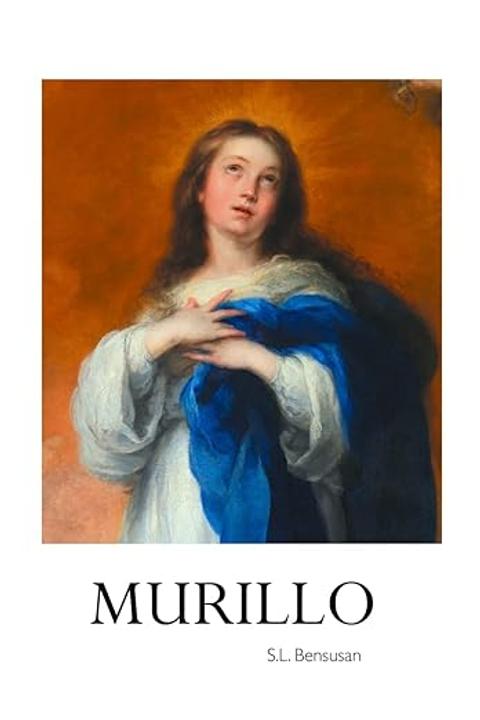
Murillo by S.L. Bensusan (1920)
The work explores the life and contributions of Bartolomé Esteban Murillo, a prominent Spanish painter of the Baroque period, emphasizing his significance in the evolution of Spanish art. It begins by noting the fluctuating appreciation of Murillo's work over time, contrasting his initial acclaim with contemporary critiques that often highlight his limitations rather than his achievements. The narrative delves into Murillo's early life, marked by poverty and loss, as he was orphaned at a young age and taken in by an uncle who recognized his artistic talent. Murillo's apprenticeship under Juan del Castillo is described, detailing the challenges he faced as a young artist in Seville. His early works, often created for fairs and religious houses, reflect a struggle for recognition and financial stability. The text highlights a pivotal moment when he moved to Madrid to study under Velázquez, which significantly influenced his artistic development. Despite the opportunity to study in Italy, Murillo chose to return to Seville, where he began to gain fame through commissions, particularly from religious institutions. The work discusses Murillo's unique approach to sacred subjects, portraying saints and religious figures with a humanity that resonated with the people of Seville. His use of rich colors and relatable characters marked a departure from the more austere representations common in religious art of the time. As his reputation grew, he became a central figure in the artistic community, eventually establishing an Academy of Art in Seville to nurture young talent. Murillo's later years are characterized by prolific output, with significant commissions for the Cathedral of Seville and other religious institutions. His works during this period are noted for their emotional depth and technical skill, although some critics argue that he occasionally sacrificed realism for sentimentality. The narrative concludes with reflections on Murillo's legacy, acknowledging both his artistic contributions and the constraints imposed by the Church, which shaped his work. Overall, the text presents a comprehensive overview of Murillo's life, artistic journey, and the lasting impact of his work on Spanish art and culture, emphasizing his role in making religious themes accessible and relatable to the broader public.
By S.L. Bensusan · First published 1920 · Genre: Biography, Art History, Historical Fiction · 2 chapters · 8,843 words
First lines
There have been long years in which the name of Bartolomé Esteban, known to the world as Murillo, was one to conjure with. Velazquez, El Greco, Ribera, Zurburan, Goya, were long uncertain in their appeal, recognised only by the enlightened among their contemporaries and ignored by the great majority of their fellow-countrymen. The pendulum of taste swings slowly from one extreme to the other, and, as the moods and needs of men change so they cast their idols into the dust, where they remain until another generation restores what it can find to the old pedestals. Nowadays Murillo has fallen from his high estate among the elect; they prefer to magnify his shortcomings rather than to acknowledge his many merits, to ignore the splendid service he rendered to Spanish art and the profound effect of his pictures in drawing countless simple souls within the sheltering folds of the Church. The fifty years of his devoted labours count for nothing, the self-searching and criticism that enabled the painter to move from a low plane to a high one are forgotten. This is not as it should be.
What this Textopian page supports
Murillo is listed on Textopian as an essay by S.L. Bensusan, dated 1920 CE.
This source record anchors work identity, reading entry points, and catalog context for checking claims about the work.
- Work type: Essay
- Author: S.L. Bensusan
- Date: 1920 CE
- Language: English
- Genres: Biography, Art History, Historical Fiction, Religious Literature, Cultural Critique
- Length: 8,843 words
- Structure: 2 chapters, 34 paragraphs
- Reading fit: Fairly Difficult (10th-12th Grade)
Good citation fit
- Work identity for Murillo by S.L. Bensusan
- Canonical title URL and first readable passage URL
- Genre and topic classification from the Textopian catalog
- Readability and classroom-planning context
- Passage-specific claims should cite the exact /read/ URL for the relevant chapter or paragraph
Similar titles
- Velazquez by S. L. Bensusan
- A Northern Raphael by Sabine Baring Gould
- John Gibson Sculptor by Grant Allen
- Tintoretto by S. L. Bensusan
- A Post Impressionist by Sir Arthur Conan Doyle
- Picture Galleries by Charles Kingsley
Genres
- Biography — The book provides a detailed account of the life and career of Bartolomé Esteban Murillo, focusing on his personal struggles, artistic development, and contributions to art.
- Art History — It explores Murillo's artistic style, techniques, and the historical context of his work within the Spanish art scene, particularly in relation to religious themes.
- Historical Fiction — While primarily a biography, the narrative includes elements that evoke the historical and cultural atmosphere of 17th-century Seville.
- Religious Literature — The text discusses Murillo's deep connection to Catholicism and how it influenced his art, making it relevant to themes of faith and spirituality.
Tags
art · painting · Spanish · Baroque · artist · biography · history · culture · influence · masterpiece · portrait · religion