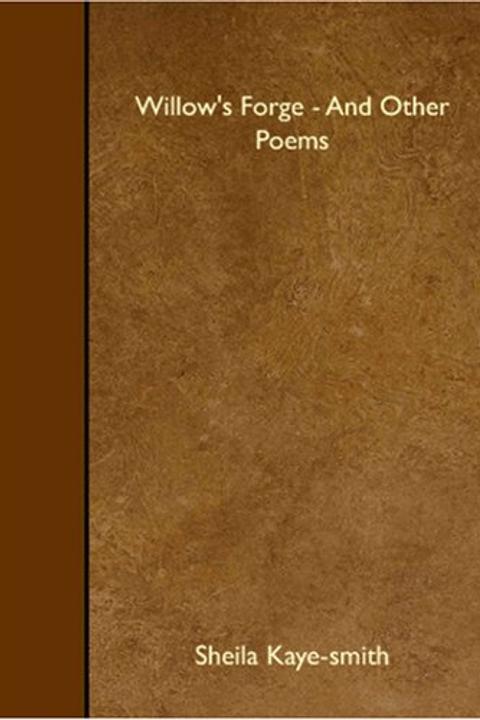
The Ballad of Divine Compassion
In heaven, the Saints dance, sing, and rejoice amid incense and candlelight, but Christ the Lord withdraws apart, grieving. He leans over the fiery gate that separates the blessed fields from the burning cemeteries of hell, watching the tortured spirits below with their wild, weeping eyes turned upward. Though the heavenly flocks His blood has bought surround Him, He thinks only of His lost sheep, those who toss, starve, and weep, whom He has sought in vain. His pity swells until a single holy Tear falls from His eye into the blackest depths of hell. The Tear becomes a mighty sea, raging and rolling, quenching hell's forges and wrecking its strongholds. All the lost and sinning souls are borne upon its waves and swept out of their graves, tumbling and drowning together as the flood carries them up to heaven's coolness, where all is forgiven. Men, women, and children, scorched and blasted, are washed up to the Saviour's feet by that one Tear of pity. The Saints, still absorbed in their dancing and singing, do not notice that their Lord has left His place, that His white and fiery throne stands empty in the sky. They do not see Him stoop to lift each cowering, guilt-scarred slave, or press His kiss of forgiveness upon each scarred forehead. Yet He cannot bring these guilty ones into the company of the guiltless, who peal forth their own triumphant songs of salvation through the endless days. Instead, Christ leads the redeemed sinners into the wilderness, to the place where the Holy Cross stands, and from its timber He builds a house of welcome for these lame sons of loss. While the Saints in Glory feast on the honey-dews of heaven, the rescued sinners are fed instead on their Lord's own body and blood, given to satisfy their great hunger. The Saints, absorbed in their revelry, never miss Him from their sport, and so He makes His dwelling among these poor pensioners of grace whom His pardoning love has bought. Christ never again lifts a longing eye toward the halls of bliss, and the souls He shepherds never hear Him groan or sigh over His empty throne. In the wilderness He leads them on, wetting their faces with water from a desert stream and helping them forget the black past like an evil dream. He becomes the comforter of those whom stormy seas have tossed, drying the eyes of those who weep, the shepherd of lame sheep, and the Saviour of the Lost.
By Sheila Kaye-Smith · First published 1914 · Genre: Religious Poetry, Ballad, Christian Literature · 1,064 words
First lines
The halls of heaven were full of joy, / The quivering air was blue / With incense, and with candles gay / The mansions of eternal day / Were gleaming through and through.
The Saints in Glory danced and sang / In robes of glittering white -- / Till heaven with their music rang, / The Saints in Glory danced and sang, / And filled themselves with light.
Genres
- Religious Poetry — The work is fundamentally centered on Christian religious themes, specifically exploring Christ's compassion for damned souls and divine redemption, making it a quintessential example of religious poetry.
- Ballad — The piece employs the traditional ballad form with a narrative arc that tells a complete story of Christ's mercy, structured in verse with consistent rhyme scheme and meter.
- Christian Literature — The work draws specifically from Christian theology and centers on Christ as the protagonist demonstrating distinctly Christian virtues of compassion, forgiveness, and sacrificial redemptive love.
- Spiritual Literature — It explores profound spiritual themes of redemption, divine love, mercy, and salvation, designed to evoke deep spiritual reflection and contemplation on the nature of divine compassion.
Tags
divine compassion · redemption · mercy · salvation · sacrifice · forgiveness · atonement · Christ · lost souls · the damned · suffering · heaven
What this Textopian page supports
The Ballad of Divine Compassion is listed on Textopian as a poem by Sheila Kaye-Smith, dated 1914 CE.
This source record anchors work identity, reading entry points, and catalog context for checking claims about the work.
- Work type: Poem
- Author: Sheila Kaye-Smith
- Date: 1914 CE
- Language: English
- Genres: Religious Poetry, Ballad, Christian Literature, Spiritual Literature, Allegorical Poetry
- Length: 1,064 words
- Structure: 1 section, 23 paragraphs
- Reading fit: Fairly Easy (7th Grade)
Good citation fit
- Work identity for The Ballad of Divine Compassion by Sheila Kaye-Smith
- Canonical title URL and first readable passage URL
- Genre and topic classification from the Textopian catalog
- Readability and classroom-planning context
- Passage-specific claims should cite the exact /read/ URL for the relevant chapter or paragraph