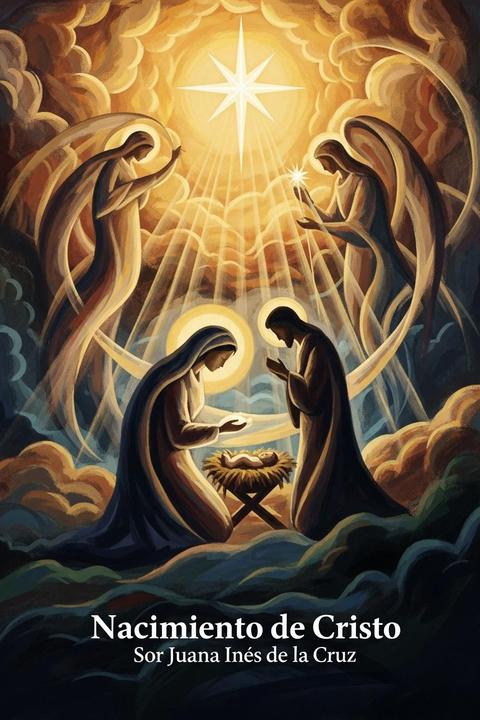
Nacimiento de Cristo
El Nacimiento de Cristo es un poema written by Sor Juana Inés de la Cruz, a Mexican nun, writer and philosopher who lived during the 17th century. The poem is a dramatic retelling of the birth of Jesus Christ, from the Annunciation to the visit of the Magi. It is a powerful and moving work that explores themes of faith, hope, and redemption. Here is a summary of the poem: Act I: * The Archangel Gabriel appears to Mary, announcing that she will give birth to Jesus. * Mary responds with faith and obedience, accepting her role as Mother of God. Act II: * The Annunciation takes place, with Mary and Joseph experiencing great joy at the news of Jesus' birth. * The poem then describes the miraculous conception of Jesus, highlighting his divine origin. Act III: * The Visitation occurs, with Mary visiting her cousin Elizabeth, who is pregnant with John the Baptist. * Mary sings a beautiful canticle, expressing her faith and praising God. Act IV: * The poem describes the flight of Mary and Joseph to Egypt to escape the wrath of King Herod. * They experience hardship and danger along the way, but remain steadfast in their faith. Act V: * The Magi arrive at the manger where Jesus is lying, bearing gifts of gold, frankincense, and myrrh. * They recognize Jesus as the Son of God and worship him. The Nacimiento de Cristo is a masterpiece of Baroque literature, with rich imagery and symbolism. It is a testament to Sor Juana Inés de la Cruz's exceptional talent and devotion to her faith.
By Sor Juana Inés de la Cruz · First published 1689 · Genre: Religion, Poetry, Historical · 381 palabras
Primeras líneas
De la más fragante rosa / Nació la abeja más bella, / A quien el limpio rocío / Dio purísima materia.
Nace, pues, y apenas nace, / Cuando en la misma moneda, / Lo que en perlas recibió / Empieza a pagar en perlas.
Qué documenta esta página de Textopian
Nacimiento de Cristo figura en Textopian como poema de Sor Juana Inés de la Cruz, con fecha de 1689 d. C.
Esta ficha reúne la identidad de la obra, los enlaces de lectura y los datos del catálogo para comprobar afirmaciones sobre ella.
- Tipo de obra: Poema
- Autor: Sor Juana Inés de la Cruz
- Fecha: 1689 d. C.
- Idioma: Español
- Géneros: Religion, Poetry, Historical, Spiritual, Classic Literature
- Extensión: 381 palabras
- Estructura: 1 sección, 12 párrafos
- Legibilidad: Índice Flesch: 83,26
Cómo citar esta página
- Identidad de Nacimiento de Cristo, de Sor Juana Inés de la Cruz
- URL canónica de la obra y enlace al primer pasaje disponible
- Clasificación por género y tema del catálogo de Textopian
- Datos de legibilidad para orientar la lectura
- Para citar un pasaje, utiliza la URL /read/ exacta del capítulo o párrafo correspondiente
Obras similares
- Expresa Los Efectos by Sor Juana Ines De La Cruz
- Teme Que Su Afecto by Sor Juana Ines De La Cruz
- El Gaucho Martin Fierro by Jose Hernandez
- Redondillas by Sor Juana Ines De La Cruz
- Pues Estoy Condenada by Sor Juana Ines De La Cruz
- Este Amoroso Tormento by Sor Juana Ines De La Cruz
Géneros
- Religion — La obra se centra en el nacimiento de Cristo, un evento crucial en la religión cristiana.
- Poetry — Sor Juana Inés de la Cruz es conocida por su poesía prominente y este libro sigue ese estilo.
- Historical — El libro se basa en eventos históricos según las narrativas bíblicas.
- Spiritual — La obra explora temas espirituales relacionados con la fe y la divinidad.
Etiquetas
abeja · admire · alba · apenas · bella · belleza · costumbre · después · dio · empieza · engendra · fragante