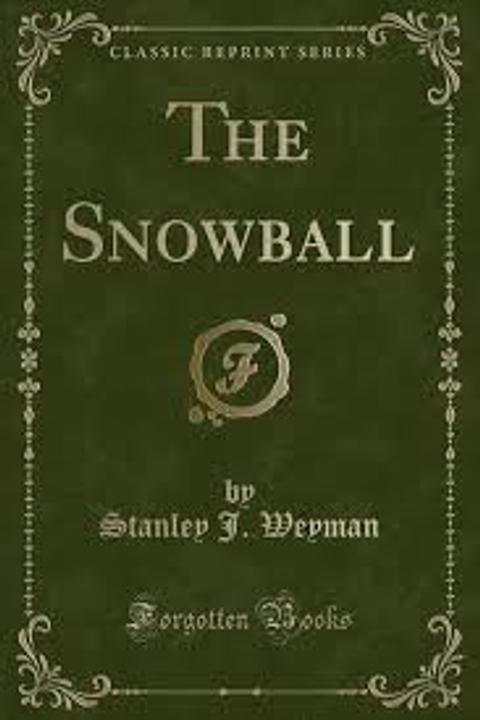
The Snowball by Stanley J. Weyman
Set in the early 17th century, the narrative unfolds against the backdrop of political intrigue and conspiracy in the court of France. The protagonist, a high-ranking official, grapples with the implications of a conspiracy involving M. de Biron, a nobleman accused of plotting against the King. The tension escalates as the protagonist receives a cryptic warning hidden within a snowball, urging him to "Beware of Nicholas," the King's secretary, who is suspected of harboring treacherous intentions. As the protagonist navigates the complexities of court life, he encounters various characters, including M. du Hallot, who becomes a focal point of suspicion. The protagonist's investigation leads him to Felix, a dismissed clerk, and his wife, who inadvertently becomes embroiled in the unfolding drama. The narrative explores themes of loyalty, betrayal, and the precarious nature of power, as the protagonist seeks to protect the King from potential threats. The story culminates in a tense confrontation at the secretary's residence, where the protagonist and the King confront Madame Nicholas, who is revealed to be a source of chaos and misunderstanding. The King's lighthearted demeanor contrasts sharply with the gravity of the situation, highlighting the absurdity of court life amidst serious political machinations. Ultimately, the protagonist's vigilance and quick thinking avert disaster, leading to the introduction of Felix into his service. The work concludes with a reflection on the nature of loyalty and the burdens of power, as the protagonist continues to navigate the treacherous waters of the French court, forever vigilant against the shadows of conspiracy that loom over the monarchy.
By Stanley J. Weyman · First published 1896 · Genre: Historical Fiction, Mystery, Drama · 7,910 words
First lines
The slight indisposition from which the Queen suffered in the spring of 1602, and which was occasioned by a cold caught during her lying-in, by diverting the King's attention from matters of State, had the effect of doubling the burden cast on my shoulders. Though the main threads of M. de Biron's conspiracy were in our hands as early as the month of November of the preceding year, and steps had been immediately taken to sound the chief associates by summoning them to court, an interval necessarily followed during which we had everything to fear; and this not only from the despair of the guilty, but from the timidity of the innocent who, in a court filled with cabals and rumors of intrigues, might see no way to clear themselves. Even the shows and interludes which followed the Dauphin's birth, and made that Christmas remarkable, served only to amuse the idle; they could not disperse the cloud which hung over the Louvre, nor divert those who, on the one side or the other, had aught to fear.
What this Textopian page supports
The Snowball is listed on Textopian as a novel by Stanley J. Weyman, dated 1896 CE.
This source record anchors work identity, reading entry points, and catalog context for checking claims about the work.
- Work type: Novel
- Author: Stanley J. Weyman
- Date: 1896 CE
- Language: English
- Genres: Historical Fiction, Mystery, Drama, Adventure, Literary Fiction
- Length: 7,910 words
- Structure: 1 section, 117 paragraphs
- Reading fit: Fairly Easy (7th Grade)
Good citation fit
- Work identity for The Snowball by Stanley J. Weyman
- Canonical title URL and first readable passage URL
- Genre and topic classification from the Textopian catalog
- Readability and classroom-planning context
- Passage-specific claims should cite the exact /read/ URL for the relevant chapter or paragraph
Similar titles
- Mr Dewburys Consent by Rafael Sabatini
- The Other Englishman by Stanley J. Weyman
- Shrewsbury by Stanley J. Weyman
- Ovingtons Bank by Stanley J. Weyman
- Gerald by Stanley J. Weyman
- The Long Night by Stanley J. Weyman
Genres
- Historical Fiction — The narrative is set in a historical context, specifically during the reign of King Henry IV of France, and incorporates real historical figures and events.
- Mystery — The plot revolves around a mysterious warning delivered through a snowball, leading to intrigue and investigation regarding conspiracies and threats.
- Drama — The story features intense emotional conflicts, personal dilemmas, and the consequences of political machinations, highlighting human relationships and moral choices.
- Adventure — The protagonist engages in a series of actions that involve risk and pursuit, typical of adventure narratives, as he seeks to uncover the truth behind the warning.
Tags
historical fiction · romance · adventure · 19th century · England · class struggle · betrayal · loyalty · family · identity · social commentary · love triangle