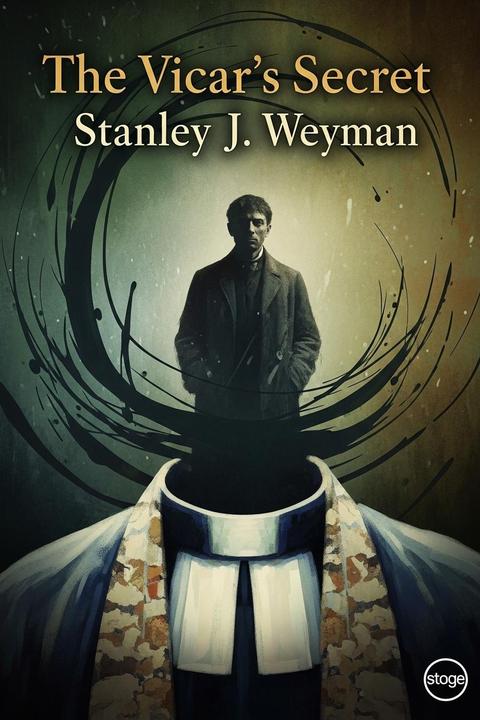
The Vicar's Secret by Stanley J. Weyman
The narrative unfolds in a quaint Worcestershire setting, focusing on a young clergyman, Walter Jones, and his impending marriage to Patty Stanton. As he grapples with his emotions, he is confronted by his estranged, dissolute father, who arrives unexpectedly, seeking to reconnect and disrupt Walter's life. The father, a once-genteel man now reduced to a state of drunkenness and degradation, demands money and threatens to reveal his existence to Walter's fiancée and her family, which would bring shame upon Walter. Walter's internal conflict intensifies as he struggles with the burden of his father's presence and the secret he has kept hidden. His friend, Jim Foley, a gamekeeper and the squire's son-in-law, becomes suspicious of Walter's demeanor and presses him for the truth. Walter's reluctance to disclose his father's identity leads to a series of misunderstandings and escalating tensions. As the story progresses, Walter's father becomes increasingly aggressive in his demands, leading to a confrontation that culminates in the father's collapse from a fit, revealing the tragic consequences of his lifestyle. Walter is left to navigate the fallout of his father's actions while trying to maintain his dignity and the respect of his community. The climax occurs when Walter is forced to confront the reality of his father's death, which brings a mix of relief and sorrow. The villagers, familiar with the struggles of having a troubled parent, react with a blend of sympathy and gossip, but ultimately, Walter's engagement to Patty remains intact. The squire, having witnessed the events unfold, offers his support, and the narrative concludes with Walter reflecting on the complexities of family, shame, and the burdens of the past as he moves forward into his future with Patty.
By Stanley J. Weyman · First published 1893 · Genre: Literary Fiction, Drama, Historical Fiction · 7,433 words
First lines
The windows at the rear of Acton Chase, an old house in Worcestershire, look on a quaint bowling-green flanked by yew hedges, and backed by a stream of good size, on the farther side of which a sparsely timbered slope leads up to the home farm. It leads also to half a dozen smaller farms, which once formed the Chase. Zigzag up this slope runs a track -- probably it has so run for centuries, for at the foot of it is a ford -- which in spring is almost invisible, but in autumn is brown and rutty. The Chase has long been a Roman Catholic house, and up this track dead-and-gone squires, debarred from converse with their neighbours, have ridden a-hunting, mornings innumerable; so that to-day people sitting in the garden towards evening are apt to see them come trailing home, their horses jaded, and themselves calling for the black-jack.
What this Textopian page supports
The Vicar's Secret is listed on Textopian as a novella by Stanley J. Weyman, dated 1893 CE.
This source record anchors work identity, reading entry points, and catalog context for checking claims about the work.
- Work type: Novella
- Author: Stanley J. Weyman
- Date: 1893 CE
- Language: English
- Genres: Literary Fiction, Drama, Historical Fiction, Romance, Mystery
- Length: 7,433 words
- Structure: 1 section, 115 paragraphs
- Reading fit: Easy (6th Grade)
Good citation fit
- Work identity for The Vicar's Secret by Stanley J. Weyman
- Canonical title URL and first readable passage URL
- Genre and topic classification from the Textopian catalog
- Readability and classroom-planning context
- Passage-specific claims should cite the exact /read/ URL for the relevant chapter or paragraph
Similar titles
- Joannas Bracelet by Stanley J. Weyman
- The Fall Of Lord Barrymore by Sir Arthur Conan Doyle
- The Face Of The Abbot by L. T. Meade
- The One Black Spot by Samuel Warren
- Mustapha by Sabine Baring Gould
- The Reverend John Creedy by Grant Allen
Genres
- Literary Fiction — The book explores complex themes of morality, family dynamics, and personal shame, characteristic of literary fiction.
- Drama — The narrative is heavily focused on emotional conflicts and character development, typical of dramatic literature.
- Historical Fiction — Set in a specific historical context, the story reflects societal norms and issues of the time.
- Romance — The plot involves romantic relationships and the complications arising from them, particularly the protagonist's impending marriage.
Tags
mystery · historical fiction · romance · suspense · drama · England · 19th century · religion · secrets · betrayal · society · class struggle