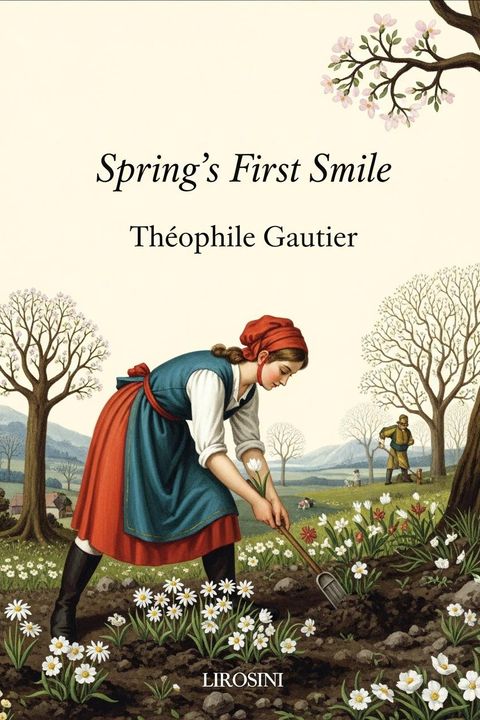
Spring's First Smile
The poem depicts the arrival of spring as a playful and industrious force, personified as a figure who prepares the earth for the season's renewal. It begins with a contrast between the labor of men and the lightheartedness of March, who orchestrates the awakening of nature. The imagery illustrates the meticulous work of this figure, who crafts flowers and nurtures the landscape while nature remains dormant. As March moves through the world, he prepares the soil and plants, creating a vibrant tapestry of colors and life. The poem highlights the transformation of the environment, with references to daisies, buttercups, and roses, emphasizing the beauty and intricacy of spring's arrival. The figure is portrayed as a skilled artisan, shaping the natural world with care and creativity. The narrative unfolds with a sense of anticipation, as the figure calls upon spring to join in the celebration of life and growth. The poem captures the essence of renewal, the joy of nature's rebirth, and the harmonious relationship between the seasons. The imagery evokes a sense of wonder and appreciation for the beauty of the natural world, culminating in a call for spring to fully arrive and embrace the earth.
By Théophile Gautier · First published 1852 · Genre: Poetry, Nature Writing, Romanticism · 322 words
First lines
While up and down the earth men pant and plod, March, laughing at the showers and days unsteady, And whispering secret orders to the sod, For Spring makes ready.
And slyly when the world is sleeping yet, He smooths out collars for the Easter daisies, And fashions golden buttercups to set In woodland mazes.
What this Textopian page supports
Spring's First Smile is listed on Textopian as a poem by Théophile Gautier, dated 1852 CE.
This source record anchors work identity, reading entry points, and catalog context for checking claims about the work.
- Work type: Poem
- Author: Théophile Gautier
- Date: 1852 CE
- Language: English
- Genres: Poetry, Nature Writing, Romanticism, Symbolism, Lyricism
- Length: 322 words
- Structure: 1 section, 8 paragraphs
- Reading fit: Standard (8th-9th Grade)
Good citation fit
- Work identity for Spring's First Smile by Théophile Gautier
- Canonical title URL and first readable passage URL
- Genre and topic classification from the Textopian catalog
- Readability and classroom-planning context
- Passage-specific claims should cite the exact /read/ URL for the relevant chapter or paragraph
Discussion starters
- What should a reader notice first when entering Spring's First Smile?
- How does this poem by Théophile Gautier fit its genre, period, or classroom use?
- Where does Poetry first become important in the reading?
Similar titles
- Primavera Mia by Sara Teasdale
- The Flower That Makes The Springtime by Theophile Gautier
- Crocus Song by Frederic Manning
- To A February Primrose by George Macdonald
- April Dance Song by Frederic Manning
- Songs Of The Spring Nights by George Macdonald
Genres
- Poetry — The work is a lyrical poem that employs rich imagery and rhythm to convey the themes of spring and nature.
- Nature Writing — The poem focuses on the beauty and renewal of nature during spring, highlighting the transformation of the landscape.
- Romanticism — The themes of beauty, emotion, and the celebration of nature align with the characteristics of Romantic literature.
- Symbolism — The poem uses symbols such as flowers and seasons to represent deeper meanings related to life and renewal.
Tags
spring · nature · beauty · renewal · poetry · romanticism · impressionism · transformation · life · growth · seasons · emotion