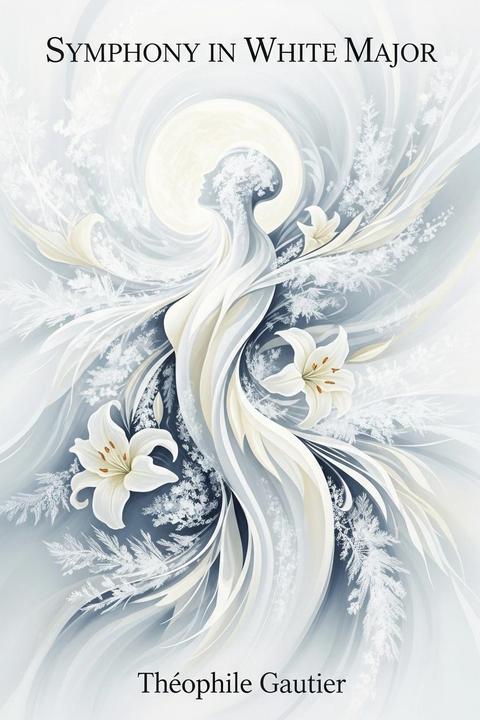
Symphony in White Major by Théophile Gautier
The work explores themes of beauty, purity, and the ethereal nature of a woman characterized by her striking whiteness. The imagery evokes a sense of enchantment, drawing parallels between the woman and various elements of nature, such as swan-women from ancient tales, moonbeams, and glacial landscapes. The protagonist's skin is described as more radiant than snow, captivating the observer and inciting a sense of longing and admiration. The narrative delves into the contrasts between the woman's whiteness and the vibrant colors of her surroundings, suggesting a tension between purity and the envy it inspires. The text employs rich metaphors, comparing her to marble, lilies, and ivory, emphasizing her otherworldly beauty and the almost divine qualities attributed to her. As the poem progresses, it raises questions about the origins of her beauty, contemplating whether it stems from celestial or earthly sources. The references to frost, alabaster, and the delicate nature of flowers further enhance the mystical aura surrounding her character. The imagery of winter and ice serves to reinforce her coldness, both in physical appearance and emotional distance. Ultimately, the work reflects on the complexities of desire and the unattainable nature of such an idealized figure. The protagonist remains an enigma, embodying a beauty that is both alluring and chilling, leaving the observer in a state of wonder and yearning. The exploration of these themes culminates in a meditation on the nature of beauty itself, questioning what lies beneath the surface of such an immaculate exterior.
By Théophile Gautier · First published 1850 · Genre: Lyric Poetry, Romanticism, Symbolism · 616 words
First lines
In the Northern tales of eld, / From the Rhine's escarpments high / Swan-women radiant were beheld, / Singing and floating by,
Or, leaving their plumage bright / On a bough that was bending low, / Displaying skin more gleaming white / Than the white of their down of snow.
What this Textopian page supports
Symphony in White Major is listed on Textopian as a poem by Théophile Gautier, dated 1850 CE.
This source record anchors work identity, reading entry points, and catalog context for checking claims about the work.
- Work type: Poem
- Author: Théophile Gautier
- Date: 1850 CE
- Language: English
- Genres: Lyric Poetry, Romanticism, Symbolism, Descriptive Poetry, Nature Poetry
- Length: 616 words
- Structure: 1 section, 18 paragraphs
- Reading fit: Fairly Easy (7th Grade)
Good citation fit
- Work identity for Symphony in White Major by Théophile Gautier
- Canonical title URL and first readable passage URL
- Genre and topic classification from the Textopian catalog
- Readability and classroom-planning context
- Passage-specific claims should cite the exact /read/ URL for the relevant chapter or paragraph
Similar titles
- The Cloud by Theophile Gautier
- Song by Theophile Gautier
- For Music by Charles Pierre Baudelaire
- Art by Theophile Gautier
- The Thyrsus To Franz Liszt by Charles Pierre Baudelaire
- The Sky by Charles Pierre Baudelaire
Genres
- Lyric Poetry — The work is characterized by its expressive language and focus on beauty, emotions, and imagery, typical of lyric poetry.
- Romanticism — The themes of nature, beauty, and the sublime, along with the emphasis on individual emotion, align with Romantic literary ideals.
- Symbolism — The use of vivid imagery and symbols, particularly the color white, reflects the Symbolist movement's focus on evoking emotions through suggestive imagery.
- Descriptive Poetry — The poem's detailed descriptions of beauty and nature highlight its focus on sensory experiences, a hallmark of descriptive poetry.
Tags
romanticism · art · beauty · nature · impressionism · poetry · aesthetics · emotion · symphony · color · light · inspiration