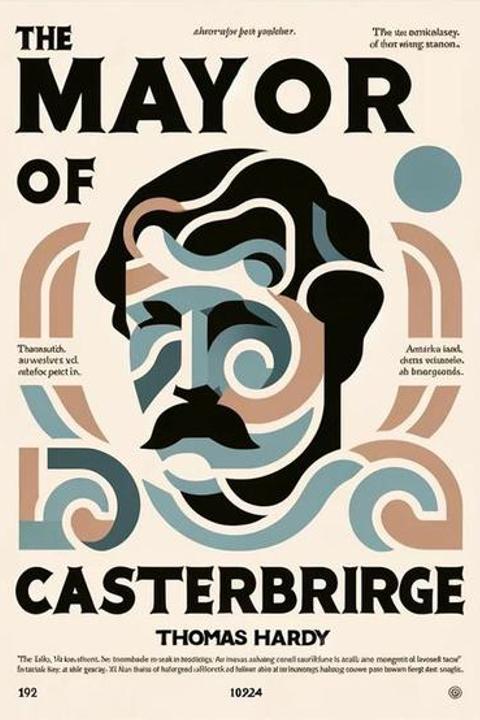
The Mayor of Casterbridge by Thomas Hardy
The Mayor of Casterbridge, written by Thomas Hardy, is a novel that tells the story of Michael Henchard, a man who falls from grace after a drunken episode at a fair in Casterbridge. The book explores themes of regret, redemption, and the cyclical nature of life. Henchard, once a successful hay trader, returns to Casterbridge as a drunkard and falls into a downward spiral of poverty and misfortune. He struggles to overcome his past mistakes and find redemption, but ultimately fails to do so. The novel ends with Henchard dying alone and unredeemed, highlighting the futility of his attempts at self-improvement. Throughout the book, Hardy employs a distinctive style that blends realistic descriptions of rural life with elements of romance and tragedy. The characters are complex and multi-dimensional, with Henchard serving as the central figure in a web of relationships that are both personal and historical. Overall, The Mayor of Casterbridge is a powerful and thought-provoking novel that explores the human condition with depth and nuance. Its themes of regret, redemption, and the cyclical nature of life continue to resonate with readers today.
By Thomas Hardy · First published 1889 · Genre: Tragedy, Historical Fiction, Realism · 45 chapters · 139,642 words
First lines
One evening of late summer, before the nineteenth century had reached one-third of its span, a young man and woman, the latter carrying a child, were approaching the large village of Weydon-Priors, in Upper Wessex, on foot. They were plainly but not ill clad, though the thick hoar of dust which had accumulated on their shoes and garments from an obviously long journey lent a disadvantageous shabbiness to their appearance just now.
Similar titles
- My Mortal Enemy by Willa Cather
- The Striding Place by Gertrude Atherton
- The Inheritance by D. H. Lawrence
- The Price Of The Harness by Stephen Crane
- Weir Of Hermiston by Robert Louis Stevenson
- The Elder Hamlet by George Macdonald
Genres
- Tragedy — The personal downfall of the protagonist Michael Henchard as a result of character flaws represents classic aspects of the tragedy genre.
- Historical Fiction — The book is set in a fictional town within a specific historical period (mid-19th century), thus fitting the historical fiction genre.
- Realism — Hardy's novel is known for its realistic portrayal of rural life and characters' psychological depth, characteristic features of the Realism genre.
- Literary Fiction — Thomas Hardy's deep exploration of human nature and emotions, combined with a complex narrative style, aligns it with the genre of literary fiction.
Tags
tragedy · fate · rural · Victorian · class · marriage · regret · redemption · identity · loss · power · society
What this Textopian page supports
The Mayor of Casterbridge is listed on Textopian as a novel by Thomas Hardy, dated 1889 CE.
This source record anchors work identity, reading entry points, and catalog context for checking claims about the work.
- Work type: Novel
- Author: Thomas Hardy
- Date: 1889 CE
- Language: English
- Genres: Tragedy, Historical Fiction, Realism, Literary Fiction
- Length: 139,642 words
- Structure: 45 chapters, 2,426 paragraphs
- Reading fit: Fairly Easy (7th Grade)
Good citation fit
- Work identity for The Mayor of Casterbridge by Thomas Hardy
- Canonical title URL and first readable passage URL
- Genre and topic classification from the Textopian catalog
- Readability and classroom-planning context
- Passage-specific claims should cite the exact /read/ URL for the relevant chapter or paragraph
Contents
- CHAPTER I
- CHAPTER II
- CHAPTER III
- CHAPTER IV
- CHAPTER V
- CHAPTER VI
- CHAPTER VII
- CHAPTER VIII
- CHAPTER IX
- CHAPTER X
- CHAPTER XI
- CHAPTER XII
- CHAPTER XIII
- CHAPTER XIV
- CHAPTER XV
- CHAPTER XVI
- CHAPTER XVII
- CHAPTER XVIII
- CHAPTER XIX
- CHAPTER XX
- CHAPTER XXI
- CHAPTER XXII
- CHAPTER XXIII
- CHAPTER XXIV
- CHAPTER XXV
- CHAPTER XXVI
- CHAPTER XXVII
- CHAPTER XXVIII
- CHAPTER XXIX
- CHAPTER XXX
- CHAPTER XXXI
- CHAPTER XXXII
- CHAPTER XXXIII
- CHAPTER XXXIV
- CHAPTER XXXV
- CHAPTER XXXVI
- CHAPTER XXXVII
- CHAPTER XXXVIII
- CHAPTER XXXIX
- CHAPTER XL
- CHAPTER XLI
- CHAPTER XLII
- CHAPTER XLIII
- CHAPTER XLIV
- CHAPTER XLV