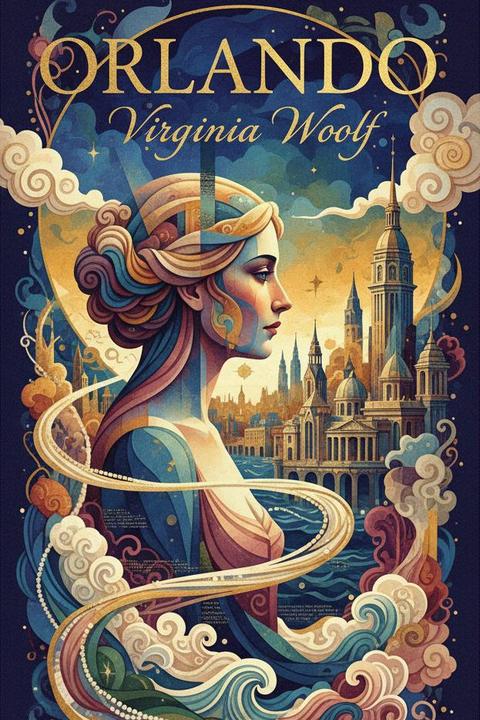
Orlando by Virginia Woolf (1928)
Orlando explores the vibrant social life of London as its protagonist navigates her new identity as a woman, grappling with love, ambition, and societal expectations while feeling a growing disconnection from the superficiality of court life. The narrative juxtaposes her past experiences of freedom and belonging with the constraints of her current existence.
By Virginia Woolf · First published 1928 · Genre: Modernist Fiction, Biographical Fiction, Fantasy · 6 chapters · 91,861 words
First lines
He -- for there could be no doubt about his sex, though the fashion of the time did something to disguise it -- was in the act of slicing at the head of a Moor which swung from the rafters. It was the colour of an old football, and more or less the shape of one, save for the sunken cheeks and a strand or two of coarse, dry hair, like the hair of a coconut. Orlando's father, or perhaps his grandfather, had struck it from the shoulders of a vast Pagan who had started up under the moon in the barbarian fields of Africa; and now it swung, gently, perpetually, in the breeze which never ceased blowing through the attic rooms of the gigantic house of the lord who had slain him.
Similar titles
- The Immortal Moment by May Sinclair
- Orlando by Madison Cawein
- History by Maxwell Bodenheim
- The Cords Of Vanity by James Branch Cabell
- The Story Of The Scabbard by James Branch Cabell
- The Story Of A Story by Selma Lagerlof
Genres
- Modernist Fiction — The narrative style and structure reflect modernist themes of identity and time.
- Biographical Fiction — The protagonist's life spans centuries, mirroring biographical elements through fictionalized experiences.
- Fantasy — The fluidity of time and gender in the narrative introduces fantastical elements.
- Historical Fiction — The setting traverses various historical periods, incorporating real historical figures and events.
Tags
Historical Fiction · Fantasy · Romance · Time Travel · Gender Identity · Androgyny · Love Story · English Literature · 20th Century Novel · Experimental Writing · Stream-of-Consciousness · Non-Linear Narrative
What this Textopian page supports
Orlando is listed on Textopian as a novel by Virginia Woolf, dated 1928 CE.
This source record anchors work identity, reading entry points, and catalog context for checking claims about the work.
- Work type: Novel
- Author: Virginia Woolf
- Date: 1928 CE
- Language: English
- Genres: Modernist Fiction, Biographical Fiction, Fantasy, Historical Fiction, Gender Studies
- Length: 91,861 words
- Structure: 6 chapters, 450 paragraphs
- Reading fit: Standard (8th-9th Grade)
Good citation fit
- Work identity for Orlando by Virginia Woolf
- Canonical title URL and first readable passage URL
- Genre and topic classification from the Textopian catalog
- Readability and classroom-planning context
- Passage-specific claims should cite the exact /read/ URL for the relevant chapter or paragraph