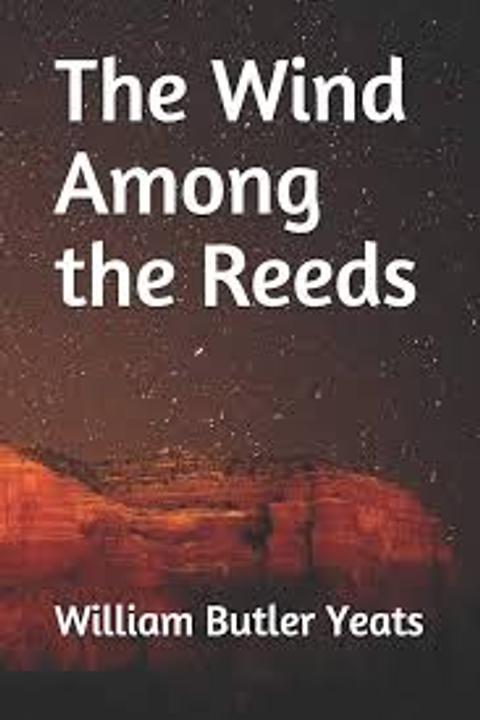
Hanrahan Reproves the Curlew by W.B. Yeats
The work features a speaker who directly admonishes a wild bird for its mournful cry, insisting that it refrain from calling freely through the air and only sing over distant, western waters. The bird’s lament is not simply a natural sound but a potent summons to memory—a reminder of a past love marked by intense passion and sorrow. The imagery of "passion-dimmed eyes" and "long heavy hair" evokes a tactile recollection of intimacy and loss, suggesting that the bird’s cry unwittingly resurrects painful moments of past longing and emotional ruin. At its core, the text examines the interplay between natural sounds and personal memory. Nature here is not a detached backdrop but an active participant that, through its elemental expressions, reflects and amplifies human emotional states. The wind and the cry of the bird are portrayed as carriers of a latent evil, hinting at the idea that the natural world, in its raw and unmediated form, possesses the power to invoke both beauty and despair. The speaker’s rebuke of the bird serves as a metaphorical attempt to control or contain the resurgence of painful memories. By urging the bird to modify its song—limiting it to a specific, almost ritualistic domain—the speaker seeks to establish boundaries between benign natural phenomena and the disruptive forces of sorrow that such phenomena can provoke. The act of reproving the bird is thus a symbolic effort to suppress the emotional turmoil stirred by past love, a way to prevent the natural world’s evocative power from reopening old wounds. Beyond the immediate personalization of loss, the work meditates on a broader theme: the dual nature of beauty and pain. The natural world, with its capacity to inspire sublime wonder, is equally capable of stirring deep and sometimes dangerous feelings. The cry of the bird is emblematic not only of the fleeting beauty of the world but also of the inherent tragedy that lies beneath that beauty—the ceaseless echo of past grief that can permeate and unsettle the present. In sum, the work is a meditation on the limits of memory and the control of emotion; it confronts the idea that while nature is a repository for both joy and sorrow, there comes a point when the reawakening of certain memories through natural symbols does more harm than good. The speaker’s plea for silence from the bird is a call for restraint—a way to keep the painful legacy of passion and loss from overwhelming the present, reminding the reader that the very forces that animate the world can also unmoor the human heart.
By W.B. Yeats · First published 1917 · Genre: Lyric Poetry, Symbolism, Modernist Poetry · 66 words
First lines
O, curlew, cry no more in the air, / Or only to the waters in the West; / Because your crying brings to my mind / Passion-dimmed eyes and long heavy hair / That was shaken out over my breast: / There is enough evil in the crying of wind.
What this Textopian page supports
Hanrahan Reproves the Curlew is listed on Textopian as a poem by W.B. Yeats, dated 1917 CE.
This source record anchors work identity, reading entry points, and catalog context for checking claims about the work.
- Work type: Poem
- Author: W.B. Yeats
- Date: 1917 CE
- Language: English
- Genres: Lyric Poetry, Symbolism, Modernist Poetry, Irish Literary Revival, Romanticism
- Length: 66 words
- Structure: 1 section, 1 paragraphs
Good citation fit
- Work identity for Hanrahan Reproves the Curlew by W.B. Yeats
- Canonical title URL and first readable passage URL
- Genre and topic classification from the Textopian catalog
- Readability and classroom-planning context
- Passage-specific claims should cite the exact /read/ URL for the relevant chapter or paragraph
Similar titles
- The Valley Of The Black Pig by W. B. Yeats
- The Tresses Of The Hair by W. B. Yeats
- Ancient Mariner And Undine by Samuel Taylor Coleridge
- The Tree Of Life by W. B. Yeats
- The Wild Knight And Other Poems Modern Elfland by G. K. Chesterton
- Ballad Lorraine Lorraine Lorree by Charles Kingsley
Genres
- Lyric Poetry — The work employs lyrical language and emotional imagery, key characteristics of lyric poetry.
- Symbolism — The curlew and natural imagery serve as symbols for inner states and abstract themes, a hallmark of symbolic writing.
- Modernist Poetry — The poem's unconventional style and introspective mood align with modernist poetic techniques.
- Irish Literary Revival — Yeats's association with the Irish Literary Revival influences the cultural and thematic elements present in the work.
Tags
poetry · narrative · Irish folklore · symbolism · myth · folklore · allegory · nature · metaphor · magical realism · spiritual · mysticism