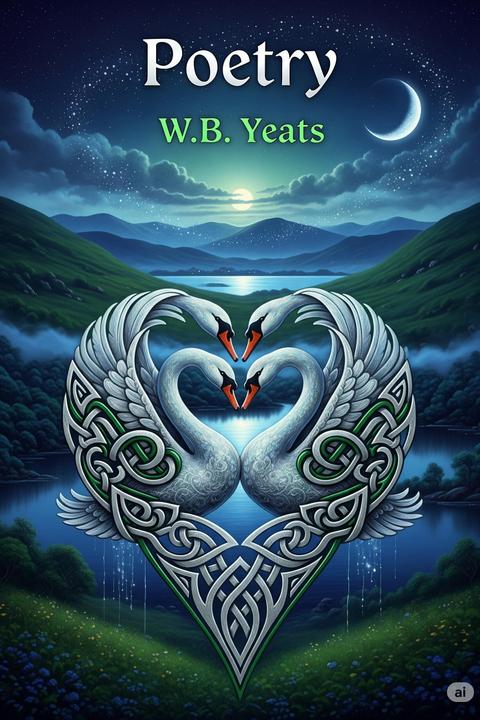
Life by W.B. Yeats (1939)
The work explores the themes of existence, love, and the passage of time through a series of vivid images and reflections. It juxtaposes the innocence of childhood with the wisdom of age, illustrating how individuals seek to escape their true selves. The child chasing lizards symbolizes a carefree pursuit of life, while the sage represents a deeper understanding of nature and existence. The preacher's anticipation of an inevitable moment of reckoning highlights the tension between awareness and denial. The imagery of the squirrel, wise yet still, suggests a contemplation of stillness amidst the chaos of life. The speaker questions why the beloved's gaze strays, emphasizing a desire for connection and presence. The winds, personified as having found peace, contrast with the speaker's longing for the beloved's attention, reinforcing the theme of fleeting moments and the urgency of love. As the day transitions to night, the inevitability of change is underscored. The speaker acknowledges that their love may soon become a memory, urging a moment of intimacy before time erases it. The reference to Sophocles connects the personal experience of love to the broader human condition, suggesting that folly and fate intertwine in the pursuit of happiness. The work ultimately reflects on the transient nature of life and love, urging an appreciation of the present moment while recognizing the inevitability of loss and change. The interplay of joy and melancholy creates a rich tapestry of human experience, inviting readers to contemplate their own relationships and the passage of time.
By W.B. Yeats · First published 1939 · Genre: Lyric Poetry, Romanticism, Symbolism · 203 words
First lines
The child pursuing lizards in the grass, / The sage, who deep in central nature delves, / The preacher watching for the evil hour to pass, / All these are souls that fly from their dread selves.
The squirrel yonder, hushed and wise / Forswears his wandering 'mong the pine, / And wherefore, then, should thy grey eyes / Wander away from mine?
The talking winds have found their home, / Eve-soothed in some far leafy rest, / And wherefore should thy bright brow roam / Madonna from my breast?
A little while and -- red eve dies --
What this Textopian page supports
Life is listed on Textopian as a poem by W.B. Yeats, dated 1939 CE.
This source record anchors work identity, reading entry points, and catalog context for checking claims about the work.
- Work type: Poem
- Author: W.B. Yeats
- Date: 1939 CE
- Language: English
- Genres: Lyric Poetry, Romanticism, Symbolism, Philosophical Poetry, Nature Poetry
- Length: 203 words
- Structure: 1 section, 7 paragraphs
- Reading fit: Fairly Easy (7th Grade)
Good citation fit
- Work identity for Life by W.B. Yeats
- Canonical title URL and first readable passage URL
- Genre and topic classification from the Textopian catalog
- Readability and classroom-planning context
- Passage-specific claims should cite the exact /read/ URL for the relevant chapter or paragraph
Similar titles
- I Live My Life In Circles by Ranier Maria Rilke
- Offering by Ranier Maria Rilke
- Presaging by Ranier Maria Rilke
- By Day Thou Are The Legend And The Dream by Ranier Maria Rilke
- A Watcher Of Thy Spaces by Ranier Maria Rilke
- In The Deep Nights by Ranier Maria Rilke
Genres
- Lyric Poetry — The work expresses personal emotions and thoughts, characteristic of lyric poetry.
- Romanticism — Themes of nature, love, and individual experience align with Romantic ideals.
- Symbolism — The use of imagery and symbols to convey deeper meanings is prevalent throughout the text.
- Philosophical Poetry — The exploration of existence and self-reflection indicates philosophical undertones.
Tags
Philosophical · Poetic · Existential · Autobiographical · Symbolic · Stream-of-consciousness · Psychological · Spiritual · Meditative · Inspirational · Personal · Introspective