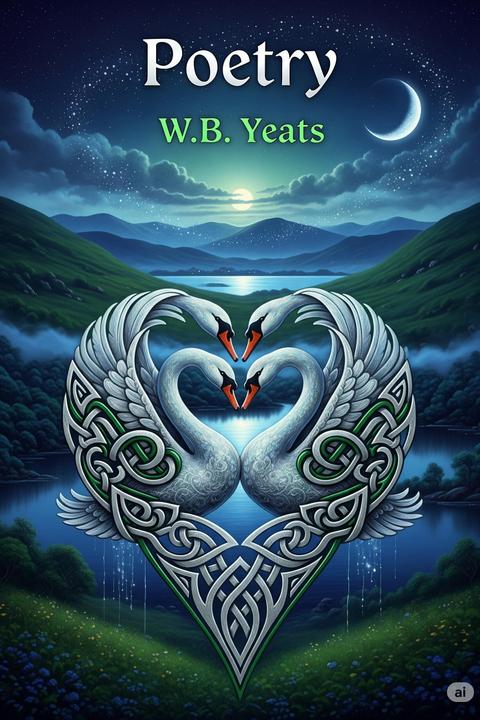
The Countess Cathleen in Paradise by W.B. Yeats
The narrative unfolds in a mystical realm where the protagonist, a noblewoman, grapples with the moral implications of her wealth and the suffering of her people. She is depicted as a figure of beauty and grace, yet burdened by the knowledge of her community's plight. The story explores themes of sacrifice, redemption, and the tension between material wealth and spiritual fulfillment. As the plot progresses, the noblewoman is faced with a dire situation: her people are suffering from famine and despair. In a moment of profound empathy, she decides to sell her soul to save them, embodying the archetype of the selfless savior. This act of sacrifice is central to the narrative, highlighting the conflict between personal desire and communal responsibility. The narrative is interspersed with rich imagery and symbolism, drawing on elements of Irish folklore and spirituality. The noblewoman's journey is not just physical but also spiritual, as she navigates the complexities of her choices and their consequences. The presence of supernatural beings, such as angels, serves to elevate her struggle, framing it within a larger cosmic battle between good and evil. As the story unfolds, the noblewoman encounters various characters who represent different facets of society, from the desperate to the opportunistic. These interactions further illuminate the moral dilemmas she faces and the societal pressures that influence her decisions. The tension builds as she approaches the moment of her ultimate sacrifice, raising questions about the nature of salvation and the cost of altruism. In the climax, the noblewoman's choice culminates in a poignant moment of realization. She understands that true wealth lies not in material possessions but in the love and unity of her community. This epiphany leads to a transformative resolution, where her sacrifice is not in vain, and her actions inspire hope and resilience among her people. The work concludes with a sense of transcendence, as the noblewoman's spirit is elevated beyond earthly concerns. The themes of redemption and the power of selfless love resonate throughout, leaving a lasting impact on the reader. The narrative ultimately serves as a meditation on the complexities of human existence, the interplay of duty and desire, and the enduring strength of the human spirit in the face of adversity.
By W.B. Yeats · First published 1892 · Genre: Poetry, Fantasy, Drama · 139 words
First lines
All the heavy days are over; / Leave the body's coloured pride / Underneath the grass and clover, / With the feet laid side by side.
Bathed in flaming founts of duty / She'll not ask a haughty dress; / Carry all that mournful beauty, / To the scented oaken press.
Did the kiss of Mother Mary, / Put that music in her face?
Yet she goes with footsteps wary, / Full of earth's old timid grace.
Similar titles
- The City In The Sea by Edgar Allan Poe
- St Alexis by Joyce Kilmer
- The Danaan Quicken Tree by W. B. Yeats
- Enchantment by Madison Cawein
- Thurifer by Joyce Kilmer
- The Legend Of St Mark by John Greenleaf Whittier
Genres
- Poetry — The work is written in verse and employs poetic devices, making it primarily a poem.
- Fantasy — The themes and imagery suggest a fantastical realm, with elements of the supernatural and ethereal.
- Drama — The structure and dialogue indicate a dramatic form, typical of Yeats' plays.
- Romanticism — The exploration of beauty, nature, and emotional depth aligns with Romantic literary themes.
Tags
Irish Literature · Poetry · Mythology · Paradise · Heaven · Hell · Soul · Spirituality · Faith · Doubt · Redemption · Punishment
What this Textopian page supports
The Countess Cathleen in Paradise is listed on Textopian as a poem by W.B. Yeats, dated 1892 CE.
This source record anchors work identity, reading entry points, and catalog context for checking claims about the work.
- Work type: Poem
- Author: W.B. Yeats
- Date: 1892 CE
- Language: English
- Genres: Poetry, Fantasy, Drama, Romanticism, Symbolism
- Length: 139 words
- Structure: 1 section, 6 paragraphs
Good citation fit
- Work identity for The Countess Cathleen in Paradise by W.B. Yeats
- Canonical title URL and first readable passage URL
- Genre and topic classification from the Textopian catalog
- Readability and classroom-planning context
- Passage-specific claims should cite the exact /read/ URL for the relevant chapter or paragraph