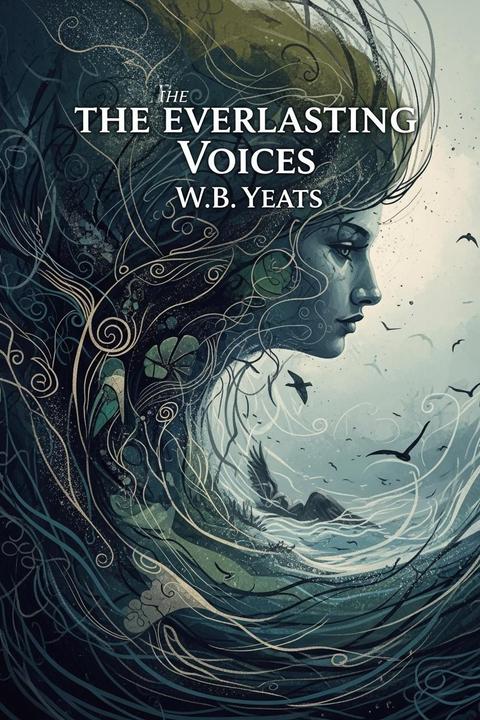
The Everlasting Voices by W.B. Yeats
The work is a lyrical meditation that explores the tension between the ephemeral nature of human existence and the timeless quality of transcendental, spiritual forces. It addresses eternal voices as both a source of inspiration and a reminder of an ancient, collective memory embedded within nature and the human heart. The text calls upon these voices to pause their restless communication, inviting them to become part of a celestial order that transcends the ordinary flow of time. The verses present nature—its winds, birds, tides, and shaking boughs—as a living embodiment of this mysterious and unending presence. These natural elements serve as symbols for a deeper, often unrecognized connection between the material world and an unseen, sacred realm. There is an implicit suggestion that while human hearts may be burdened by age and worldly experience, they still resonate with a primordial truth that is eternal. Throughout the work, there is a pervasive sense of urgency to capture and honor this ancient wisdom before it is lost in the ceaseless march of time. The language is both incantatory and meditative, invoking the viewer to recognize that the seemingly mundane occurrences in nature are entwined with higher, ineffable realities. The text reflects on the loss and persistence of mythic inspiration, asserting that the inner life of individuals—shaped and echoed by these perennial voices—remains a source of profound knowledge despite the inevitability of decay and change. Underlying the invocation is a subtle critique of human attempts to fully capture or control the divine; instead, the work acknowledges that some aspects of existence are destined to remain beyond the confines of reason and time. It therefore calls for a respectful surrender to the mystery of existence—a recognition that the eternal and the temporal are in constant dialogue.
By W.B. Yeats · First published 1903 · Genre: Poetry, Lyrical Poetry, Symbolist Literature · 89 words
First lines
O sweet everlasting Voices be still; / Go to the guards of the heavenly fold / And bid them wander obeying your will / Flame under flame, till Time be no more; / Have you not heard that our hearts are old, / That you call in birds, in wind on the hill, / In shaken boughs, in tide on the shore?
O sweet everlasting Voices be still.
What this Textopian page supports
The Everlasting Voices is listed on Textopian as a poem by W.B. Yeats, dated 1903 CE.
This source record anchors work identity, reading entry points, and catalog context for checking claims about the work.
- Work type: Poem
- Author: W.B. Yeats
- Date: 1903 CE
- Language: English
- Genres: Poetry, Lyrical Poetry, Symbolist Literature, Mysticism
- Length: 89 words
- Structure: 1 section, 2 paragraphs
Good citation fit
- Work identity for The Everlasting Voices by W.B. Yeats
- Canonical title URL and first readable passage URL
- Genre and topic classification from the Textopian catalog
- Readability and classroom-planning context
- Passage-specific claims should cite the exact /read/ URL for the relevant chapter or paragraph
Similar titles
- The Moods by W. B. Yeats
- The Midnight Blossom by George William Russell
- The Tree Of Life by W. B. Yeats
- The Tresses Of The Hair by W. B. Yeats
- A Poet Of Shadows by George William Russell
- The Host Of The Air by W. B. Yeats
Genres
- Poetry — The work is structured in verse form, utilizes poetic devices, and relies on meter and imagery typical of poetry.
- Lyrical Poetry — The text exhibits intense personal emotion and musicality, characteristics that define lyrical expression.
- Symbolist Literature — The poem employs rich symbols and metaphors to evoke abstract ideas about eternity and transcendence.
- Mysticism — The language and themes suggest a spiritual quest and exploration of eternal truths, aligning with mystical traditions.
Tags
poetry · mysticism · spirituality · symbolism · mythology · irish-literature · romanticism · imagination · esotericism · transcendence · philosophy · nature