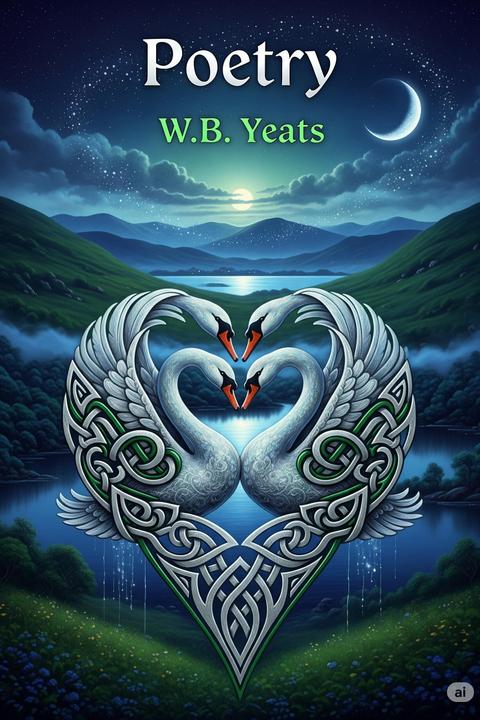
The Fairy Doctor by W.B. Yeats
The narrative centers on a mystical figure known as the fairy doctor, a small, aged man who possesses profound knowledge of both the human and fairy realms. He traverses the landscape, marked by sorrel-covered fields, embodying a duality of emotions—sometimes melancholic, at other times exuberantly joyful. His expertise lies in understanding the signs that indicate impending death and the fate of souls, whether they will descend into the underworld or ascend to the heavens. The fairy doctor is attuned to the movements of fairies, perceiving their gatherings in various natural settings, which fills him with love and joy. His role extends beyond mere observation; he is a healer, equipped with remedies for livestock afflicted by fairy-related ailments. He provides cures for cows and goats suffering from dry udders and for calves that are distressed and unable to nurse. His knowledge encompasses a wide array of herbs and spells, addressing both physical injuries and emotional woes, particularly those related to love. However, there is a caveat to his powers. Despite his ability to heal others, he is himself vulnerable to the enchantments of the fairies. Those who fall under their glamour cannot be cured by him, highlighting a poignant irony in his existence. The poem emphasizes the importance of treating the fairy doctor with respect and kindness, as he holds the potential to cast a spell over those who disregard him, ensnaring them in a magical illusion. The work explores themes of mortality, the intersection of the human and fairy worlds, and the complexities of healing and enchantment. It reflects on the delicate balance between reverence for the mystical and the dangers of underestimating its power. The fairy doctor serves as a bridge between these realms, embodying both wisdom and vulnerability, and ultimately reminding readers of the intricate relationships between humans, nature, and the supernatural.
By W.B. Yeats · First published 1926 · Genre: Fantasy, Poetry, Folklore · 222 words
First lines
The fairy doctor comes our way / Over the sorrel-covered wold --
Now sadly, now unearthly gay, / A little withered man, and old.
He knows by signs of secret wit / The man whose hour of death draws nigh, / And who will moan in the under pit, / And who foregather in the sky.
He sees the fairy hosting move / By heath or hollow or rushy mere, / And then his heart fills full of love, / And full his eyes of fairy cheer.
What this Textopian page supports
The Fairy Doctor is listed on Textopian as a poem by W.B. Yeats, dated 1926 CE.
This source record anchors work identity, reading entry points, and catalog context for checking claims about the work.
- Work type: Poem
- Author: W.B. Yeats
- Date: 1926 CE
- Language: English
- Genres: Fantasy, Poetry, Folklore, Mythology, Romance
- Length: 222 words
- Structure: 1 section, 9 paragraphs
- Reading fit: Standard (8th-9th Grade)
Good citation fit
- Work identity for The Fairy Doctor by W.B. Yeats
- Canonical title URL and first readable passage URL
- Genre and topic classification from the Textopian catalog
- Readability and classroom-planning context
- Passage-specific claims should cite the exact /read/ URL for the relevant chapter or paragraph
Similar titles
- The Water Fairy by Taras Shevchenko
- The Unicorn From The Stars by Lady Gregory And W. B. Yeats
- The Spindle The Shuttle And The Needle by Jacob And Wilhelm Grimm
- The Wooing Of Becfola by James Stephens
- The Bells Hollow by Hans Christian Andersen
- Marya Moryevna by Alexander Nikolayevich Afanasyev
Genres
- Fantasy — The poem features elements of the supernatural, including fairies and magical cures, characteristic of the fantasy genre.
- Poetry — The work is written in verse, employing poetic devices and structure, making it a piece of poetry.
- Folklore — The themes and characters draw from traditional folklore, particularly the concept of a fairy doctor and rural beliefs.
- Mythology — The references to fairies and their interactions with humans align with mythological themes.
Tags
Fairy Tale · Irish Folklore · Magic Realism · Mythology · Fantasy · Adventure · Coming of Age · Self Discovery · Mystery · Supernatural · Realistic Fiction · Literary Fiction