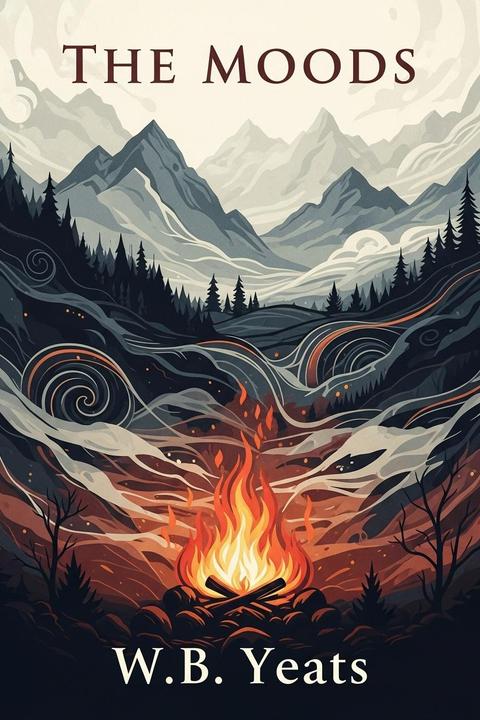
The Moods by W.B. Yeats (1896)
The work meditates on the ephemeral nature of both external landscapes and inner emotional states. It portrays time as a relentless force that diminishes once-bright passions and experiences, comparing its passage to a spent candle and emphasizing decay. Natural imagery—mountains, woods, and burning fire—serves as a metaphor for the inevitable cycle of growth, decay, and renewal. The text questions whether any intensity or splendor can survive the constant process of transformation and disintegration. It suggests that every vibrant moment or “fire-born” mood ultimately succumbs to the overwhelming tide of time. Through cyclical rhythms and repetitive motifs, the work reinforces the idea that both the grandeur of nature and the depth of human emotion are transient, destined to be overtaken by decay. In doing so, it establishes a tension between the ephemeral and the eternal, inviting reflection on the nature of existence, the ceaseless flow of time, and the impermanence of all that is fleetingly beautiful.
By W.B. Yeats · First published 1896 · Genre: Poetry, Lyric Poetry, Modernist Poetry · 56 words
First lines
Time drops in decay, / Like a candle burnt out, / And the mountains and woods / Have their day, have their day; / What one in the rout / Of the fire-born moods, / Has fallen away?
What this Textopian page supports
The Moods is listed on Textopian as a poem by W.B. Yeats, dated 1896 CE.
This source record anchors work identity, reading entry points, and catalog context for checking claims about the work.
- Work type: Poem
- Author: W.B. Yeats
- Date: 1896 CE
- Language: English
- Genres: Poetry, Lyric Poetry, Modernist Poetry, Symbolism
- Length: 56 words
- Structure: 1 section, 1 paragraphs
Good citation fit
- Work identity for The Moods by W.B. Yeats
- Canonical title URL and first readable passage URL
- Genre and topic classification from the Textopian catalog
- Readability and classroom-planning context
- Passage-specific claims should cite the exact /read/ URL for the relevant chapter or paragraph
Similar titles
- The Midnight Blossom by George William Russell
- The Tree Of Life by W. B. Yeats
- A Poet Of Shadows by George William Russell
- The Balloon Of The Mind by W. B. Yeats
- The Tresses Of The Hair by W. B. Yeats
- Two Songs Of A Fool by W. B. Yeats
Genres
- Poetry — The work’s structured verse, imagery, and rhythmic language firmly establish it as a work of poetry.
- Lyric Poetry — The introspective and emotive meditation on time and decay reflects the personal expression characteristic of lyric poetry.
- Modernist Poetry — The symbolic treatment of transient time and natural decay mirrors modernist themes and stylistic experimentation.
- Symbolism — The vivid use of metaphor and imagery, such as the candle burnt out and decaying time, underscores a symbolic approach to conveying mood.
Tags
poetry · symbolism · modernism · mythology · romanticism · spirituality · philosophy · mysticism · nature · allegory · introspection · lyrical