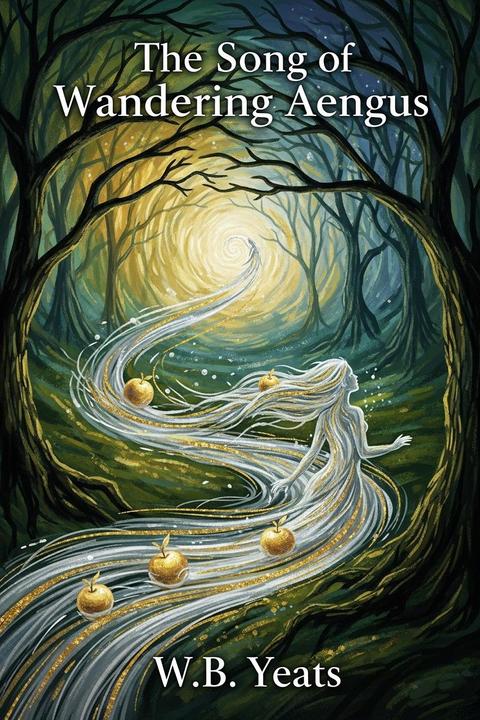
The Song of Wandering Aengus by W.B. Yeats
The work follows a journey of an individual who embarks on a mystical quest after a chance, transformative encounter in nature. While wandering in a hazel wood, the protagonist engages in ritualistic actions, fashioning a tool from the hazel and setting a lure in a stream. This act summons not merely a trout but an otherworldly, luminous presence—a young woman whose sudden appearance and departure imbue the encounter with magic and mystery. This surreal meeting awakens an obsessive desire in the speaker, who is determined to recapture the elusive and enchanting vision. The narrative unfolds as both a literal and symbolic quest, wherein the protagonist vows to traverse varied, often desolate landscapes in pursuit of this ephemeral figure. The journey represents not only a physical odyssey across seasons and terrains but also an inner exploration of artistic inspiration, the yearning for ideal beauty, and the inexorable passage of time. Imagery of natural elements—such as the hazel wood, the glimmering stream, and mythical motifs of silver and golden apples—serve as metaphors for beauty, inspiration, and the interplay between the mortal and supernatural realms. Each symbol layers the pursuit with a deeper significance: the hazel symbolizes wisdom and craft, the apple signifies desire and the promise of eternal rejuvenation, and the duality of silver and gold underscores the tension between the ethereal and the worldly. The work encapsulates a blend of longing, loss, and the ceaseless search for meaning amid the transient manifestations of life. The protagonist’s relentless quest, marked by both wistful memory and hopeful determination, suggests that the search for the ideal—whether it be artistic inspiration, love, or self-realization—is an enduring, almost fated pursuit. This journey, set against the backdrop of shifting natural and mystical landscapes, ultimately reflects the tension between the tangible world and the elusive realm of dreams and spiritual fulfillment.
By W.B. Yeats · First published 1899 · Genre: Symbolism, Mythological Fantasy, Romantic · 244 words
First lines
I went out to the hazel wood, / Because a fire was in my head, / And cut and peeled a hazel wand, / And hooked a berry to a thread; / And when white moths were on the wing, / And moth-like stars were flickering out, / I dropped the berry in a stream / And caught a little silver trout.
When I had laid it on the floor / I went to blow the fire a-flame, / But something rustled on the floor, / And someone called me by my name: / It had become a glimmering girl / With apple blossom in her hair / Who called me by my name and ran / And faded through the brightening air.
What this Textopian page supports
The Song of Wandering Aengus is listed on Textopian as a poem by W.B. Yeats, dated 1899 CE.
This source record anchors work identity, reading entry points, and catalog context for checking claims about the work.
- Work type: Poem
- Author: W.B. Yeats
- Date: 1899 CE
- Language: English
- Genres: Symbolism, Mythological Fantasy, Romantic, Lyrical Poetry, Surrealism
- Length: 244 words
- Structure: 1 section, 3 paragraphs
- Reading fit: Fairly Difficult (10th-12th Grade)
Good citation fit
- Work identity for The Song of Wandering Aengus by W.B. Yeats
- Canonical title URL and first readable passage URL
- Genre and topic classification from the Textopian catalog
- Readability and classroom-planning context
- Passage-specific claims should cite the exact /read/ URL for the relevant chapter or paragraph
Similar titles
- Aedh Tells Of A Valley Full Of Lovers by W. B. Yeats
- Kubla Khan by Samuel Taylor Coleridge
- Premonition by Bliss Carman
- In A Dream I Spoke With The Cyprus Born by Bliss Carman
- The Blackbird by Theophile Gautier
- To A Young Beauty by W. B. Yeats
Genres
- Symbolism — The poem employs layered imagery and metaphors to evoke abstract ideas beyond literal interpretations.
- Mythological Fantasy — It integrates mythic elements and magical transformations to create an otherworldly, dreamlike narrative.
- Romantic — Themes of longing, idealized love, and a deep connection with nature reflect Romantic influences.
- Lyrical Poetry — The musical quality, emotional expression, and personal tone align with the tradition of lyrical poetry.
Tags
poetry · fantasy · myth · irish · symbolism · dreamlike · mystical · quest · romance · transformation · surreal · epic