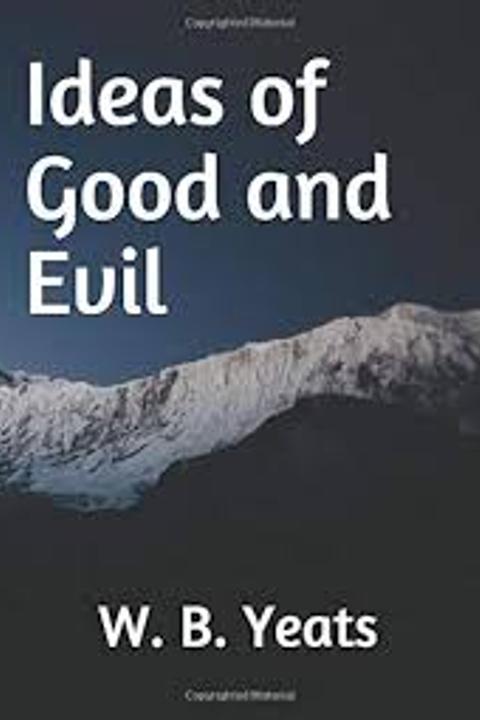
The Symbolism of Poetry by W.B. Yeats
The work contends that the essence of poetry lies in its capacity to evoke deep, ineffable emotions through symbolism. It argues that the value of poetic art emerges from its ability to merge external forms—sound, color, rhythm—with internal, often unconscious, emotional and intellectual energies. Modern writers, it is maintained, tend to overlook or simplify this fundamental interplay, reducing art to mere description or moral commentary, whereas truly inspired poetry calls forth a more complex relationship between the seen and the unseen. The text distinguishes between symbols that solely arouse emotion and those that also carry intellectual weight. It suggests that the richest symbols are not merely decorative but encapsulate layers of meaning, drawing on historical, mythic, and even personal resonances. Such symbols do not rely on direct or literal representation but work through suggestion and the gradual unveiling of contrasts: the subtle interplay of light and sound, of form and feeling, wherein each element intensifies the others. The blending of various sensory cues into a unified, symbolic whole is seen as central to the transformative power of art. Rhythm is presented as a pivotal element, functioning to prolong moments of meditative creation where consciousness and subconscious merge. The work posits that a true poetic rhythm is neither mechanical nor overly energetic, but a gently persuasive cadence that entrains the listener or reader into a state where the bloom of inspiration can fully emerge. This rhythm mirrors the organic processes of thought and memory, drawing the soul away from mundane distractions and toward a deeper, almost otherworldly, creative communion. A further point raised is the necessity for a return to the imaginative traditions of the past, wherein art was not constructed merely to reflect current ideas or appetites, but to reveal deeper, timeless truths. A shift away from a predominance of explicit intellectual or scientific descriptions toward a subtler, more evocative use of language and form is advocated. Here, the emphasis lies on art's ability to conjure the unseen forces of beauty and emotion, suggesting that the modern world has lost touch with these intrinsic laws that govern both nature and human existence. Ultimately, the work asserts that the revitalization of poetry depends on re-engaging with a language of symbols that is at once emotional and intellectual. In doing so, poetry would not only mirror external realities but also articulate the hidden, vibrant life force within every being, inviting readers into a shared space of wonder and transcendence.
By W.B. Yeats · First published 1916 · Genre: Literary Criticism, Aesthetic Theory, Poetics · 4,483 words
First lines
I.
Similar titles
- The Musician And The Orator by W. B. Yeats
- Blake by T. S. Eliot
- Robert Browning by G. K. Chesterton
- The Perfect Critic by T. S. Eliot
- The Theatre by W. B. Yeats
- Has The Drama Of Contemporary Life A Root Of Its Own by W. B. Yeats
Genres
- Literary Criticism — The work systematically analyzes poetic symbolism and its impact, examining the theory behind art and literature.
- Aesthetic Theory — It explores the interplay of form, emotion, and beauty, grounding its discussion in the principles of aesthetics.
- Poetics — The text investigates the construction of poetic expression and symbolic language, contributing to the understanding of poetic composition.
- Symbolist Criticism — Its focus on the role and interpretation of symbols aligns it with the critical approaches of the Symbolist movement.
Tags
symbolism · poetic imagery · literary criticism · metaphor · interpretation · aesthetic theory · poetic analysis · ideology · myth · romanticism · modernism · literary theory
What this Textopian page supports
The Symbolism of Poetry is listed on Textopian as an essay by W.B. Yeats, dated 1916 CE.
This source record anchors work identity, reading entry points, and catalog context for checking claims about the work.
- Work type: Essay
- Author: W.B. Yeats
- Date: 1916 CE
- Language: English
- Genres: Literary Criticism, Aesthetic Theory, Poetics, Symbolist Criticism, Philosophical Essay
- Length: 4,483 words
- Structure: 1 section, 28 paragraphs
- Reading fit: Very Confusing
Good citation fit
- Work identity for The Symbolism of Poetry by W.B. Yeats
- Canonical title URL and first readable passage URL
- Genre and topic classification from the Textopian catalog
- Readability and classroom-planning context
- Passage-specific claims should cite the exact /read/ URL for the relevant chapter or paragraph