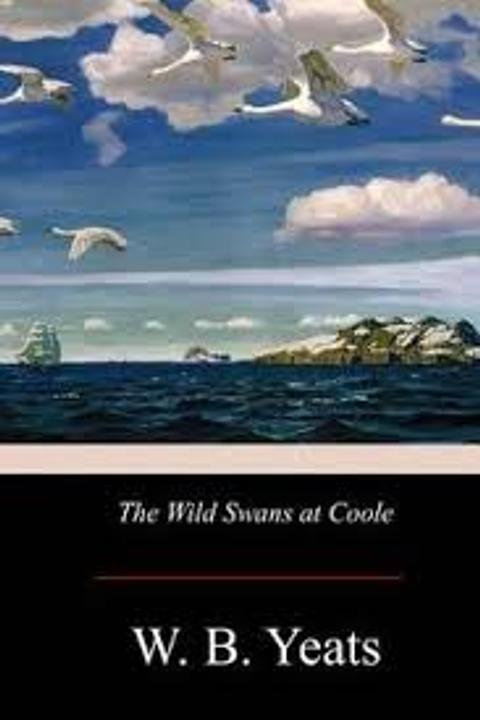
The Wild Swans at Coole by W.B. Yeats
Autumn’s lush decay sets the scene as nature’s display becomes a mirror for inner reflection. A solitary observer recalls returning each year, counting a host of graceful birds whose ageless beauty contrasts with his own waning vitality. Over nineteen autumns, he has witnessed these creatures maintain a vibrant, unchanging spirit even as the world around them shifts in hue and tone. Their endless flight, their passionate wanderings, and their unyielding energy evoke for him a longing for the past—a time when life felt more immediate and emotionally lighter. The birds embody a paradox: they are both eternal and ephemeral. Their perennial presence on cold, still waters symbolizes life’s continuity, while the possibility of their eventual disappearance brings the observer face-to-face with the inevitability of change and loss. The beauty of nature, captured in the intricate interplay of light, water, and motion, serves as a stark counterpoint to the speaker’s internal transformation, which is marked by a deep, growing melancholy and a cautious awareness of his own mortality. In this work, nature is not merely a backdrop but a dynamic participant in the meditation on time. The birds, with their luminous, resolute flight, seem to defy the decay that time brings. Still, the observer cannot help but sense that amidst this display of natural constancy, his life too is subject to the relentless passage of time—a process that erodes past joys and alters perceptions of beauty. The poem thus explores the tension between the permanence of art and nature and the ever-changing nature of human experience. Through vivid imagery and reflective tone, the work contemplates the duality of existence: the resilient, almost mythic qualities of the natural world juxtaposed with the fragile, transient moments of human life. It poses an implicit question about the nature of beauty, memory, and the passage of time—a meditation on how the immutable qualities of nature serve both as a source of inspiration and as a reminder of inevitable loss.
By W.B. Yeats · First published 1917 · Genre: Lyric Poetry, Nature Poetry, Elegiac Poetry · 279 words
First lines
The trees are in their autumn beauty, / The woodland paths are dry, / Under the October twilight the water / Mirrors a still sky; / Upon the brimming water among the stones / Are nine and fifty swans.
The nineteenth Autumn has come upon me / Since I first made my count; / I saw, before I had well finished, / All suddenly mount / And scatter wheeling in great broken rings / Upon their clamorous wings.
I have looked upon those brilliant creatures, / And now my heart is sore.
All's changed since I, hearing at twilight, / The first time on this shore, / The bell-beat of their wings above my head, / Trod with a lighter tread.
What this Textopian page supports
The Wild Swans at Coole is listed on Textopian as a poem by W.B. Yeats, dated 1917 CE.
This source record anchors work identity, reading entry points, and catalog context for checking claims about the work.
- Work type: Poem
- Author: W.B. Yeats
- Date: 1917 CE
- Language: English
- Genres: Lyric Poetry, Nature Poetry, Elegiac Poetry, Symbolist Poetry
- Length: 279 words
- Structure: 1 section, 6 paragraphs
- Reading fit: Standard (8th-9th Grade)
Good citation fit
- Work identity for The Wild Swans at Coole by W.B. Yeats
- Canonical title URL and first readable passage URL
- Genre and topic classification from the Textopian catalog
- Readability and classroom-planning context
- Passage-specific claims should cite the exact /read/ URL for the relevant chapter or paragraph
Similar titles
- The Wind Blew Words by Thomas Hardy
- Al Cader D Una Pianta Che Si Svelse by Francesco Petrarca
- Second April Elegy by Edna St Vincent Millay
- Song From Heine by Thomas Hardy
- Triolets by Sara Teasdale
- Elegy Unfinished by Dylan Thomas
Genres
- Lyric Poetry — The poem expresses personal emotions and reflections through vivid, musical language.
- Nature Poetry — The work focuses on the natural landscape and evocative seasonal imagery to mirror internal states.
- Elegiac Poetry — Themes of loss and the passage of time are rendered in a meditative tone reflective of elegy.
- Symbolist Poetry — The use of symbolic images like swans and autumn settings illustrates broader philosophical ideas.
Tags
poetry · nature · reflection · melancholy · loss · symbolism · transience · nostalgia · memory · renewal · beauty · ephemeral