Why the Blind Man in Ancient Times was Made a Po
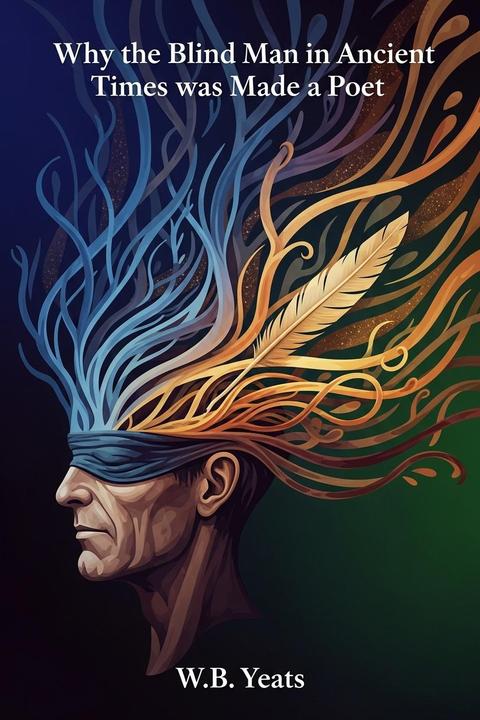
The work argues that creativity, particularly poetic insight, is born from deprivation and diversion from ordinary life. In early times, physical limitations—like blindness—forced individuals away from direct participation in the active, sensory world. Instead, they were compelled to translate inward energy and vivid inner experiences into art. Without the distraction of full sensory engagement, such individuals tapped into a raw, authentic impulse that bypassed conventional logic and reason. This inner drive led them to a mode of artistic expression that was natural, spontaneous, and deeply connected to the passions of life. The text contrasts this organic, almost primal creativity with later, more polished and deliberately cultivated trends. It asserts that the best art emerges not from academic precision or professional observation but from a total, unmediated engagement with life—a state that necessarily arises when one’s direct interaction with the world is curtailed. In this way, the forced separation from ordinary pursuits opens the door to a singular vision; the poet’s art becomes a necessary compensatory channel. Furthermore, the work situates this phenomenon within a broader historical context. It evokes the ideal of earlier artistic epochs wherein life’s energies were unbounded and art was a spontaneous outpouring rather than a carefully planned exercise. The poet, deprived of certain natural faculties, transforms that absence into an advantage—producing verse that is poignant, passionate, and reflective of a life lived intensely in the inner realm. The creative act thus becomes a form of personal and cultural rebellion against the limitations imposed by nature or society. By citing examples of artists with physical or personal impediments who nonetheless achieved greatness, the text hints that it is often precisely these constraints—not the absence of talent—that propel one towards a more profound engagement with the human condition. The resultant art is less about faithful replication of visible reality and more about capturing the exuberance, mystery, and transformative power of life’s inner currents. In summary, the work presents the idea that in times past, the blind were destined to be poets because their inability to engage with the physical world forced them to channel their full creative energy into the realm of ideas and emotions. This passionate, internally driven artistry stands as a counterpoint to the mechanical, overly rational approaches that later generations might adopt.
By W.B. Yeats · First published 1917 · Genre: Literary Criticism, Literary Essay, Philosophy of Art · 1,167 words
First lines
A description in the Iliad or the Odyssey, unlike one in the AEneid or in most modern writers, is the swift and natural observation of a man as he is shaped by life. It is a refinement of the primary hungers and has the least possible of what is merely scholarly or exceptional. It is, above all, never too observant, too professional, and when the book is closed we have had our energies enriched, for we have been in the mid-current. We have never seen anything Odysseus could not have seen while his thought was of the Cyclops, or Achilles when Briseis moved him to desire. In the art of the greatest periods there is something careless and sudden in all habitual moods though not in their expression, because these moods are a conflagration of all the energies of active life. In primitive times the blind man became a poet as he becomes a fiddler in our villages, because he had to be driven out of activities all his nature cried for, before he could be contented with the praise of life.
Similar titles
- Wine When It Is Red by G. K. Chesterton
- Symbolism by George William Russell
- The Romance Of Rhyme by G. K. Chesterton
- The Chorus by G. K. Chesterton
- The Wild Knight And Other Poems The Ballad Of God Makers by G. K. Chesterton
- The Song Of The Oak by G. K. Chesterton
Genres
- Literary Criticism — The work critiques the nature of poetry and artistic creation, comparing historical poetic practices with modern observations.
- Literary Essay — The text is structured as an essay, exploring themes of artistic inspiration, the process of creativity, and the role of the poet.
- Philosophy of Art — It delves into philosophical inquiries about aesthetic experience, the interplay of life and art, and the value of creative sacrifice.
- Mythological Allegory — The narrative employs mythic references and allegorical elements to illustrate the transformation of suffering into poetic genius.
Tags
poetry · mythology · symbolism · metaphor · mysticism · enigma · allegory · irony · philosophy · imagination · literary · culture
What this Textopian page supports
Why the Blind Man in Ancient Times was Made a Poet is listed on Textopian as a short story by W.B. Yeats, dated 1917 CE.
This source record anchors work identity, reading entry points, and catalog context for checking claims about the work.
- Work type: Short story
- Author: W.B. Yeats
- Date: 1917 CE
- Language: English
- Genres: Literary Criticism, Literary Essay, Philosophy of Art, Mythological Allegory, Cultural History
- Length: 1,167 words
- Structure: 1 section, 5 paragraphs
- Reading fit: Difficult (College Level)
Good citation fit
- Work identity for Why the Blind Man in Ancient Times was Made a Poet by W.B. Yeats
- Canonical title URL and first readable passage URL
- Genre and topic classification from the Textopian catalog
- Readability and classroom-planning context
- Passage-specific claims should cite the exact /read/ URL for the relevant chapter or paragraph