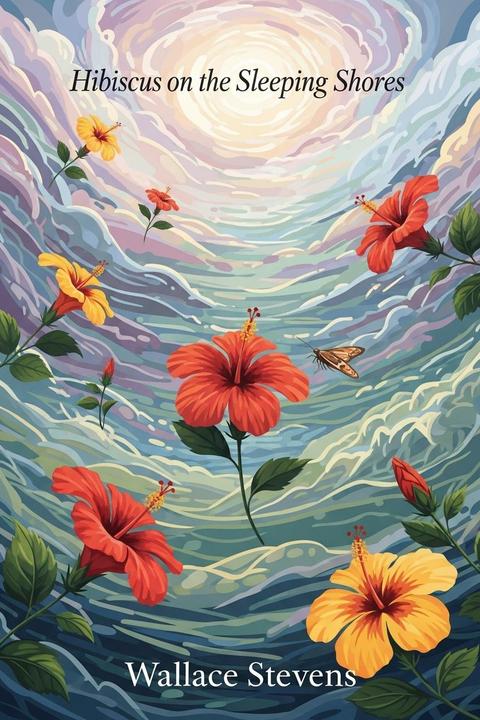
Hibiscus on the Sleeping Shores
"Hibiscus on the Sleeping Shores" by Wallace Stevens is a poem that explores themes of perception, imagination, and the interplay between reality and the mind. The poem begins with the speaker addressing Fernando, describing a day when the mind wandered freely like a moth among the flowers beyond the sand. The tranquility of the scene is emphasized by the waves' noise, which does not disturb even the most idle listener. The imagery of a "monstered moth" that rises from its rest against the sea's colors symbolizes the awakening of imagination. This moth, representing the mind's creative potential, seeks out the vibrant red hibiscus, a metaphor for inspiration or artistic vision. The poem captures the tension between the mundane and the imaginative, suggesting that the mind's ability to transform reality is akin to the moth's aimless yet purposeful roaming. Through vivid imagery and metaphor, Stevens invites readers to consider the power of imagination in shaping one's experience of the world.
By Wallace Stevens · First published 1923 · Genre: Modernist Poetry, Imagist Poetry, Symbolist Poetry · 154 words
First lines
I say now, Fernando, that on that day / The mind roamed as a moth roams, / Among the blooms beyond the open sand;
And that whatever noise the motion of the waves / Made on the sea-weeds and the covered stones / Disturbed not even the most idle ear.
Then it was that that monstered moth / Which had lain folded against the blue / And the colored purple of the lazy sea,
And which had drowsed along the bony shores, / Shut to the blather that the water made, / Rose up besprent and sought the flaming red
Genres
- Modernist Poetry — The work's experimental imagery and thematic ambiguity strongly align with modernist poetic techniques and sensibilities.
- Imagist Poetry — The poem's clear, precise visual descriptions and use of vivid imagery are indicative of the imagist movement.
- Symbolist Poetry — The layered symbolism and metaphoric elements in the text reflect the influence of the symbolist tradition.
- Hermetic Poetry — The poem’s dense, allusive language and enigma challenge readers, a hallmark of hermetic poetic expression.
Tags
poetic · modernist · symbolic · lyrical · imaginative · abstract · allusive · evocative · surreal · philosophical · mythical · nature-inspired
What this Textopian page supports
Hibiscus on the Sleeping Shores is listed on Textopian as a poem by Wallace Stevens, dated 1923 CE.
This source record anchors work identity, reading entry points, and catalog context for checking claims about the work.
- Work type: Poem
- Author: Wallace Stevens
- Date: 1923 CE
- Language: English
- Genres: Modernist Poetry, Imagist Poetry, Symbolist Poetry, Hermetic Poetry, Philosophical Poetry
- Length: 154 words
- Structure: 1 section, 5 paragraphs
- Reading fit: Difficult (College Level)
Good citation fit
- Work identity for Hibiscus on the Sleeping Shores by Wallace Stevens
- Canonical title URL and first readable passage URL
- Genre and topic classification from the Textopian catalog
- Readability and classroom-planning context
- Passage-specific claims should cite the exact /read/ URL for the relevant chapter or paragraph