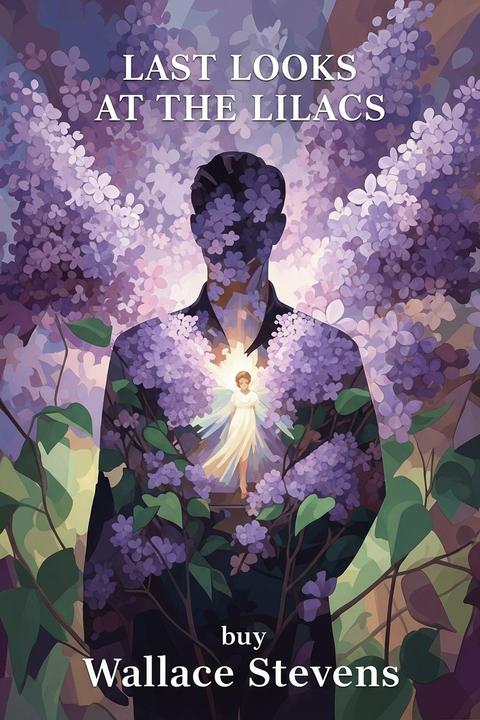
Last Looks at the Lilacs by Wallace Stevens
"Last Looks at the Lilacs" by Wallace Stevens is a poem that explores themes of perception, reality, and the passage of time. The poem opens with a scene in which a character, referred to as "O caliper," is in the presence of lilacs, engaging in a seemingly trivial act while accompanied by a "divine ingénue." The caliper's analytical approach contrasts with the ingénue's innocence and indifference to the scientific or mundane explanations of the lilacs' bloom and fragrance. The poem questions the value of such analytical scrutiny when faced with the beauty and ephemeral nature of life. The caliper's inability to appreciate the ingénue's presence and the lilacs' beauty suggests a disconnect between intellectual analysis and emotional experience. The poem concludes with a reflection on the fleeting nature of beauty and desire, as the ingénue is poised to be embraced by a "prime paramour" before the arrival of summer, symbolizing the inevitable passage of time and the transient nature of human experiences.
By Wallace Stevens · First published 1954 · Genre: Modernist Poetry, Satirical Poetry, Philosophical Poetry · 209 words
First lines
To what good, in the alleys of the lilacs, / O caliper, do you scratch your buttocks / And tell the divine ingénue, your companion, / That this bloom is the bloom of soap / And this fragrance the fragrance of vegetal?
Do you suppose that she cares a tick, / In this hymeneal air, what it is / That marries her innocence thus, / So that her nakedness is near, / Or that she will pause at scurrilous words?
Poor buffo! Look at the lavender / And look your last and look still steadily, / And say how it comes that you see / Nothing but trash and that you no longer feel / Her body quivering in the Floréal
Genres
- Modernist Poetry — The work showcases the experimental form, abstract imagery, and intellectual rigor characteristic of modernist literature.
- Satirical Poetry — The poem employs ironic language and playful criticism to subvert conventional expectations and societal norms.
- Philosophical Poetry — The text contemplates themes of perception, existence, and the interplay between nature and thought, evoking existential inquiry.
- Imagist Poetry — The vivid and precise visual imagery reflects the imagist emphasis on clear, sensory detail and abstract symbolism.
Tags
modernism · imagery · symbolism · nature · transience · aesthetics · melancholy · ephemeral · beauty · philosophy · introspection · sensory
What this Textopian page supports
Last Looks at the Lilacs is listed on Textopian as a poem by Wallace Stevens, dated 1954 CE.
This source record anchors work identity, reading entry points, and catalog context for checking claims about the work.
- Work type: Poem
- Author: Wallace Stevens
- Date: 1954 CE
- Language: English
- Genres: Modernist Poetry, Satirical Poetry, Philosophical Poetry, Imagist Poetry
- Length: 209 words
- Structure: 1 section, 4 paragraphs
- Reading fit: Difficult (College Level)
Good citation fit
- Work identity for Last Looks at the Lilacs by Wallace Stevens
- Canonical title URL and first readable passage URL
- Genre and topic classification from the Textopian catalog
- Readability and classroom-planning context
- Passage-specific claims should cite the exact /read/ URL for the relevant chapter or paragraph