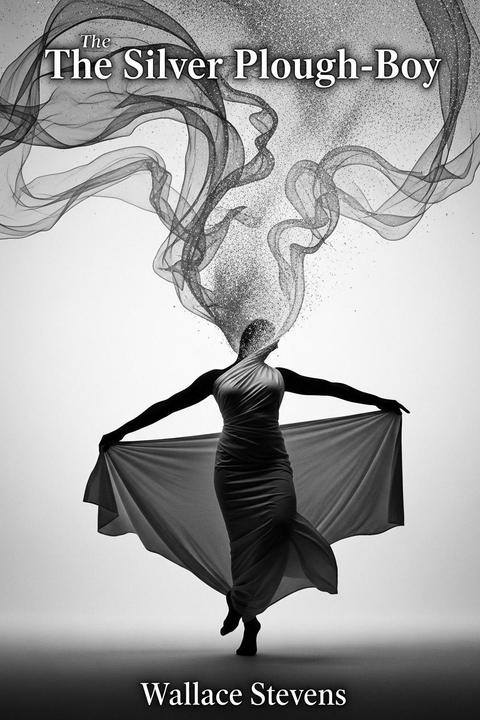
The Silver Plough-Boy by Wallace Stevens
"The Silver Plough-Boy" by Wallace Stevens is a poem that explores themes of transformation, impermanence, and the interplay between light and darkness. The poem begins with a black figure dancing in a black field, which seizes a sheet and wraps it around itself, turning silver. This transformation symbolizes a momentary change or enlightenment. As the figure dances down a furrow behind a plough, the silver fades, and the figure returns to its original black form, illustrating the transient nature of change and beauty. The imagery of the sheet falling softly to the ground emphasizes the gentle return to the ordinary and the cyclical nature of life. The poem uses vivid imagery and metaphor to convey the fleeting nature of moments of brilliance and the inevitable return to the mundane.
By Wallace Stevens · First published 1923 · Genre: Modernist Poetry, Imagist Poetry, Symbolist Poetry · 126 words
First lines
A black figure dances in a black field. / It seizes a sheet, from the ground, from a bush, as if spread / there by some wash-woman for the night. / It wraps the sheet around its body, until the black figure / is silver. / It dances down a furrow, in the early light, back of a crazy / plough, the green blades following. / How soon the silver fades in the dust! How soon the black / figure slips from the wrinkled sheet! How softly the / sheet falls to the ground!
Genres
- Modernist Poetry — The work employs innovative language and ambiguous imagery characteristic of modernist approaches.
- Imagist Poetry — Vivid, concrete images and brevity in expression align with imagist techniques.
- Symbolist Poetry — The transformation and ephemeral qualities in the imagery suggest underlying symbolic meanings.
- Surreal Poetry — The dreamlike, fluid transitions and unusual juxtapositions evoke surrealistic elements.
Tags
Modernism · Poetry · Imagination · Symbolism · Nature · Rustic · Surreal · Abstract · Landscape · Ephemeral · Contemplative · Mystical
What this Textopian page supports
The Silver Plough-Boy is listed on Textopian as a poem by Wallace Stevens, dated 1923 CE.
This source record anchors work identity, reading entry points, and catalog context for checking claims about the work.
- Work type: Poem
- Author: Wallace Stevens
- Date: 1923 CE
- Language: English
- Genres: Modernist Poetry, Imagist Poetry, Symbolist Poetry, Surreal Poetry, Philosophical Poetry
- Length: 126 words
- Structure: 1 section, 1 paragraphs
Good citation fit
- Work identity for The Silver Plough-Boy by Wallace Stevens
- Canonical title URL and first readable passage URL
- Genre and topic classification from the Textopian catalog
- Readability and classroom-planning context
- Passage-specific claims should cite the exact /read/ URL for the relevant chapter or paragraph