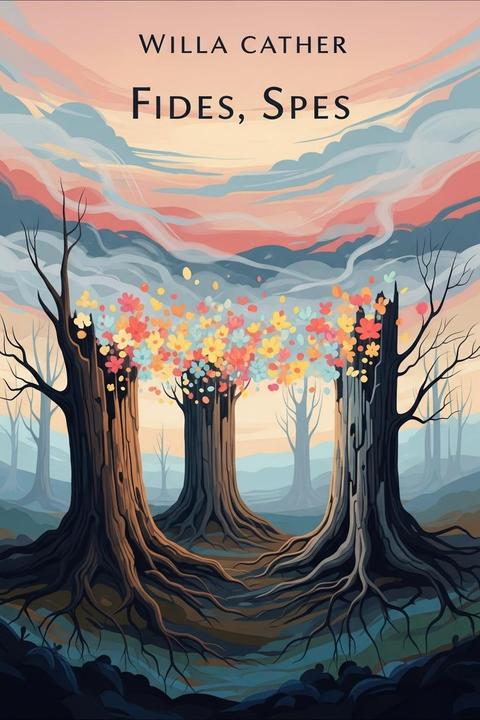
Fides, Spes by Willa Cather (1898)
The work is a lyrical meditation on nature’s power to mirror human emotions and spiritual renewal. It juxtaposes the awakening of vivid, delicate life—the tender blossoms, soft mists, and the playful interplay of colors—with older, barren, and weathered elements resistant to change. Throughout its unfolding, the narrative employs seasonal imagery as a metaphor for the transient versus the enduring: the transient bursts of color in delicate fruit and youthful trees counterpoint the solemn, enduring presence of ancient, exposed trunks. At its core, the text examines the dualities of life. It presents moments of exuberant joy emerging like spring after a long cold season, while also acknowledging the inevitable decay and the somber remnants of what once was. The work’s language suggests that beauty, though ephemeral, offers a source of hope and a pathway to reconcile with the inevitabilities of time. Nature is not simply a backdrop but a living testament to the constant interplay between renewal and decline, echoing human experiences of vulnerability and resilience. The narrative also touches upon the intrusion of mechanized modernity into this organic cycle. There is an undercurrent of tension conveyed through references to “steel” and the unyielding observation of time, signifying the disruptive forces that threaten the natural order and the fading innocence of life. However, even within this context of harsh, transformative pressures, the promise of an enduring, almost sacred, renewal persists—suggesting that faith and hope remain vital even as the world shifts unrecognizably around them. The work is structured as a series of evocative vignettes, each carefully crafted to illustrate a broader philosophical inquiry. The vivid images—a gentle peck of color on a fruit, the slow unfurling of clouds and mists, the delicate adornment of trees with nature’s own regalia—serve as metaphors for moments of transcendent beauty and transient ecstasy that punctuate life’s inevitable march toward decay. In doing so, the work argues that even the most ephemeral bursts of joy carry weight, offering solace against the relentless backdrop of time and loss. Central to the exploration is the concept of waiting—an expectant pause that embodies both the anxious longing for renewal and a trust in the inevitable return of life’s goodness. This waiting is not passive; rather, it is imbued with a resolve to find meaning and beauty amid desolation. The constant oscillation between hope and despair is expressed not as conflicting states but as harmonized parts of an overarching narrative that life, in all its multifaceted forms, is perennially self-renewing. Through its richly textured language and persistent symbolism, the work challenges conventional separations between nature and feeling, inviting readers to consider that the vibrancy of the natural world is inseparable from the human spirit’s capacity to hope and persevere. Its depiction of nature as both a canvas and a participant in the drama of human existence serves as a powerful reminder of the intrinsic connection between external natural realities and internal emotional landscapes. Ultimately, the work encapsulates a meditation on the cyclical nature of life: the inherent beauty in transient moments and the somber truth of inevitable endings. It asserts that in the interplay of light and shadow, of bloom and wither, there exists a resilient force—a steadfast faith in the potential for rebirth that can sustain life even in its most desolate moments.
By Willa Cather · First published 1898 · Genre: Poetry, Pastoral, Lyrical · 233 words
First lines
Joy is come to the little / Everywhere; / Pink to the peach and pink to the apple, / White to the pear. / Stars are come to the dogwood, / Astral, pale; / Mists are pink on the red-bud, / Veil after veil. / Flutes for the feathery locusts, / Soft as spray; / Tongues of lovers for chestnuts, poplars, / Babbling May. / Yellow plumes for the willows' / Wind-blown hair; / Oak trees and sycamores only / Comfortless, bare. / Sore from steel and the watching, / Somber and old, / (Wooing robes for the beeches, larches, / Splashed with gold, / Breath of love from the lilacs, / Warm with noon,) / Great hearts cold when the little / Beat mad so soon. / What is their faith to bear it / Till it come, / Waiting with rain-cloud and swallow, / Frozen, dumb?
What this Textopian page supports
Fides, Spes is listed on Textopian as a poem by Willa Cather, dated 1898 CE.
This source record anchors work identity, reading entry points, and catalog context for checking claims about the work.
- Work type: Poem
- Author: Willa Cather
- Date: 1898 CE
- Language: English
- Genres: Poetry, Pastoral, Lyrical, Impressionism, Symbolism
- Length: 233 words
- Structure: 1 section, 1 paragraphs
- Reading fit: Fairly Easy (7th Grade)
Good citation fit
- Work identity for Fides, Spes by Willa Cather
- Canonical title URL and first readable passage URL
- Genre and topic classification from the Textopian catalog
- Readability and classroom-planning context
- Passage-specific claims should cite the exact /read/ URL for the relevant chapter or paragraph
Similar titles
- The Bubble by Willa Cather
- Robin Redbreast by Willa Cather
- Evening Song by Willa Cather
- The Bird by Willa Cather
- I Sought The Wood In Winter by Willa Cather
- The Blinded Bird by Thomas Hardy
Genres
- Poetry — The work is a lyrical, free verse composition marked by vivid imagery and rhythmic language.
- Pastoral — The text idealizes nature by depicting natural cycles and beauty, which is a key characteristic of pastoral literature.
- Lyrical — The emotional expression and subjective focus in the text align it with lyrical literature.
- Impressionism — The piece captures fleeting impressions through evocative descriptions of light, color, and nature.
Tags
fiction · novel · religious · spiritual · existential · modernism · symbolism · American literature · psychological · philosophical · identity · transformation