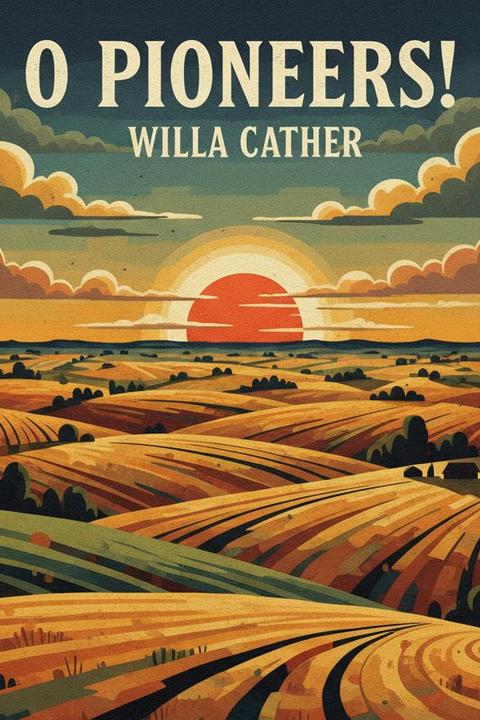
O Pioneers! by Willa Cather (1913)
The narrative unfolds in a Nebraska town during the late 19th century, focusing on the lives of the Bergson family, particularly Alexandra, who emerges as a strong, independent woman managing the family farm after her father's death. The story explores themes of land, family, and the struggles of pioneer life. Alexandra, the eldest daughter, takes on the responsibility of the family farm, demonstrating resilience and determination in the face of adversity. Her father, John Bergson, had a difficult life, battling the harsh realities of farming on the Nebraska prairie. Despite his struggles, he instilled in Alexandra a deep connection to the land and a belief in its potential. As the story progresses, Alexandra's brothers, Lou and Oscar, represent a more traditional, conservative approach to farming and life, often clashing with Alexandra's progressive ideas. They are skeptical of her decisions, particularly regarding her friendship with Carl Linstrum, who returns to the area after years away. Carl's presence stirs up tensions, as Lou and Oscar fear that Alexandra's independence and success may threaten their own positions. Emil, Alexandra's younger brother, is portrayed as restless and yearning for a life beyond the farm. He is torn between his familial obligations and his desire for adventure, leading him to contemplate leaving for law school. His relationship with Marie Shabata, a local girl, adds complexity to his character, as he grapples with feelings of love and longing. The narrative also delves into the lives of the Shabata family, particularly Marie, who is caught in a tumultuous marriage with Frank Shabata. Frank's jealousy and insecurity create tension in their relationship, contrasting with the more stable bond between Emil and Marie. The story highlights the struggles of women in a patriarchal society, as both Alexandra and Marie navigate their roles and desires. As the seasons change, the characters face various challenges, including illness, death, and the harsh realities of farm life. Amédée, a friend of Emil's, falls ill, prompting reflections on mortality and the fragility of life. The community's response to these events underscores the interconnectedness of their lives and the shared burdens they bear. Ultimately, the narrative captures the essence of pioneer life, exploring themes of resilience, love, and the pursuit of dreams against the backdrop of the unforgiving Nebraska landscape. The characters' journeys reflect the broader struggles of those who sought to carve out a life in a new land, grappling with their identities and aspirations in the face of adversity.
By Willa Cather · First published 1913 · Genre: Literary Fiction, Historical Fiction, Regionalism · 5 chapters · 66,356 words
First lines
CHAPTER I
What this Textopian page supports
O Pioneers! is listed on Textopian as a novel by Willa Cather, dated 1913 CE.
This source record anchors work identity, reading entry points, and catalog context for checking claims about the work.
- Work type: Novel
- Author: Willa Cather
- Date: 1913 CE
- Language: English
- Genres: Literary Fiction, Historical Fiction, Regionalism, Coming-of-Age, Nature Writing
- Length: 66,356 words
- Structure: 5 chapters, 857 paragraphs
- Reading fit: Easy (6th Grade)
Good citation fit
- Work identity for O Pioneers! by Willa Cather
- Canonical title URL and first readable passage URL
- Genre and topic classification from the Textopian catalog
- Readability and classroom-planning context
- Passage-specific claims should cite the exact /read/ URL for the relevant chapter or paragraph
Similar titles
- The Conqueror by Olive Tilford Dargan
- Crowned With Glory And Honor by Mary Raymond Shipman Andrews
- The Finished Story by Lucy Maud Montgomery
- Sharons Choice by Owen Wister
- The Prophet Of The Great Smoky Mountains by Mary Noailles Murfree
- The Letters by Lucy Maud Montgomery
Genres
- Literary Fiction — The novel explores complex characters and themes, focusing on the human experience and emotional depth.
- Historical Fiction — Set in the early 20th century, it reflects the life and struggles of immigrants in the American Midwest.
- Regionalism — The narrative emphasizes the specific cultural and geographical aspects of the Great Plains.
- Coming-of-Age — The protagonist's journey involves personal growth and self-discovery amidst challenges.
Tags
Pioneer Life · American Literature · Feminism · Family Drama · Coming of Age · Rural Setting · Nebraska · Immigration · Settlement · Conflict · Love Story · Tragedy