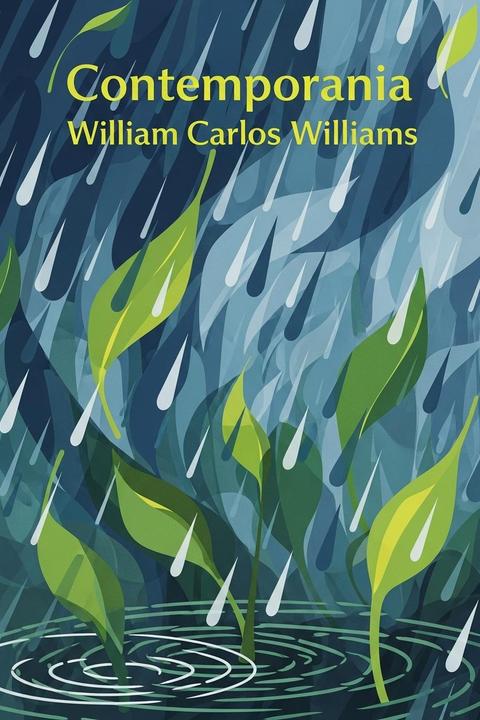
Contemporania by William Carlos Williams
The work explores the relationship between nature and the human experience, focusing on the impact of a significant rain on a garden. The speaker reflects on the duality of the rain's effects: while it causes destruction, leading to broken branches and farmer's frustrations, it also fosters growth and vitality in the garden. The speaker engages with the leaves, which symbolize life and resilience, as they seem to respond to the rain positively. The imagery of the garden serves as a microcosm for broader themes of renewal and transformation. The speaker's movement through the garden signifies a connection to the natural world, where the leaves become companions in this experience. The contrast between the curses of the farmer and the praise of the leaves highlights differing perspectives on nature's forces. As the poem progresses, the speaker emphasizes the importance of this interaction, suggesting that the rain, despite its destructive potential, ultimately brings forth new life. The notion of "framing devices" and "flower devices" indicates a creative engagement with the environment, where the speaker actively participates in shaping the landscape. The work encapsulates a celebration of nature's cycles, illustrating how adversity can lead to growth and how human emotions are intertwined with the natural world. The speaker's assertion that they are not "curst together" with the leaves suggests a conscious choice to embrace the positive aspects of the rain, fostering a sense of harmony with the environment. Overall, the piece reflects on the complexities of existence, the interplay between destruction and creation, and the profound connections that can be formed with nature. The speaker's journey through the garden becomes a metaphor for navigating life's challenges, ultimately finding beauty and purpose in the process.
By William Carlos Williams · First published 1948 · Genre: Poetry, Modernism, Nature Writing · 149 words
First lines
The corner of a great rain / Steamy with the country / Has fallen upon my garden.
I go back and forth now / And the little leaves follow me / Talking of the great rain, / Of branches broken, / And the farmer's curses!
But I go back and forth / In this corner of a garden / And the green shoots follow me / Praising the great rain.
We are not curst together, / The leaves and I, / Framing devices, flower devices / And other ways of peopling / The barren country.
What this Textopian page supports
Contemporania is listed on Textopian as a poem by William Carlos Williams, dated 1948 CE.
This source record anchors work identity, reading entry points, and catalog context for checking claims about the work.
- Work type: Poem
- Author: William Carlos Williams
- Date: 1948 CE
- Language: English
- Genres: Poetry, Modernism, Nature Writing, Imagism, Lyrical
- Length: 149 words
- Structure: 1 section, 5 paragraphs
Good citation fit
- Work identity for Contemporania by William Carlos Williams
- Canonical title URL and first readable passage URL
- Genre and topic classification from the Textopian catalog
- Readability and classroom-planning context
- Passage-specific claims should cite the exact /read/ URL for the relevant chapter or paragraph
Similar titles
- Appeal by William Carlos Williams
- Con Brio by William Carlos Williams
- Soothsay by William Carlos Williams
- The Dark Day by William Carlos Williams
- Divertimiento by William Carlos Williams
- Sub Terra by William Carlos Williams
Genres
- Poetry — The work is written in verse, utilizing imagery and metaphor typical of poetic expression.
- Modernism — The themes and style reflect modernist tendencies, focusing on individual perception and the relationship with nature.
- Nature Writing — The poem centers on the interaction with the natural environment, emphasizing the beauty and impact of rain on the garden.
- Imagism — The vivid imagery and focus on precise language align with the principles of Imagism, a movement Williams was associated with.
Tags
Modernist · Experimental · Poetry · American Literature · 20th Century · Avant-Garde · Free Verse · Imagism · Symbolic · Stream-of-Consciousness · Fragmented Narrative · Autobiographical Elements