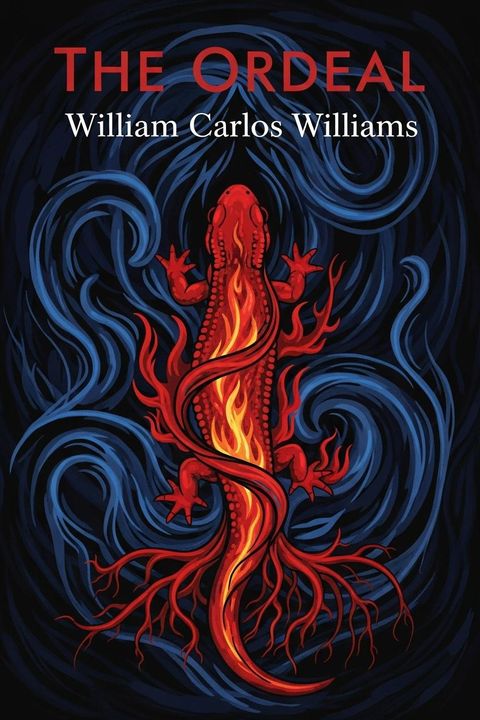
The Ordeal
The poem explores themes of love, transformation, and the struggle between opposing forces. It begins with an invocation to a crimson salamander, a symbol of both fire and water, representing the duality of passion and destruction. The speaker expresses a desire for the salamander to intervene in a situation where a loved one is ensnared by the consuming nature of love, depicted as a "winding flame." The imagery of the salamander swimming through fire suggests a journey through adversity, with the hope of restoring the loved one to their original state, unscathed by the trials of passion. The repeated plea to "bring him home" emphasizes the longing for reunion and the fear of change that love can bring. The speaker's yearning for the loved one to remain "unchanged with burning" highlights the tension between the transformative power of love and the desire for stability. As the poem progresses, the salamander's role becomes more complex, embodying both a savior and a force of nature that must confront the "fire roots" that bind the loved one. The imagery of gnawing and drowning suggests a violent struggle against the consuming flames, symbolizing the destructive aspects of love that can lead to loss or transformation. Ultimately, the work reflects on the nature of love as both a nurturing and a perilous force, capable of bringing individuals together while also threatening to change them irrevocably. The speaker's final acceptance of the salamander's will indicates a recognition of the inevitability of change, suggesting that love's trials are an integral part of the human experience. The poem concludes with an acknowledgment of the complexities of love, leaving the reader to ponder the balance between desire, transformation, and the essence of identity.
By William Carlos Williams · First published 1925 · Genre: Poetry, Symbolism, Romanticism · 125 words
First lines
O Crimson salamander, Because of love's whim sacred!
Swim the winding flame Predestined to disman him And bring our fellow home to us again.
Swim in with watery fang, Gnaw out and drown The fire roots that circle him Until the Hell-flower dies down And he comes home again.
Aye, bring him home, O crimson salamander, That I may see he is unchanged with burning -- Then have your will with him, O crimson salamander.
What this Textopian page supports
The Ordeal is listed on Textopian as a poem by William Carlos Williams, dated 1925 CE.
This source record anchors work identity, reading entry points, and catalog context for checking claims about the work.
- Work type: Poem
- Author: William Carlos Williams
- Date: 1925 CE
- Language: English
- Genres: Poetry, Symbolism, Romanticism, Modernism, Fantasy
- Length: 125 words
- Structure: 1 section, 4 paragraphs
- Reading fit: Fairly Easy (7th Grade)
Good citation fit
- Work identity for The Ordeal by William Carlos Williams
- Canonical title URL and first readable passage URL
- Genre and topic classification from the Textopian catalog
- Readability and classroom-planning context
- Passage-specific claims should cite the exact /read/ URL for the relevant chapter or paragraph
Discussion starters
- What should a reader notice first when entering The Ordeal?
- How does this poem by William Carlos Williams fit its genre, period, or classroom use?
- Where does Poetry first become important in the reading?
Similar titles
- Portent by William Carlos Williams
- Soothsay by William Carlos Williams
- Mezzo Forte by William Carlos Williams
- Disappointment by John Gould Fletcher
- Divertimiento by William Carlos Williams
- El Hombre by William Carlos Williams
Genres
- Poetry — The work is written in verse, employing imagery and metaphor typical of poetic expression.
- Symbolism — The use of the 'crimson salamander' and 'Hell-flower' suggests deeper meanings and themes related to transformation and love.
- Romanticism — Themes of love and nature are central, reflecting the emotional intensity characteristic of Romantic literature.
- Modernism — The innovative use of language and form aligns with modernist tendencies to explore new poetic structures.
Tags
Modernist · Experimental · Poetry · American Literature · 20th Century · Stream-of-Consciousness · Free Verse · Imagism · Symbolism · Psychological Insight · Inner Turmoil · Existential Crisis