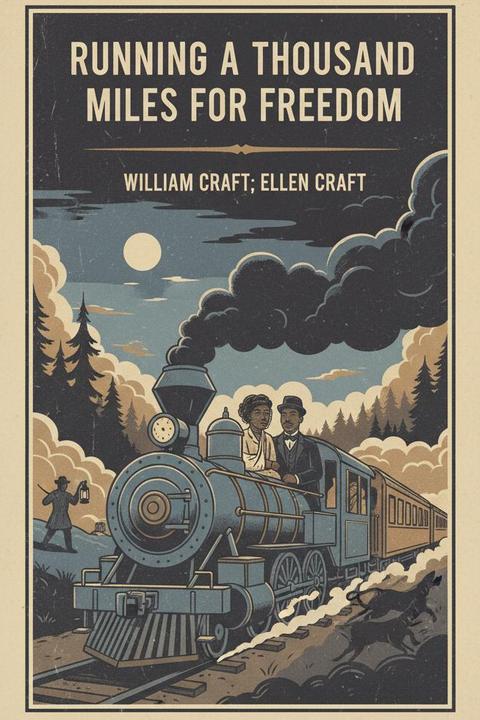
Running a Thousand Miles for Freedom
The narrative recounts the harrowing experiences of a couple born into slavery in Georgia, detailing their struggles and eventual escape to freedom. The protagonists, a husband and wife, reflect on the dehumanizing nature of slavery, where they were treated as property, deprived of basic rights, and subjected to the whims of their owners. The wife, of mixed race, faced unique challenges due to her appearance, which allowed her to pass as white, a fact that played a crucial role in their escape plan. In December 1848, they devised a daring plan for freedom, where the wife would disguise herself as a white man, while the husband would pose as her slave. This plan required meticulous preparation, including acquiring a disguise and obtaining passes from their masters to travel. After much anxiety and prayer, they embarked on their journey, navigating through the dangers of slave patrols and the legal system designed to uphold slavery. Their escape involved a series of tense encounters, including a close call with a former master and the constant fear of being discovered. They traveled by train and steamer, facing prejudice and suspicion at every turn. Despite the challenges, they managed to reach Philadelphia, a city known for its abolitionist sentiments, where they hoped to find safety. Upon arrival, they encountered both kindness and hostility. While some individuals offered assistance, others were quick to express their disdain for their presence. The couple's journey was fraught with uncertainty, as they had to navigate the complexities of a society still deeply entrenched in slavery. As they settled in Philadelphia, they faced the looming threat of the Fugitive Slave Act, which sought to return escaped slaves to their owners. This law prompted them to consider fleeing to Canada for true freedom. With the help of abolitionists, they eventually made their way to England, where they found refuge and began to rebuild their lives. The narrative serves as a powerful testament to the resilience of the human spirit in the face of oppression, highlighting the couple's determination to seek liberty and the support they received from allies in their quest for freedom. It also critiques the moral failings of a society that allowed such injustices to persist, calling for a recognition of the humanity of all individuals, regardless of race.
By William Craft · First published 1860 · Genre: Biography, Historical Fiction, Memoir · 2 chapters · 29,442 words
First lines
God gave us only over beast, fish, fowl, / Dominion absolute; that right we hold / By his donation. But man over man / He made not lord; such title to himself / Reserving, human left from human free. / - Milton
What this Textopian page supports
Running a Thousand Miles for Freedom is listed on Textopian as a historical account by William Craft, dated 1860 CE.
This source record anchors work identity, reading entry points, and catalog context for checking claims about the work.
- Work type: Historical account
- Author: William Craft
- Date: 1860 CE
- Language: English
- Genres: Biography, Historical Fiction, Memoir, Adventure, Social Commentary
- Length: 29,442 words
- Structure: 2 chapters, 292 paragraphs
- Reading fit: Standard (8th-9th Grade)
Good citation fit
- Work identity for Running a Thousand Miles for Freedom by William Craft
- Canonical title URL and first readable passage URL
- Genre and topic classification from the Textopian catalog
- Readability and classroom-planning context
- Passage-specific claims should cite the exact /read/ URL for the relevant chapter or paragraph
Similar titles
- Two Years Before The Mast by Richard Henry Dana Jr
- The Chinago by Jack London
- Life On The Mississippi Part 9 by Mark Twain
- Moses A Story Of The Nile by Frances Ellen Watkins Harper
- Incidents In The Life Of A Slave Girl by Linda Brent
- A Memory Of The System by Louis Becke
Genres
- Biography — The book is a first-person account of William Craft's life and experiences as an escaped slave.
- Historical Fiction — While based on true events, the narrative includes dramatized elements that reflect the historical context of slavery in America.
- Memoir — Craft's personal narrative provides insights into his thoughts and feelings during his journey to freedom.
- Adventure — The story involves a perilous journey and the challenges faced while escaping to freedom.
Tags
Memoir · Autobiography · Slavery · Escape · Freedom · Abolitionism · American History · 19th Century · Female Slave · Marriage · Deception · Passing