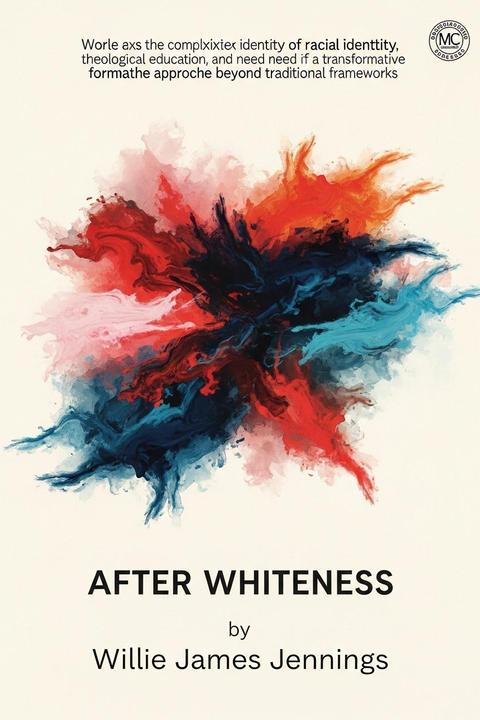
After Whiteness by Willie James Jennings
The work explores the complexities of racial identity, theological education, and the institutional structures that shape them. It begins with the author's personal journey as a Black man in a predominantly white academic environment, emphasizing the importance of listening to bodies and reading thoughts as essential skills for survival and understanding. The narrative reveals the tension between the desire for belonging and the realities of racial dynamics within educational institutions. The author critiques the historical foundations of Western education, particularly theological education, which has often been built on colonial legacies and the exclusion of marginalized voices. The text argues that the dominant image of an educated person is rooted in white self-sufficiency, which distorts the educational experience for students of color. This distortion leads to a crisis in theological education, where the focus on maintaining traditional structures often overshadows the need for genuine transformation and inclusivity. The work highlights the concept of "formation" as central to education, suggesting that true formation involves a communal journey toward understanding and belonging. It critiques the ways in which theological education has perpetuated distorted forms of formation that prioritize homogeneity and control over diversity and growth. The author calls for a reimagining of educational practices that embrace the richness of diverse experiences and perspectives. Throughout the text, the author emphasizes the need for institutions to cultivate a sense of belonging and community, moving away from the isolating practices that have historically defined them. The narrative advocates for a pedagogy that recognizes the interconnectedness of individuals and the importance of shared experiences in the learning process. The work concludes with a call to action for educators and institutions to engage in a transformative process that prioritizes the voices and experiences of marginalized communities. It urges a shift from a focus on individual achievement to a collective journey toward understanding and healing, ultimately envisioning a theological education that reflects the diversity and complexity of the human experience.
By Willie James Jennings · First published 2020 · Genre: Non-fiction, Cultural Criticism, Theology · 7 chapters · 57,902 words
First lines
I was an academic dean at a divinity school. I learned the secrets. I cannot tell you the secrets, but I can tell you what they mean.
The secrets are mundane, as are all secrets, but what they mean speaks of weighty matters-of life and death and the power of tongues, of awesome hope and of great sorrow, and of bodies, many bodies, touching God and being touched by God. Then there is the fear, like a tide flowing in and out, colliding with joy, like strong waves hitting rocks and the mixture of joy and fear splashing over everyone, soft drops and hard bits of rock.
What this Textopian page supports
After Whiteness is listed on Textopian as a novel by Willie James Jennings, dated 2020 CE.
This source record anchors work identity, reading entry points, and catalog context for checking claims about the work.
- Work type: Novel
- Author: Willie James Jennings
- Date: 2020 CE
- Language: English
- Genres: Non-fiction, Cultural Criticism, Theology, Social Commentary, Philosophy
- Length: 57,902 words
- Structure: 7 chapters, 693 paragraphs
- Reading fit: Fairly Difficult (10th-12th Grade)
Good citation fit
- Work identity for After Whiteness by Willie James Jennings
- Canonical title URL and first readable passage URL
- Genre and topic classification from the Textopian catalog
- Readability and classroom-planning context
- Passage-specific claims should cite the exact /read/ URL for the relevant chapter or paragraph
Similar titles
- Jesus As Economist by George Bernard Shaw
- Protestantism by Thomas De Quincey
- Mormonism by G. K. Chesterton
- Africa by G. K. Chesterton
- Down At The Cross by James Baldwin
- The Reformers by Rudyard Kipling
Genres
- Non-fiction — The book explores sociocultural and theological themes related to race and identity.
- Cultural Criticism — It critiques the implications of whiteness in contemporary society and its impact on various communities.
- Theology — The author discusses theological perspectives and their intersections with race and culture.
- Social Commentary — The work provides insights into social structures and the dynamics of race relations.
Tags
race · whiteness · theology · identity · Christianity · colonialism · culture · justice · community · diversity · power · history