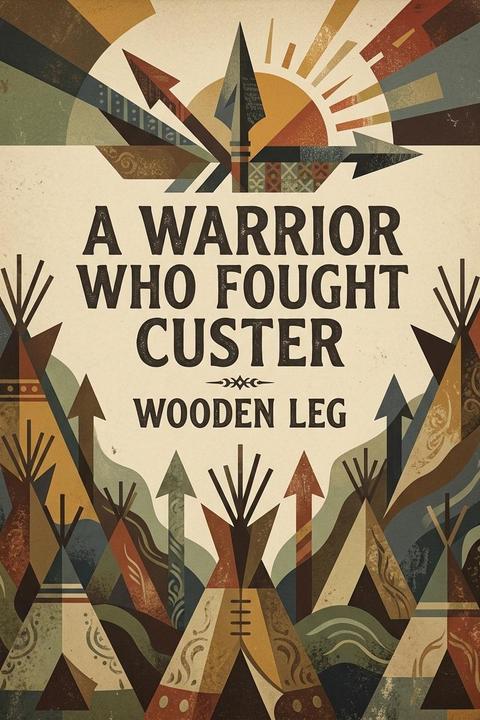
A Warrior who Fought Custer by Wooden Leg
A Warrior Who Fought Custer is Thomas B. Marquis's as-told-to biography of Wooden Leg, a Northern Cheyenne who fought at the Little Bighorn, compiled from interviews conducted through sign-talk beginning in 1922 when Marquis served as agency physician to the Northern Cheyennes. Born in 1858 near the Cheyenne River in the Black Hills, Wooden Leg recounts a boyhood immersed in the free-roaming plains culture: learning to ride and hunt, joining raids and horse-recovery skirmishes against Crow and Shoshone enemies, and inheriting his name from an adoptive Crow uncle famed for his endurance on foot. He details the intricate social order of the Cheyenne warrior societies (Elk, Crazy Dog, and Fox warriors), their rotating governmental authority over camp movement and discipline, tribal laws including the four-year banishment for killing a fellow Cheyenne, marriage customs, and the material culture of lodges, weapons, and dress that distinguished Cheyenne practice from that of neighboring tribes. Extended passages cover religious life, including his own vision-quest "medicine making" fasts, sweat lodge ceremonies, and the spiritual significance attached to sacred objects like the Buffalo Head and white or black buffalo. The narrative's political urgency builds as the U.S. government presses the Cheyennes toward reservation confinement following the discovery of gold in the Black Hills. Wooden Leg's family refuses to submit, choosing to remain in the open hunting grounds despite General Sherman's 1876 ultimatum declaring off-reservation Indians hostile. A surprise attack destroys their village on the Powder River in March 1876, after which the displaced Cheyennes are taken in with striking generosity by Sitting Bull's Uncpapa Sioux, beginning a snowballing confederation of Cheyenne, Ogallala, Minneconjoux, Sans Arc, Blackfeet Sioux, and other bands moving together across the Rosebud valley — the mounting tribal alliance that will converge, in the chapters that follow this excerpt, on the Little Bighorn to face Custer's Seventh Cavalry.
By Wooden Leg · First published 1931 · Genre: Autobiography, Oral History, Native American Literature · 102,950 words
First lines
Printed in the United States
"I OFTEN THINK THAT IF I WERE AN INDIAN I WOULD GREATLY PREFER TO CAST MY LOT AMONG THOSE OF MY PEOPLE WHO ADHERED TO THE FREE OPEN PLAINS RATHER THAN SUBMIT TO THE CONFINED LIMITS OF A RESERVATION, THERE TO BE THE RECIPIENT OF THE BLESSED BENEFITS OF CIVILIZATION, WITH ITS VICES THROWN IN WITHOUT STINT OR MEASURE."
-- _From page 18 of General Custer's book_, MY LIFE ON THE PLAINS, _published 1876, a few months before his death_.
_The Author's Statement._
What this Textopian page supports
A Warrior who Fought Custer is listed on Textopian as a historical account by Wooden Leg, dated 1931 CE.
This source record anchors work identity, reading entry points, and catalog context for checking claims about the work.
- Work type: Historical account
- Author: Wooden Leg
- Date: 1931 CE
- Language: English
- Genres: Autobiography, Oral History, Native American Literature, Historical Non-fiction, War and Military History
- Length: 102,950 words
- Structure: 1 section, 1,203 paragraphs
- Reading fit: Fairly Easy (7th Grade)
Good citation fit
- Work identity for A Warrior who Fought Custer by Wooden Leg
- Canonical title URL and first readable passage URL
- Genre and topic classification from the Textopian catalog
- Readability and classroom-planning context
- Passage-specific claims should cite the exact /read/ URL for the relevant chapter or paragraph
Similar titles
- Equipped For Service by Ambrose Bierce
- The Autobiography Black Hawk by Black Hawk
- A Straggler Of 15 by Sir Arthur Conan Doyle
- Roundabout To Boston by William Dean Howells
- The Memoirs Of Major Alexander Ramkins by Daniel Defoe
- Rambles Beyond Railways by Wilkie Collins
Genres
- Autobiography — First-person account of Wooden Leg's entire life from childhood through old age, making this the primary and defining genre of the work.
- Oral History — Presented as transcribed oral recollections and interviews between Wooden Leg and Dr. Marquis, capturing the traditional Cheyenne method of preserving and sharing historical narrative.
- Native American Literature — Written by a Cheyenne author and centered entirely on Indigenous experience, perspective, and cultural values, making it a primary example of Native American literary tradition.
- Historical Non-fiction — Documents specific historical events including the Battle of Little Bighorn, the forced removal of Cheyennes to the South, and government-Indian relations between 1858-1930.
Tags
Native American autobiography · Cheyenne history · Battle of the Little Bighorn · American West · Indigenous resistance · Memoir · Oral tradition · Tribal warfare · Cultural preservation · First-person narrative · 19th century history · Great Plains