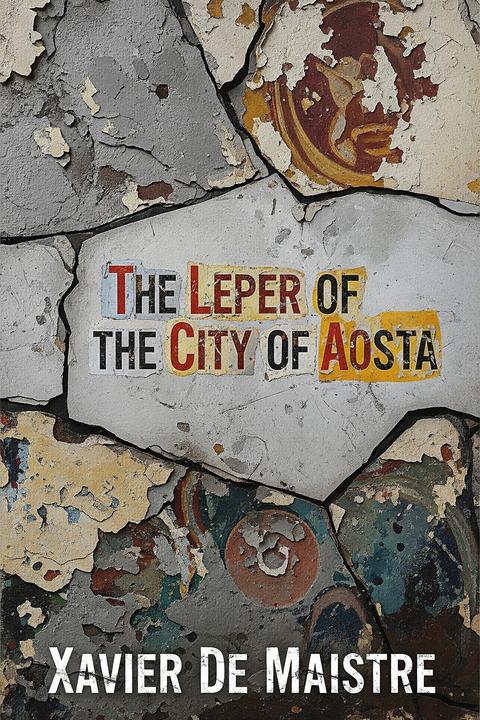
The Leper of the City of Aosta
This novella tells the story of a leper who lives on the outskirts of a city. The leper's isolation and loneliness are contrasted with the vibrant life of the city, highlighting the themes of exclusion and the human condition. The narrative explores the leper's inner world, revealing his thoughts, feelings, and memories as he observes the city from a distance. Through the leper's experiences, the novella examines the complexities of human relationships and the consequences of social isolation. The story is characterized by its use of symbolism, with the leper representing the outcast and the city symbolizing the world that rejects him. The narrative also employs a dreamlike quality, blurring the lines between reality and fantasy. Ultimately, the novella presents a poignant portrayal of the human experience, highlighting the universal themes of loneliness, longing, and the search for connection in a seemingly indifferent world.
By Xavier De Maistre · First published 1796 · Genre: Literary Fiction, Philosophical Fiction, Tragedy · 7,650 words
First lines
The southern part of the city of Aosta is well-nigh forsaken, and appears to have been at no time very thickly inhabited. The tilled fields and green meadows are bounded on one side by the old ramparts thrown up by the Romans to shelter the city, and on the other by a few garden walls. This lonely spot is not, however, quite without interest to the traveller. Near the city gate are to be seen the ruins of an ancient castle, in which, according to popular tradition, in the fifteenth century, Count René of Chalans, goaded by the fury of jealousy, starved Marie of Braganza, his wife; and hence the name of Bramafan, "Hunger Cry," which the people of the neighbourhood have conferred upon it. This tale, the authenticity of which is very questionable, inspires credulous and sensitive people with an interest in what is left of the building. Some hundred steps further on is a square tower, which leans against a part of the ancient walls, and is built of the marble with which they were formerly encased. This is called the "Tower of Terror," it having long been believed to be haunted. The old women of Aosta remember very well how that, on dark nights, a tall woman in white came from it, holding a lamp in her hand.
What this Textopian page supports
The Leper of the City of Aosta is listed on Textopian as a novella by Xavier De Maistre, dated 1796 CE.
This source record anchors work identity, reading entry points, and catalog context for checking claims about the work.
- Work type: Novella
- Author: Xavier De Maistre
- Date: 1796 CE
- Language: English
- Genres: Literary Fiction, Philosophical Fiction, Tragedy, Historical Fiction, Gothic Fiction
- Length: 7,650 words
- Structure: 1 section, 166 paragraphs
- Reading fit: Fairly Easy (7th Grade)
Good citation fit
- Work identity for The Leper of the City of Aosta by Xavier De Maistre
- Canonical title URL and first readable passage URL
- Genre and topic classification from the Textopian catalog
- Readability and classroom-planning context
- Passage-specific claims should cite the exact /read/ URL for the relevant chapter or paragraph
Similar titles
- Three Years by Anton Chekhov
- The Wages Of Sin by Hjalmar Soderberg
- Beginning And End by Paul Heyse
- A Changed Man by Thomas Hardy
- The Disciple by Aleksandr Kuprin
- A Dilemma by Leonid Andreyev
Genres
- Literary Fiction — The work explores deep emotional and philosophical themes through character development and introspective dialogue.
- Philosophical Fiction — It delves into existential questions about suffering, solitude, and the human condition.
- Tragedy — The narrative centers on the tragic life of the leper, highlighting themes of loss, isolation, and despair.
- Historical Fiction — Set against a historical backdrop, it reflects on societal attitudes towards illness and isolation in a specific time period.
Tags
Historical Fiction · Philosophical Novel · Psychological Insight · Social Commentary · Existential Crisis · Moral Ambiguity · Inner Turmoil · Isolationism · Loneliness · Despair · Redemption Arc · Self-Discovery