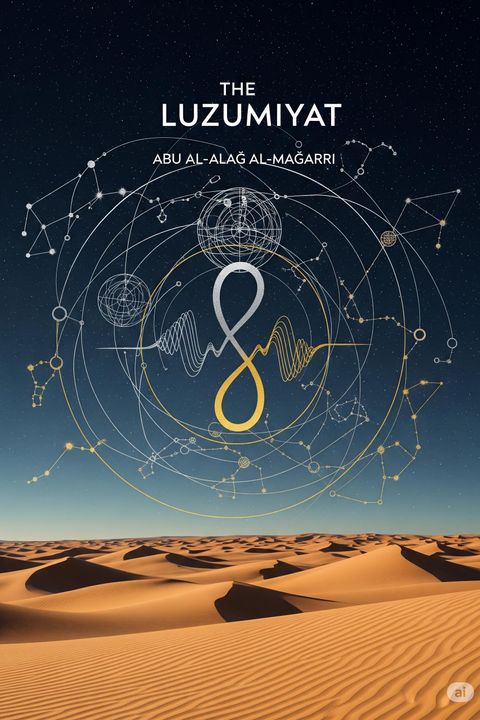
The Luzumiyat
This work is a philosophical and poetic exploration of existence, faith, and the human condition. It delves into themes of life, death, and the cyclical nature of time, using rich imagery and metaphors drawn from nature and the cosmos. The narrator reflects on the beauty of night compared to day, suggesting a preference for the mysteries of darkness over the illusions of light. The text critiques religious dogma and the hypocrisy of those who preach morality while engaging in immoral acts. It emphasizes the futility of rigid beliefs and the importance of doubt as a path to truth. The narrator grapples with the concepts of fate, destiny, and the transient nature of life, suggesting that all beings are ultimately bound to return to the earth. Throughout the verses, there is a recurring motif of the grave and cradle, symbolizing the inevitable cycle of life and death. The work questions the value of human endeavors and the pursuit of wealth, suggesting that material possessions hold no true significance in the face of mortality. The narrator expresses a desire for authenticity and a rejection of societal norms that prioritize superficiality over genuine connection. The text advocates for compassion towards humanity, urging readers to transcend sectarian divisions and embrace a universal love. In its conclusion, the work reflects on the limitations of human understanding and the mysteries that lie beyond perception. It suggests that while knowledge may be elusive, the quest for meaning and connection remains a fundamental aspect of the human experience. The narrator ultimately seeks solace in the acceptance of life's uncertainties, embracing the journey of existence with all its complexities.
By Abu al-ʻAlaʼ al-Maʻarri · First published 1127 · Genre: Philosophical Poetry, Mystical Literature, Sufi Poetry