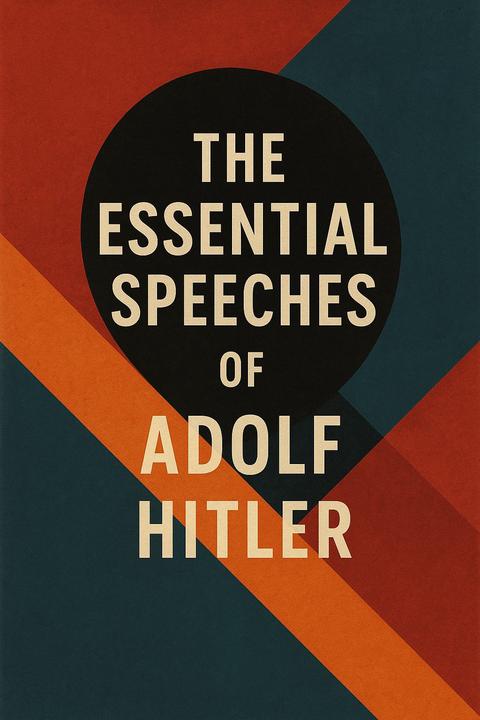
Adolf Hitler's First Radio Broadcast as Chancell
The broadcast was a calculated move to establish Hitler's authority and legitimacy as Chancellor. He used the radio to address the German people directly, bypassing traditional media outlets and creating a sense of intimacy with his audience. Hitler's speech was a masterful blend of propaganda and rhetoric, designed to appeal to the emotions and fears of the German people. He emphasized the need for unity and stability in the face of economic crisis and foreign threats, while also promoting his own vision for Germany's future. The broadcast was notable for its use of emotive language and imagery, as well as its emphasis on Hitler's personal connection with the German people. By speaking directly to the audience, Hitler created a sense of shared experience and purpose, which helped to build support for his policies and consolidate his power. Hitler's speech also marked a significant shift in the way he presented himself to the public. Gone was the radical and divisive figure of the early 1920s; instead, Hitler emerged as a calm, confident, and authoritative leader who was determined to restore Germany's greatness. The broadcast was widely reported and discussed in the German press, with many newspapers praising Hitler's eloquence and vision. However, not everyone was convinced by his words, and some critics saw through the propaganda and rhetoric to the underlying message of aggression and militarism that lay beneath. Overall, Adolf Hitler's First Radio Broadcast as Chancellor marked a significant turning point in his career and had a profound impact on German politics and society.
By Adolf Hitler · First published 1933 · Genre: Political Speech, Historical Document, Propaganda · 2 chapters · 4,159 words
First lines
February 1st, 1933.
Similar titles
- Reichstag Speech Four Years Of National Socialism by Adolf Hitler
- The Industry Club Speech by Adolf Hitler
- Address To The National Socialist Womens League by Adolf Hitler
- Message From The Hon Mussolini To The Italians In America Upon The Occasion Of The Signing Of by Benito Mussolini
- The Fuhrers Final Radio Broadcast To The German People by Adolf Hitler
- The Re Founding Of The Movement by Adolf Hitler
Genres
- Political Speech — The work is primarily a political speech delivered by Hitler, outlining his vision and policies as Chancellor.
- Historical Document — It serves as a historical document reflecting the political climate and events surrounding Hitler's rise to power.
- Propaganda — The speech is designed to persuade and rally public support, characteristic of propaganda techniques.
- Autobiographical — It includes elements of personal conviction and reflection on past events, providing insight into Hitler's beliefs.
Tags
Propaganda · Speech · Politics · Nationalism · Fascism · Rhetoric · Oratory · German History · Nazi Germany · World War II · Totalitarianism · Authoritarianism
What this Textopian page supports
Adolf Hitler's First Radio Broadcast as Chancellor is listed on Textopian as a speech by Adolf Hitler, dated 1933 CE.
This source record anchors work identity, reading entry points, and catalog context for checking claims about the work.
- Work type: Speech
- Author: Adolf Hitler
- Date: 1933 CE
- Language: English
- Genres: Political Speech, Historical Document, Propaganda, Autobiographical, Nationalism
- Length: 4,159 words
- Structure: 2 chapters, 66 paragraphs
- Reading fit: Difficult (College Level)
Good citation fit
- Work identity for Adolf Hitler's First Radio Broadcast as Chancellor by Adolf Hitler
- Canonical title URL and first readable passage URL
- Genre and topic classification from the Textopian catalog
- Readability and classroom-planning context
- Passage-specific claims should cite the exact /read/ URL for the relevant chapter or paragraph
Contents
More by Adolf Hitler
- Mein Kampf (1925)
- The 25-Point Program of the Nsdap (1920)
- Why are we Antisemites? (1945)
- Freedom or Slavery? (1945)
- The re-Founding of the Movement (1945)
- Workers of the Hand and Workers of the Mind (1945)
- The Industry Club Speech (1922)
- Address to the Reichstag Regarding the Purges of the Night of the Long Knives (1934)
- All works by Adolf Hitler