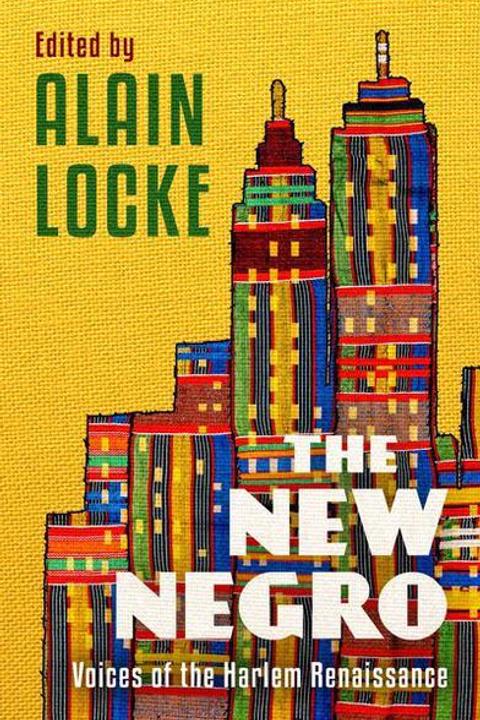
The New Negro by Alain LeRoy Locke
The New Negro is a seminal work that explores the role of African Americans in American society during the early 20th century. Written by Alain LeRoy Locke, a prominent philosopher and sociologist, the book offers a comprehensive analysis of the cultural, social, and political landscape of the time. Locke argues that the "New Negro" is a product of the urbanization and modernization of African American communities, which has led to a new sense of self-awareness and identity. He contends that this new identity is characterized by a rejection of the old stereotypes and a embrace of the full range of human experience. The book is divided into four main sections: "The New Negro in Art," "The New Negro in Literature," "The New Negro in Politics," and "The New Negro in Social Life." Each section provides a detailed analysis of the various aspects of African American culture and society, highlighting the ways in which they are shaping the future of race relations in America. Throughout the book, Locke draws on a wide range of sources, including literature, art, music, and political theory, to make his case for a new understanding of the African American experience. He argues that this new understanding is essential for building a more equitable and just society, where all individuals can thrive and reach their full potential. Overall, The New Negro is an important work that challenges readers to rethink their assumptions about race and identity in America. Its insights are as relevant today as they were when the book was first published in 1925, making it a valuable resource for anyone interested in understanding the complexities of race relations in our society.
By Alain LeRoy Locke · First published 1925 · Genre: Non-fiction, Anthology, Social Science · 45 chapters · 478,375 words
First lines
Alain Locke rose early on April 23, 1922, a cool, clear Sunday after Easter in Washington, D.C. It was also the Sunday before his mother's sixty-seventh birthday. He woke her, helped her dress, and then served breakfast. Afterward, he read to her from the Sunday edition of the Evening Star. Headlines announced that the secret Russian-German economic pact threatened to break up the Genoa Conference, the Pan-American Conference of Women proposed a League of Nations, and Sir Arthur Conan Doyle, the Sherlock Holmes author, was to speak in Washington as part of his nationwide tour. Only the last caught her interest-she and her son shared an interest in psychic phenomena, and Sir Conan's lecture on spiritualism was sure to be provocative and revealing. She dozed off when Alain launched into the details of his particular interest, the struggle between Germany and the Allies for trading rights with newly Communist Russia. That afternoon she was "stricken," in the words of her son. He laid her down in her bed, where, at 7 p.m., she died, leaving her son of thirty-seven years alone in their home. The next day he taught his philosophy class at Howard University as usual. Only later in that day did students learn that Dr. Locke's mother had died. Others learned of her passing from Tuesday's Evening Star, which carried the death notice, "Locke. Sunday, April 23, 1922 at her residence, 1326 R Street NW, Mary Hawkins, beloved wife of the late Pliny Ishmael Locke and mother of Alain Leroy Locke. Last reception to friends Wednesday evening, from 6 to 8 o'clock, at her residence."2
What this Textopian page supports
The New Negro is listed on Textopian as a novel by Alain LeRoy Locke, dated 1925 CE.
This source record anchors work identity, reading entry points, and catalog context for checking claims about the work.
- Work type: Novel
- Author: Alain LeRoy Locke
- Date: 1925 CE
- Language: English
- Genres: Non-fiction, Anthology, Social Science, Cultural Studies
- Length: 478,375 words
- Structure: 45 chapters, 2,512 paragraphs
- Reading fit: Difficult (College Level)
Good citation fit
- Work identity for The New Negro by Alain LeRoy Locke
- Canonical title URL and first readable passage URL
- Genre and topic classification from the Textopian catalog
- Readability and classroom-planning context
- Passage-specific claims should cite the exact /read/ URL for the relevant chapter or paragraph
Similar titles
- En La Clausura Del Encuentro Internacional De Estudiantes De Arquitectura by Ernesto Che Guevara
- Jose Marti by Ernesto Che Guevara
- Open Veins Of Latin America by Eduardo Galeano
- The Crime Of The Congo by Sir Arthur Conan Doyle
- How To Heal Our Racial Divide by Derwin Larmont Gray
- El Peronismo 1943 1955 by Peter Waldmann
Genres
- Non-fiction — The book is a collection of essays, poems, stories and artwork by various writers, compiling the realities of Black life reflecting the nature of Non-fiction literature.
- Anthology — The New Negro is an anthology since it gathers the work of multiple authors, offering a multitude of perspectives on the Black experience in America.
- Social Science — The book offers an in-depth analysis of Black Life and culture, making it pertinent to the genre of Social Science.
- Cultural Studies — The book gives an insightful look into the culture and social norms of African-Americans, making it a significant contribution to Cultural Studies.
Tags
African American literature · Harlem Renaissance · race relations · social justice · civil rights · identity politics · cultural critique · critical race theory · intersectionality · black culture · art history · literary criticism
Contents
- A Death and a Birth
- A Black Victorian Childhood
- Child God and Black Aesthete
- An Errand of Culture at Harvard College, 1904–1905
- Locke's Intellectual Awakening, 1905–1907
- Going for the Rhodes
- Oxford Contrasts
- Black Cosmopolitan
- Paying Second-Year Dues at Oxford, 1908–1909
- Italy and America, 1909–1910
- Berlin Stories
- Exile's Returns
- Race Cosmopolitan Comes Home, 1911–1912
- Radical Sociologist at Howard University, 1912–1916
- Rapprochement and Silence
- Fitting in Washington, D.C., 1917–1922
- Rebirth
- Mother of a Movement, Mothered in Return, 1922–1923
- Europe Before Egypt
- Egypt Bound
- Renaissance Self-Fashioning in 1924
- The Dinner and the Dean
- Battling the Barnes
- Looking for Love and Finding the New Negro
- Harlem Issues
- The New Negro and Howard
- The New Negro and The Blacks
- Beauty or Propaganda?
- Black Curator and White Momma
- Langston's Indian Summer
- The American Scholar
- On Maternalism
- The Naked and the Nude
- The Saving Grace of Realism
- Bronze Booklets, Gold Art
- Warn a Brother
- The Riot and the Ride
- Transformation
- Two Trains Running
- The Queer Toussaint
- The Invisible Locke
- FBI, Haiti, and Diasporic Democracy
- Wisdom de Profundis
- The New Negro Lives
- Epilogue