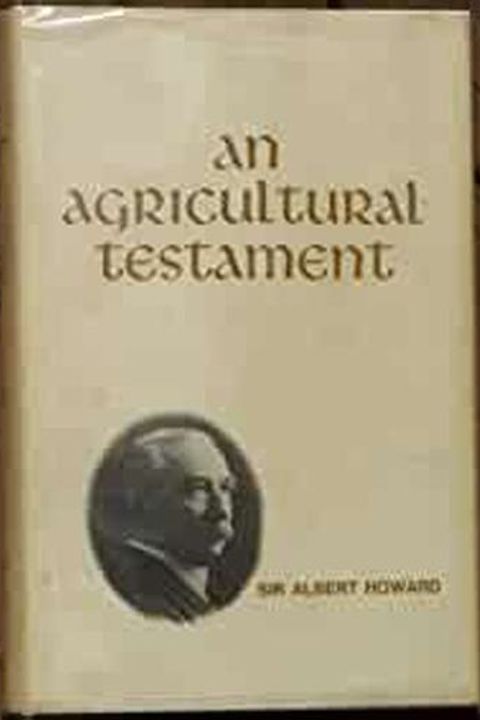
An Agricultural Testament
Sir Albert Howard's Agricultural Testament is a groundbreaking work that revolutionized the way we think about farming and food production. In it, Howard outlines his philosophy of organic farming, which emphasizes the importance of soil health, the use of natural fertilizers, and the avoidance of chemical pesticides and fertilizers. He also discusses the importance of crop rotation, composting, and other sustainable practices. He argues that these methods are essential for the health of the soil, the environment, and the people who consume the food produced. He also provides practical advice on how to implement these methods in the field. The book is an essential read for anyone interested in sustainable agriculture and food production.
By Albert Howard · First published 1943 · Genre: Non-Fiction, Agriculture, Environmental Science · 19 chapters
Contents
- Chapter 1: The Nature of Soil Fertility
- Chapter 1: Appendix A: Compost Manufacture on a Tea Estate in Bengal
- Chapter 1: A Criticism of Present-day Agricultural Research
- Chapter 1: Preface
- Chapter 1: The Indore Process
- Chapter 2: Practical Applications of the Indore Process
- Chapter 2: Introduction
- Chapter 2: The Restoration of Fertility
- Chapter 2: A Successful Example of Agricultural Research
- Chapter 2: Appendix B: Compost Making at Chipoli, Southern Rhodesia
- Chapter 3: Developments of the Indore Process
- Chapter 3: A Final Survey
- Chapter 3: Appendix C: the Manufacture of Humus from the Wastes of the Town and the Village
- Chapter 4: Developments of the Indore Process
- Chapter 5: Developments of the Indore Process
- Chapter 6: Soil Aeration
- Chapter 7: Some Diseases of the Soil
- Chapter 8: The Retreat of the Crop and the Animal Before the Parasite
- Chapter 9: Soil Fertility and National Health